No.: PET3008
Origin: African Congo river system
Vulnerability to diseases: albino disease, rotting tail disease
Life: Overview of Congo flagfish species 3-4 years
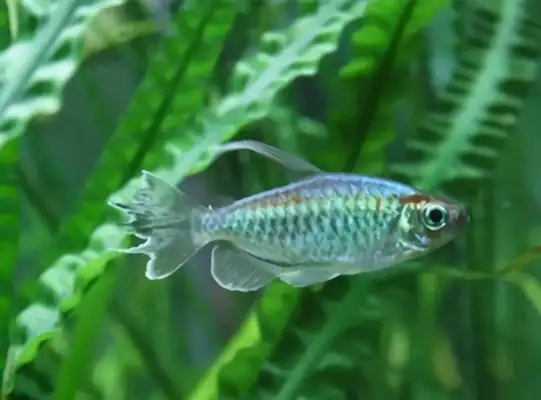
Congolese flagfish are also known as Congolese neon, Congolese fish, originating from the African Congo River. The size of the Congolese flagfish is small, and the size of the fish is about 8 to 10 cm, which tends to be conglomerate, can be fed in groups and can be combined with those of similar sizes.
Chinese literary name: Congolese flagfish
Not to mention: Congolese neon, Congolese fish
Context: Animals
Gate: Pipeline gate
Amen: vertebrate Amen.
Region of distribution: African Congo river water system
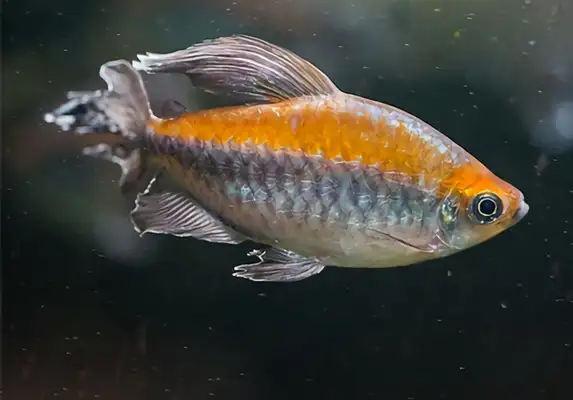
The colour of Congolese flagfish, also known as Congolese neon, is unique by name. The Congolese flagfish in the aquarium belong to the middle- and lower-level fish, and it is best to raise some waterweeds while raising the Congolese flagfish, which not only provides them a refuge, but also reflects the beauty of the Congolese flagfish.
Congo's flagfish are 8-10 cm long. Hammer. Small head, big eye, crack up. Tight back fins. The abdomen, the hips are bigger. The outer edge of the tail is flat, but the centre of the outer edge is prominent. The Congolese flagfish are coloured in blue, mixed in gold, with large scales of metal luminous, colourful and beautiful in light. Congo flagfish breeding environment
The Congolese flagfish, which originated in the African Congo River, require attention to the requirements of water quality when raising the Congolese flagfish artificially, otherwise they are prone to disease and death. Congolese fish are weak and acidic, water quality clean and water temperature 22-26 degrees. The grooves, the mobility, the movement, the activity in the middle and lower layers of the waters, they are temperate and can be ploughed with most small fish, but they also have the same vices as carp skins, which sometimes bite the fin edges of slow-moving fish with broad fins. Congolese flagfish.
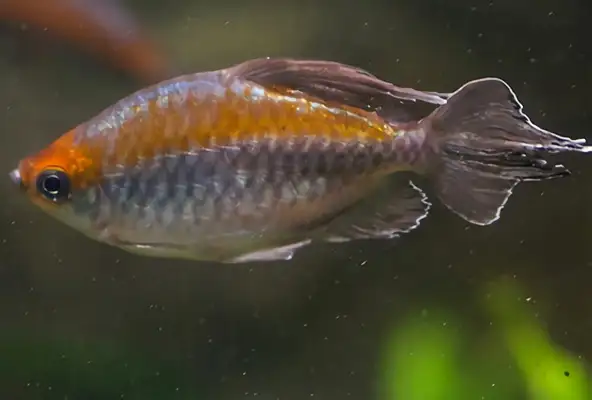
The raising of Congolese flagfish is not so difficult as to ensure a stable quality of water as well as healthy and reasonable feeding, so that they can grow healthy. So what's good for the Congo? How can we feed science?
The Congolese flagfish are healthy and food-free, although they are a variety of culinary species, but are dominated by animal baits, which are also easier to receive. They prefer to live in a less acidic water-quality environment, where they live in homogeneity, where they move and operate in the middle and lower layers of water. The fertilized eggs hatch about 36 hours later, and the fish do not swim to feed themselves on their own nutrients by absorbing their own yolk within 36 hours, and then on their own to feed very small live baits, such as artificially grown grassworms. Ten days later, fish. It's easy to receive a simple little fish without taking care of it.