Designation: PET3139
English name: Bolson Tortoise
Character: timid, cautious
Origin: Mapimi Basin, Chivava Desert, Mexico.
Vulnerability to disease: decomposition
Life: Overview of turtle species in Mexico, 80 to 100 years old
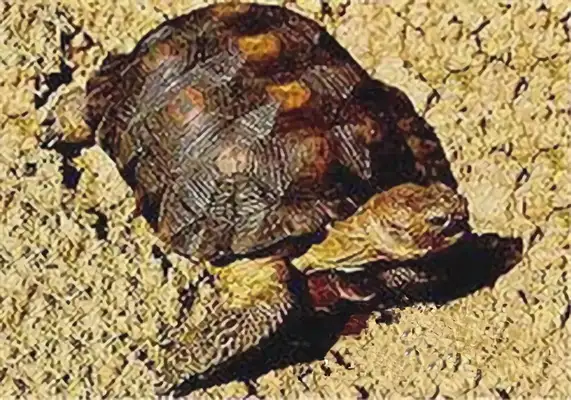
Mexico has one of the largest terrestrial turtles in North America, the only remaining four in North America, with a long life but low survival rate, with only 3 per cent reaching adulthood in a wild environment and occasional trade in domestic markets.
Chinese name: Mexican mole turtle
Chinese alias: yellow sand turtle
English name: Bolson Tortoise
Latin name: Gopherus flavomarginatus
Context: Animals
Gate: Pipeline gate
Amen: vertebrate Amen.
Programme: climb
Tortoises.
Subtitles: Curvature turtle
Section: Marine turtles
It's from the rat.
Crop: Mexican mole turtle
Geographical distribution: Mapimi Basin, Chivava Desert, Mexico.
Endangered state: CITES.
(a) The manner of reproduction: the number of eggs laid at once is about 12 to 15.
Body characteristics: The maximum size can be as high as 45 cm, one of the North American groundhog turtle species and the largest.
Life expectancy: Mexican ground rats have a very long life expectancy of 80 to 100 years on average and 100 years on average in an artificially raised environment. Mexican tortoise morphological characteristics
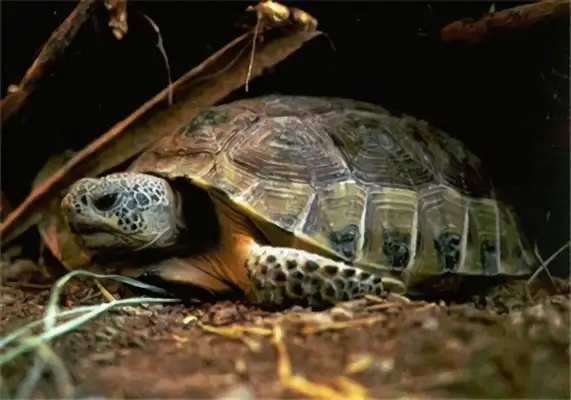
The look of Mexican turtles is not very different from that of average turtles, but Mexican turtles belong to large turtle species with a body armor of up to 45 cm, a relatively large species in the turtles, preferring to live in caves and be cautious.
Mexican ground turtles are one of the most large species in North America, and they can easily grow over 40 cm in size and are located only within Mexican territory and in the Chihuahua desert. The back is rounded, with short and large legs, with front limbs covered with nails, flat in shape, easy to excavate, and all the toes are empty. Reared ellipses, brown, like horny, slightly yellow in the middle of the shield. The bridge is well developed, single shield. The aperture is yellow and brown along the edge of the shield; the larynx goes far beyond the vest. Small head, front circle, tea color, slightly red, iris yellow. The front and back feet are approximately the same size. Male dents in the abdominal abdomen.
In Mexico, where the turtles originate, indigenous peoples use their backs as a container, and as the number of Mexican turtles decreases and people become aware of the protection of the species, their hunting is becoming fewer and their number is slowly increasing. Mexican rat care knowledge
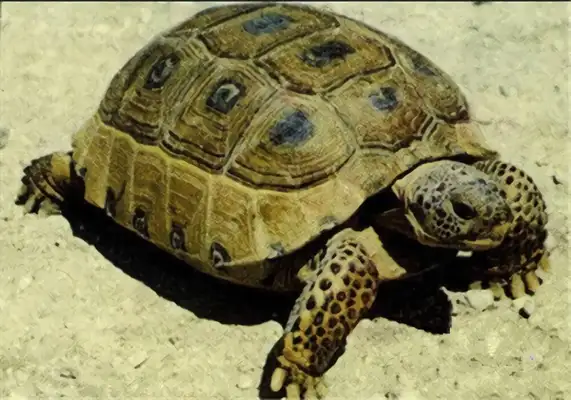
The Mexican terrogen turtles, which were on the verge of extinction for a time because of human hunting, were later discovered and protected and helped to hatch, breed and release to the wild after a dangerous period, had had a better effect, and the number of Mexican ground rats was rising.
As a result of the early exploitation of Mexican ground turtles by large numbers of humans, which led to near extinction, and the fact that in 1973 California biologists conducted a quantitative survey to Mexican ground turtle habitats, which revealed considerable danger, the Mexican Government established a protected area in 1976, and the Mexican Government and biologists established sites in the protected area to conduct research and develop a conservation plan for Mexican groundhog turtles.
These hunters, who previously specialize in the capture of land turtles, are now helping biologists to find the mother-to-child turtles, to place them in research centres as a seeder, or to dig up the eggs to help them hatch, and to hire locals to train them to support the turtles, who are about 2 to 5 years of age and are being fielded. This has been a very satisfactory and successful outcome, with over 80 per cent survival and pride on the part of the locals, who are now growing in numbers and are more optimistic about their future.
Human beings can kill a population, or they can protect a population. It is between the thoughts of human beings that nature has the same survival rules as human beings, and do not kill such a fragile life at will. Mexican groundhogs live in conditions.
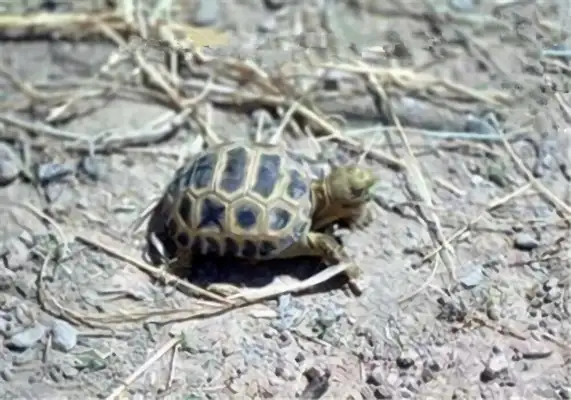
The greatest characteristic of the turtles is that they dig holes, and Mexican turtles are no exception. This is a turtle that lives in caves, even though they already have heavy shells to protect themselves, they still like to feel safer in the way they do.
Mexican ground turtles, like other North American ground turtles, use caves to hide, although it may be rare to know that over 80 per cent of the caves in which all ground turtles hide are dug by males, and in fact most females are enjoyers. The caves dug by the male turtle, of course, also create a safer habitat for many local organisms in North America, and even some depend on the caves of the Earth.
Mexican ground turtles usually leave their caves during the afternoon hours, almost all the rest of the time in the caves, they are dormant in the same winters or summers, and they have a strong water storage capacity, which can be replenished almost only by the annual rainy season, so they drink a lot during the rainy season, which is enough water to survive the entire year of dry season.
This is the habit of Mexican turtles, where birds build nice nests, and where Mexican turtles live their whole lives, a strong and comfortable way of living, as they continue to exist. It's the mexican turtle feed.
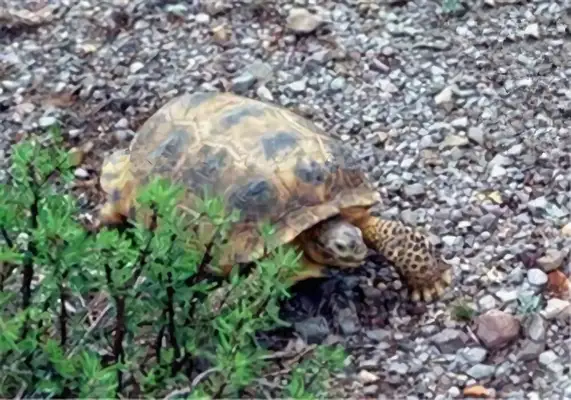
Mexican turtles are not very difficult to raise, and may be sold in some markets in the country, but the species are usually larger, so do not mix with other turtles, and the newly introduced Mexican turtles have to pay attention to some problems in raising them.
I. MEXICO MOX HOLDERS BETWEEN
Mexican groundhogs are dressed in hard crust, with a fearless collision and pressure-resistant posture. But when the turtles of different sizes are raised together, there is a danger that the small will be squeezed, starved and dominated. This is the case in the long run, when people who are small are suffering from wasting, fear, timidity and the risk of death. We need to separate the Mexican turtle from the other turtles.
II. Attention to new breeding of Mexican ground rats
In the wild, Mexican turtles often swallow food with eggs into their bodies and become parasite carriers. The food that feeds the Mexican mole turtles is processed and less likely to carry parasites. As a result, parasites have to be killed for new wild Mexican rats. Second, Mexican rats from the wild should be fed or forced into food for a single anti-spectrum parasite. Mexican groundhog turtles are allowed to refrain from feeding drugs until late autumn or early winter. Thereafter, after feeding the drug, the insect is released with excrement, usually two to three days later.