Designation: PET4836
English name: Mexican Snapping Turkle
Origin: Mainly in southern Mexico
Vulnerability: leukemia, gastrointestinal disease
Life: 45-50 years
Price: Summary of alligator species in Central America, 1000-2000
Central American crocodile turtles, one of the four sub-generic species, are not very numerous and not very common, are larger in size, belong to large species of water turtles, have a strong personality and are not suitable for domestic breeding, and some will buy them for meat turtles and have difficulty breeding. The main habitat is in swamps, ponds or lakes, and there are also slow-moving rivers. Adapt to temperature of 22-28°C. Central America's alligator character.
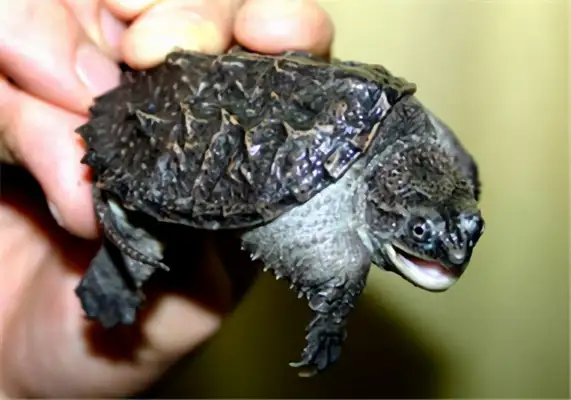
There are four sub-generic species of turtles, South America, Central America, North America and Florida, of which the number of alligator turtles is the most rare. The backs of Central America's crocodiles appear to be very high, with a maximum of 45 cm.
The overall colour (including abdominal, back, and skin) of the Central American crocodile turtles is deeper than the other three sub-species. The larvae's back armor is dark gray to black, with white dots on the outer shell and white spots on the abdomen. Two pairs of abdomen appear to be extraordinary and obvious. The same as alligator in Florida is the fine, sharp, and very visible, prick on the neck and other skins. The head is wider and strong, the top is flat, it is dark brown and the kiss is narrow and long.
The Sino-American gator's backnail is partially rectangular and unobserved, with the third vertebrae the largest, accounting for 25 per cent of the length of the vest. The front leg of the abdomen accounts for more than 40 per cent of the length of the vest. This species appears to be more aggressive than any other sub-species, the most rare of the four sub-species. The crust of the Central American population is essentially black, while the color of the crust of the Honduran population is relatively deep in brown. Central America has knowledge of alligator care.
Central America's crocodile turtles are usually hard to fight in the water, but they can bite on land. Central America's crocodile turtles can turn their heads with their bodies in search of targets and even bite. Toes, toes, water habitat, in deep rivers, lakes, mudslides, and occasional exposure to saltwater areas. Under artificial conditions, crocodile turtles are relatively adaptable to both shallow and deep water, but they should be given a shallow water environment because of their limited ability to swim in the juvenile phase. Central America's alligator environment.
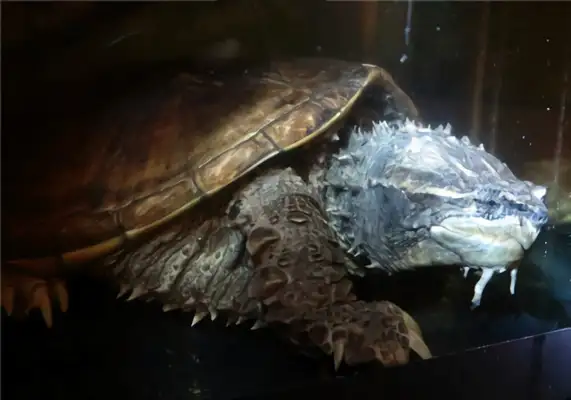
The most important thing for the success of the curing of alligators in Central America is the establishment of a reasonable breeding environment, which is generally more important for water and food control, and how the environment can be maintained, even if the environment is relatively successful, while ensuring nutrition.
A new turtle field should be selected where the water source is good, the environment is quiet and transport convenient. The main subjects of the turtle ponds are: turtle ponds themselves, table, land, drainage systems, water spills, etc., in which the land is used mainly for resting with turtles, and for spawning grounds in the land section of the tortoise pool. One third of the table is watered, two thirds of the table is surfaced and is tilted to the surface at 30°, which is actually referred to as a slope in the underwater part, part of the water as a table, and, in the case of a tortoise pool, part of the water on the table is also able to guide the turtle to the spawning grounds. It is reasonable to set the table southwards on the north side of the turtle pond, with a width of about 2 m and a length of 80 per cent of the length of the pond. The spawning field is 2-3 m wide and is long enough to match the table with 20-30 cm deep sand. The laying of eggs above the spawning grounds in a rain-proof shed has facilitated the laying of eggs by turtles.
At least 10 cm in diameter into the drain pipe in order to speed up the discharge, while facilitating the discharge of sewage, bearing in mind that the drain must be under or near the table, where the most sewage is found and where turtles like to excrete. Water spills are located at the highest level above the walls of the turtle ponds, allowing for the discharge of organic suspensions and flash floods during the rainy season. Turtle ponds are constructed with repeated water-purification impregnation for at least one week to remove alkalinity. It is then sterilized with 150 ppm of lime and replaced with fresh water. Central America's alligator feed point.
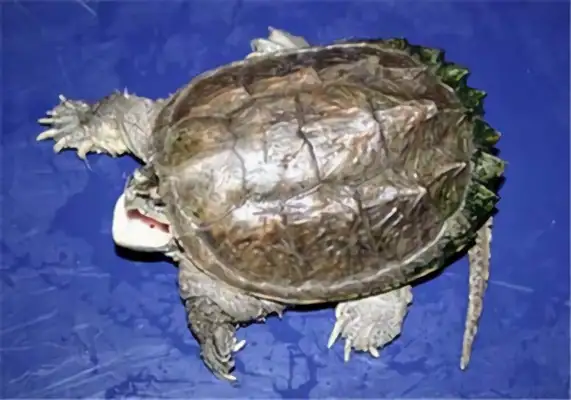
Although the cuisine turtles are impregnated turtles, it rarely uses phyto-breeding, and generally only meat is of interest to them, and in the case of feed, it is important to be sensitive to the mouthworthiness of the feed and to ensure as much nutrition as possible.
The larvae can be fed in a variety of ways, including small fish, shrimp, bread worms and any water, turtle feed. All small animals in water or onshore are hunted when they are ready to eat, as long as they can swallow.
For alligator feeding stages in Central America, only a small amount of food is required if the powdered feed requires water, maize oil, fish oil to be made into soft particles or groups, which is fed twice a day, at a rate of two hours each. Changes in water quality and higher levels of ammonia were observed, prompt water changes were required, and the conditions for turtle farms could automatically detect water quality using classic hydrochemical methods or modern instruments, and computer-controlled methods could be used to follow up on the activity of alligators in the greenhouses and take immediate steps to detect problems. Modern technology has made automatic testing, automatic water exchange, automatic analysis and automatic alarm. A special reminder during the breeding process is “temperature change”. The movement of turtles from outside to indoors is gradual, and when they move outside, they are gradually cooling, taking care of the temperature balance.