No.: PET3301
English name: Blue & Gold Macaw
Vulnerability: respiratory, digestive and parasitic diseases
Life: An overview of the species of blue gold parrots for 60 years or so
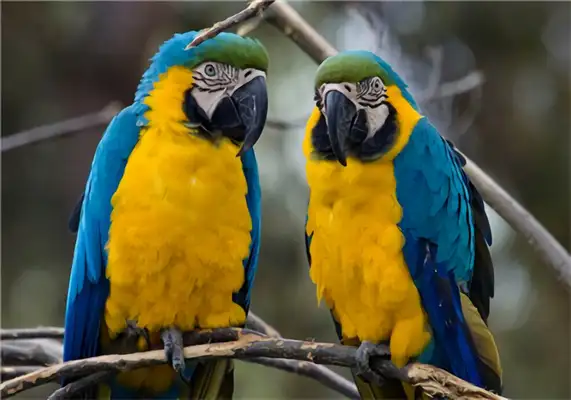
Blue & Gold Macaw, alias Ludwig parrots, are attractive in color and shape, and very beautiful parrots are from the tropics of the Americas, the most common parrot on the market.
Blue gold parrots are easier to train and are friendly with other kinds of parrots, whose proximity makes them particularly popular, moderate, visible everywhere in bird shops, zoos, and so forth, from the north and north-east of the South American continent to eastern Panama and Mexico in North America.
The Blue Gold Parrot.
English name: Blue & Gold Macaw
Don't call it "the parrot."
Area: Animal
Door: vertebrate door.
Amen.
Platform: Birds
Today's bird's
It's a parrot.
Section of parrots
Family: Nautilus
Distribution: South American tropical lowlands in eastern Panama, south-eastern Brazil and Bolivia and Paraguay, Colombia, Venezuela and the North of Argentina. Blue gold parrot form.
The blue gold parrots are one of the most beautiful parrots, with a life span of 60 years, and they're not small enough to be a pet bird. Adults raise young birds, and they're good enough to stay with you throughout your life.
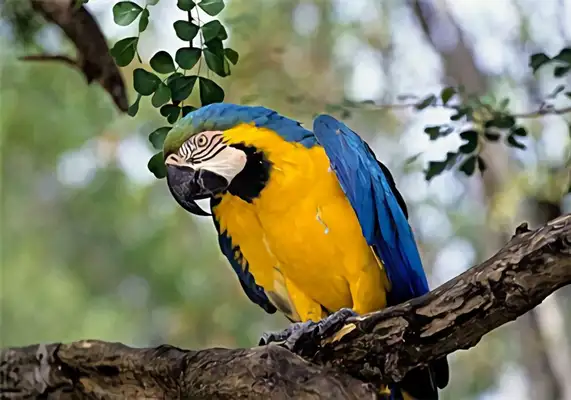
Blue Fantasy Parrots have no feathers on their faces, covered with stripes, a bit like the face of the opera. It's a long tail. It's a big climbing. The post-adult body is 86-94 cm long; the wing stretch is 104-114 cm; the tail is 40-50 cm long, almost half the size; the body weight is 995-1380 g; the size of the species is yellow and green, from the top to the upper part, with naked eyes and cheeks, white. From the base of the mouth to the lower of the eye, there are three black feathers in the ear, with six to seven vertical stripes in the front eye and black in the back of the ear, orange yellow in the abdomen and purple blue in the wings and tail feathers. The plume of the first flying feather is purple blue, its inner feather is black and its tail is blue blue. The male and female feathers are essentially the same, except that the male has a wider head than the female. The general color of the macaw feathers is blue, with some yellow feathers on the forehead, light yellow on the iris, black lead on the beaks and grey on the claws. Blue gold parrots live in environments.
The fact that blue gold parrots are so popular is largely due to their handsome appearance and good language skills. It is possible to survive for seven or eight years or more in a good animal husbandry environment.
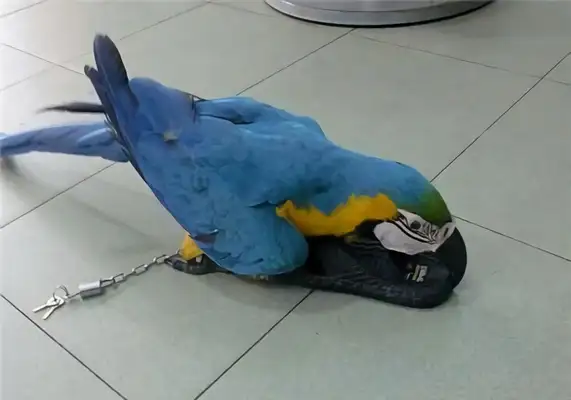
Blue gold parrots have always been one of the most popular parrots, but they tend to be raised with more effort and knowledge because they are different from cat-and-dog. They have a high level of intelligence, spleen temperature and goodwill, and they'll be good pets as long as they meet their needs. Because of the large size of the bird, the cages that are raised are also very large and should be more than two cubic metres. If you have a yard in your house, it's the best. When it's in motion, because even if the cage is big enough to be blue, the parrot feels bound in the cage and he's in a bad mood. If raised from a small age and properly trained, they can also be raised with a mounted metal shelf (remember to bring a chain to the bird). But even with good care, the blue gold parrots still scream and are very loud. It is their nature to shout loud and to destroy objects with beaks, which they do even under conditions of artificial breeding. Parrots could be trained to bite only toys, but when there was no one to watch them, they would be devastated if they were not in cages. Blue gold parrots love baths, and the newly bred blue gold can quickly adapt to and trust the new feeder and the environment, chewing hard and providing fresh branches for his bite. The blue gold parrot feeds the order.
Blue gold parrots have always been common parrots, the prices sold on the market have been relatively moderate, and families should not feed only a single feed, and diversified foods can contribute to their healthy growth. The following is about the food of the blue gold parrots in the wild and at home. Blue-gold parrots in the wild eat mainly fruits, nuts, fruits of palm trees, seeds, flowers, buds, parasitic plants, insects, etc.