Designation: PET1190
English name: the Pig-nosed turtle
Origin: Northern Australia, Southern Irian Jaya and Southern New Guinea.
Vulnerability to disease: decomposition
Life: 25-30 years
Price: A brief description of the pig-nose turtle species, $200-500
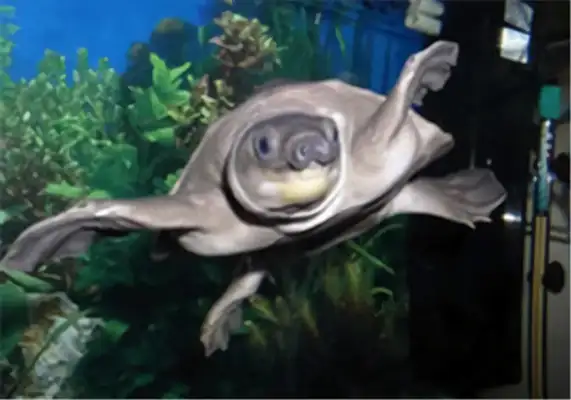
A pig's nose turtle is also called a pig's nose, a tortoise with no hard-shelled backs, highly water-dwelling, usually untanned, but with high water quality, high risk of corrosive skins and nails, relatively difficult to raise and medium price.
Chinese literary name: Pig-nose turtle
Don't call it "Oceania pig-nose turtles, flying river turtles, pig-nose noses, etc."
Latin name: Carettochelys insculpta
English
Context: Animals
Gate: Pipeline gate
Programme: climb
Tortoises.
Subtitles: Curvature turtle
C: Two claws
Yes: Two claws
Plantation: Pig nose turtles
Distribution: Northern Australia, Southern Irian Jaya and Southern New Guinea.
Appearance characteristics: Their backs are round, they are dark gray, olive ash or brown ash, and there is a line of white spots near the edge.
The typical habitat includes rivers, estuaries, lakes, lakes, marshes and ponds.
Habitat: aquatic.
Reproduction habits: The dry season between July and October of each year is the breeding season for pig-nose turtles, where adult females climb up to shore at night and dig up holes of about 20 cm deep, with 7 to 19 eggs per nest, in round shape, in the form of ping-pong balls.
Eating: Pig noses are groceries dominated by vegetable foods, which feed mainly fruit, leaves, flowers and aquatic plants that fall in rivers, while they also feed animal foods such as molluscs, insect larvae, crustaceans, fish and mammals. Pig nose turtle morphology
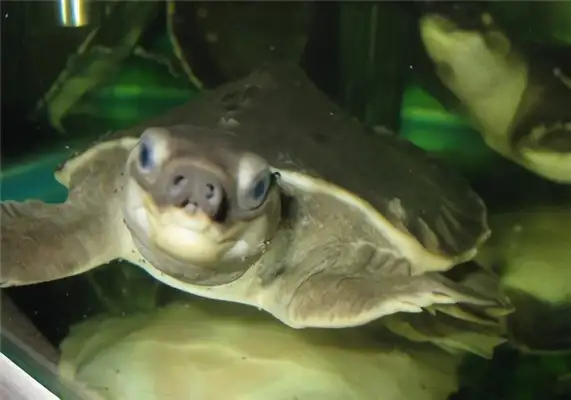
The pig-nose turtles are more like a slug, because the pig-nose turtles have no crust, the nose is the biggest look, the nose of the pig-nose is like a pig's nose, their personality is more lively, and they live in water like a strange fish, so there are many people raising them.
The pig-nose turtle is one of the strangest fresh-water turtles, with the Minister of Nasal and the fleshy, like pig-nose, and thus the reputation of the pig-nose turtle. There's a gray stripe behind the eyes. The limbs are uniquely fin-shaped and cannot be condensed into the shell in order to adapt to aquatic life. Two visible nails are also one of the features of each frontal limb near the midpoint. The tail is short and the back is covered with a line of moon-shaped scales, which gradually shrink from the base to the tip of the tail. Both sides of the tail have visible skin wrinkles that extend through the legs to the back. The tails of adult males are older and the vents are lower, while the tails of female turtles are smaller.
The length of a pig's tortoise is generally 46-51 cm, with a weight of 18-22 Kg, and 56.3 cm for the largest pig's to date found, and 22.5 Kg. Their backs are round, dark gray, olive ash or brown ash, with a white line of spots near the edge. The edges are slightly serrated, and there are no skirts like tungsten because the outer bones are well developed and well structured. And there were no shields. Instead, there were successive, wrinkled skins. There's a bar of pricks in the back armour. The body's abdomen are light, white, milk white or light yellow, slightly crucifixed. The head size is moderate and cannot be condensed into the shell. Knowledge of pig nose turtle care
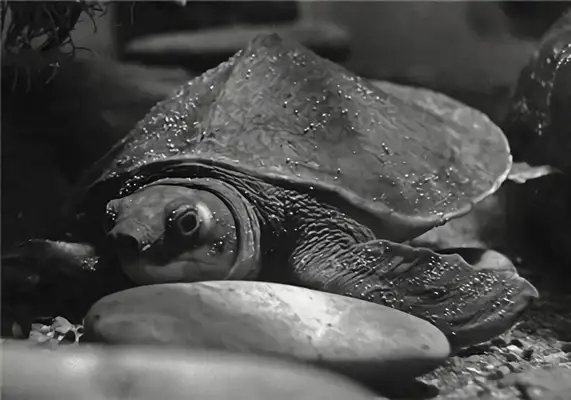
Pig-nose turtles are easier to raise, but they are more likely to be ill, and generally, pig-nose turtles do not like sunbacks or fall on the tan, so water quality is difficult to control and this is where pig-nose turtles need the most attention.
The bigger the pig's nose is, the bigger it is, the bigger it is, the bigger it is. He does not need sunlight and keeps it as far away as possible from the sun, which causes green algae on water and pigs. So don't put solar power in the tank. Heat sticks are up to 28 degrees, they're on, they're off, he's warming up, they're going to be on for years. Low temperature pigs are prone to disease. It is best to eat turtle food with beef (River), shrimps to skin, holy fruit, grapes, etc., which are not stimulating fruit. The pigs' digestive system is the worst in turtles, so make as little as possible when feeding others.
It's not really the main one, most importantly the water quality, and the nitrite bacteria have to be bred out, filtered 24 hours, so that the water flows, and if the nitrified bacteria are well cultivated, one third of the water per week. Water is stuck in water for more than two days. It's important to prevent it if there's a problem with the quality of water. A pig's nose tortoise living environment
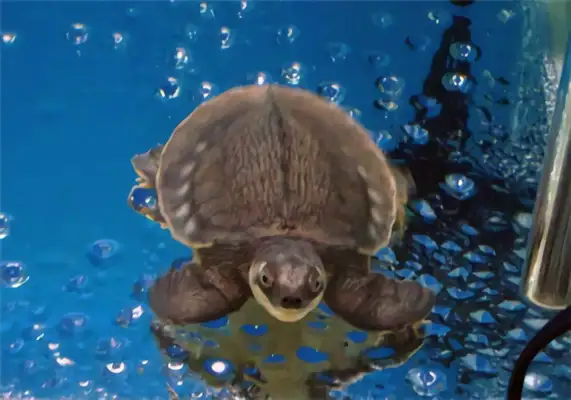
Pig-nose turtles like to live in rivers with relatively low water levels, usually hidden in low-water mudslides, and newly raised turtles usually hide themselves in mudslides, but they become accustomed to interacting with their masters for a long time.
Pig turtles are located in northern Australia, southern Irian Jaya and southern New Guinea, with a narrow distribution and remoteness. Typical habitats include rivers, estuaries, lakes, lakes, marshes and ponds. Most pig-nose turtles are found at depths of more than six feet, with sand and gravel at the bottom, and covered by silt freshwater waters, where coastal areas are rich forests. In rare cases, pig-nose turtles appear in saltwater lakes.
In the first place, pig-nose turtles should know that adult pig-noses are more aggressive among the same species, and that they can fight and bite for hiding places. So, when raising a child, it is not too dense and there is a need to prepare enough hiding space. Every pig-nose turtle that is raised has a hiding place to avoid a fight.
Pig-nose turtles are highly aquatic freshwater turtles, so the aquariums used for breeding should be higher, usually 60 to 80 centimetres in their early years, and larger aquariums are needed when a pig's nose is 25 centimetres or more. In addition, pigs' nose turtles are mostly horizontal activities, so the aquariums chosen are wide enough.
Pig-nose turtles have not only hidden habits but also excavated, so it is preferable not to use bottom filters in the selection of filters, which are the best. At the same time, the thin coral sand is the most suitable bottom sand in order to satisfy the pig's nasal turtle digging habits. This sand facilitates pig nose digging, smooths the surface, does not easily damage the skin of the pig's nose, and also adjusts water quality to weak alkalinity and provides a more suitable water quality living environment for pig's nose turtles. What do you mean?
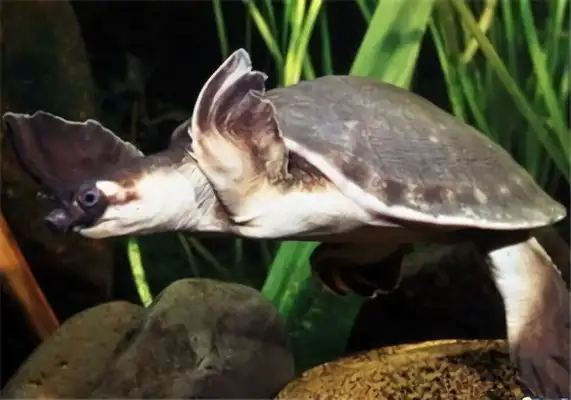
Pig-nose turtles usually prefer to eat some vegetarian food, which can be well adapted to human feeding, and can provide a wide variety of meat in some special times, that is to say, a non-sorting turtle that can easily be raised.
I. ELECTIVENESS OF THE NORTHLOW
Pigs and turtles eat a lot, and adults eat a lot. Because they are naturally lazy, they do not actively capture food. The food principle for pig-nose turtles is to wait for rabbits and eat whatever they encounter, and not pick and choose. As a result, celery, carbs, cabbage, cabbage, cabbage, apples, pears, tomatoes, barley, watermelons, grapes, cucumbers, beef, shrimp, animal organs, breadworms, crickets, red bloodworms, etc. can be their food, and pigs' nose turtles will never pick up anorexia or refuse to eat.
ii. Pig-nose turtles
Newly purchased pig noses do not have to rush to feed, and it will only slowly start eating if it adapts to the new water quality environment. So you have to keep the environment quiet and stable, and the process usually lasts about three or four days. After that, if the environment is right, a healthy pig's nose will be eaten. First-time feeding is best done with fruits with special fragrances (e.g. bananas, grapes, etc.), which can easily stimulate pig nose interest and appetite. It is not appropriate to feed too much, as the main purpose is to eat while allowing their stomachs to work once in the new water quality. A normal feeding can take place once the food is ready and excreted.