Title: PET4533
English name: Florida East Coast Diamondback Terrapin
Character: lively
Origin: Eastern Americas
Vulnerability to disease: decomposition
Life: Around 50 years of age
Prices: An overview of the species of eastern Florida drilled turtles
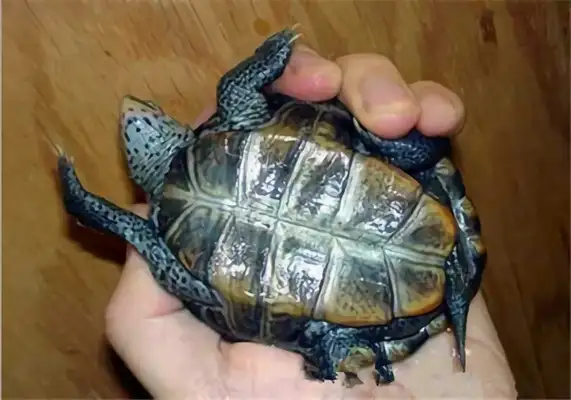
East Florida drilling turtle.
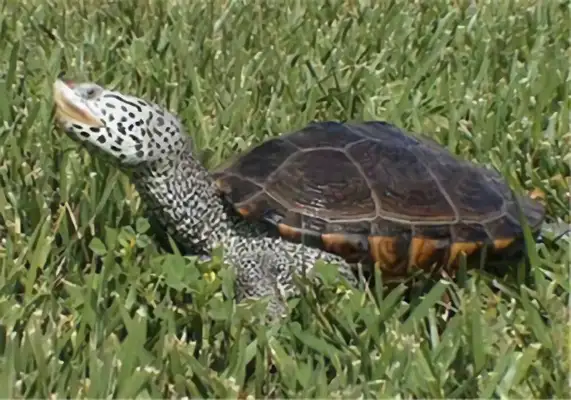
The eastern edge of Florida, which looks darker in the back, has a lower colour in the central part of the shield, with less visible growth rings on the back, a rare type of turtle along the Atlantic coast of Florida, with few wildlife and few breeders.
Chinese name: Eastern Florida Drilling Turtle
English name: Florida East Coast Diamondback Terrapin
Reproduction: Eggs
Distribution: Florida
Practice: Living in saline marshes, wetland with tidal rises and lakes behind coastal beaches.
Reproduction: In the South, camp nests lay eggs from 4 to June, while in the North they are later. 4-18 eggs, white, slightly pink, thin, gel, 1/4 " (32 mm) long, end-end blunt round. Deep in the nest, in the sand by the swamp and dunes. Incubation period 9-15 weeks. Females reach sexual maturity after approximately seven years and males are later. Eastern Florida drilling turtle morphology.
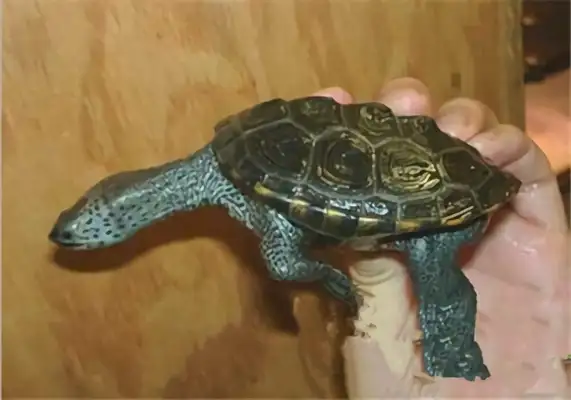
There are seven species of drilling turtles located in different areas along the eastern coast of the United States and in the eastern part of Florida. It's not as bright as it looks, and it's not very visible, and it's just a little bit of a bouquet on the head, like a cut of a flamingo.
In eastern Florida, the vests are of a single colour, even colour, and the head is of a dark colour, with the least visible co-concentric bouquets, and the head grafts are in point or stripes, and unique markings of the pomegranate can be seen on the back.
I. BACKLAKE
The concentric marks of the back armour are not visible, and the color of the back armour is deep, low-backed, with small pomegranates, and the overall colour of the skin does not look good. The color of the turtle doesn't change much with the color of the turtle. The color of the turtle is deeper.
II. Skin
The skin is also dark, the head is white, but there are black spots. The large and round head and the toes on the toes clearly indicate that this is a very swimming turtle.
III. Bronze
The diamond is dark, there is no visible texture, but it can be distinguished from the visible pattern of the diamond-truck turtle, which is condensed and not apparent during the period of the childish turtle, and which is growing as the body grows. Eastern Florida Drilling Turtle Conservation Knowledge
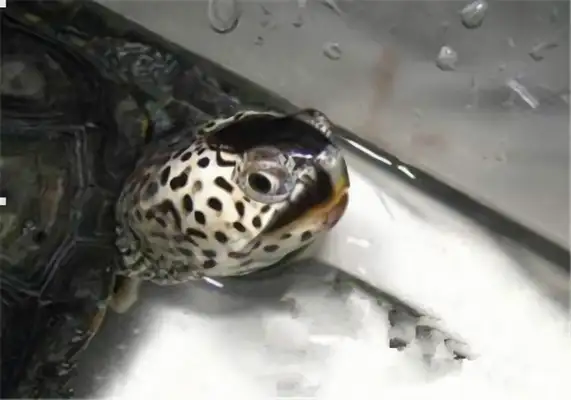
The most important factor in raising the diamond-dreading turtles in eastern Florida is the choice of water quality, and eastern Florida has a high demand on whose PH is located in the coastal marshes.
I. Drilling turtle breeding
Drill turtles are known for their diamond-shaped drilling lines between their heads, and they should be the only ones that are fully distributed in the coastal marshes, where the water quality is very high and close to seawater, so they are more suitable for raising near seawater salinity, although fresh water can also be raised, mostly by larvae, which is the most important characteristic of the diamond turtle as distinct from other turtles.
II. Water quality choices for drilling turtles
The maintenance of water quality is important for the drilling of turtles and, in addition to the general requirement of cleanliness, the pH in water is inextricably linked to the growth of turtle shells. Artificial diamond-trucking turtles often find a white layer of sediment on the surface of their shells that affects beauty, and the calcium deposition of turtle shells should have multiple effects. In addition to the softness of water, recent American players, based on their rearing experience, have considered the setting up of tan zones to be a contributing factor to sedimentation.
Moreover, the choice between fresh water and soda farming was better in the field than in the drilling field, where the drilling turtle grew to about 10 centimetres, but to his knowledge, many players were still growing and growing.
III. Food choices for drilled turtles
All drilling turtles are able to replace their natural foods with feed, not necessarily by feeding, and without compromising the quality of water, not by feeding off the water, but by feeding individuals who are found to be unable to eat (especially juvenile turtles) to affect their health. East Florida Drill Turtle Living Environment
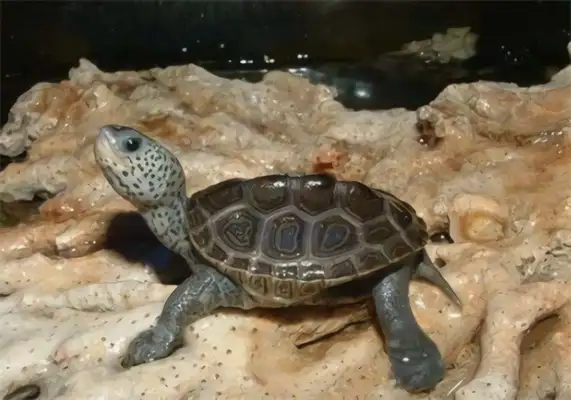
Drill turtle.
While eastern Florida's drilling turtles originate at the United States River and Sea junction, which is a major feature of other species of water turtles, the individuals we encounter are generally wild individuals, many of whom have adapted to the life of fresh water, but mature bodies are better suited to live in seawater.
I. Water quality choices
It is more suitable to feed in sodas (or not shabby), or in waters with a certain salinity, but with a much lower salinity than that of seawater, so that, in order to maintain other people ' s habits, some sea salt can be added to it, and water PHs can be kept between 7 and 8 and can be measured on trial paper. To keep this water quality alive, we can also put some coral sand.
II. Control of water temperature
Control is between 26 and 28 degrees, and in autumn and winter, we need to warm up our breeding, so that we can get room temperature in the summer.
III. Water table setting
At the larvae stage, I was raised with deep water, which was very watery, but with floating islands to rest; as my head grew larger, I now maintained a very low level of water, which was basically above the height of my back armour, and also a site with sunglasses (Sill Island). Here's what the Eastern Florida Drill Turtle Feeds.
It is not very difficult to feed the diamond-dreading turtles in eastern Florida, and many of them feel that this is an easily ill turtle, but in fact any turtle has a process of adaptation that, if successfully passed, can easily be raised.
Food choices
Eastern Florida's drilling turtles are meat-eating turtles, staple fish, shrimp, crustaceans. It is important to diversify foods by feeding small fish, both live shrimp and can normally reward canned shrimps for drying, and occasionally fresh food. Some foreign websites can see feeders growing up as their staples, but some eastern Florida drill turtles do not catch colds, which may differ from individual or early dietary habits.
II. ELEMENTS FOR RESEARCH
Once adapted to the way you raised it, the diamond turtles in eastern Florida grow well, and rarely experience problems such as disease, they are the stronger turtles, but it is important to note that there must be no less sun intake and that UVB lamps should normally be placed. It would be very useful for families in a position to do so to arrange a few days or two per week of sun bathing, so that the installation of terrestrial habitat for the breeding environment is necessary to avoid the problem of dilution in their backs.