Designation: PET4943
English name: Brown Surgeonfish
Origin: Overview of the Indian-Pacific lavender herbivage species
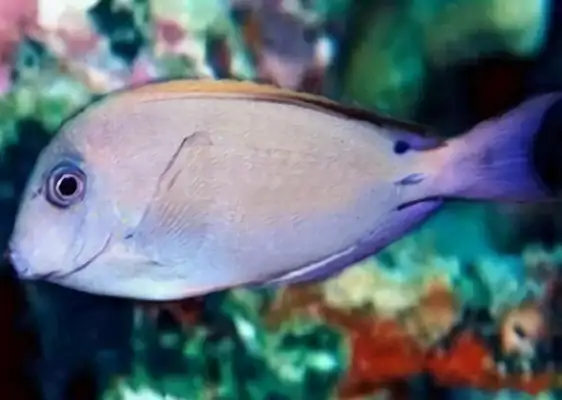
Lavender lavender can grow up to 21 cm, commonly known as moss. Although lavender screeching may be slightly different from one region to another, lavender screeching is awarded because both the ass and tail screech screeching are similar to the lavender colour and are purple.
English name: Brown Surgeonfish
Type: Tropical seawater fish
Origin: India-Pacific
Reproduction: Eggs
Water quality: pH: 8.1-8.4; weight: 1.020-1.025
Difficulty of raising: general
Fits to water temperature: 24 - 28°C in the field, aquarium environment recommended less than 30°C for lavender slinging
The name of lavender is special, and although the lavender is slightly different in color from region to region, the lavender is named lavender because both the ass and the tail are purple as lavender. The adult lavender can be as long as 21 cm. The lavender is strangled in elliptical shape and flatted. The mouth is small, the end is flat, the upper and lower jaws are flat, the teeth are fixed, the teeth are etched. Fish sizes range from purple brown to brown, with yellow spots spread over the head and chest, and black internal lips. Lavender sheathing environment
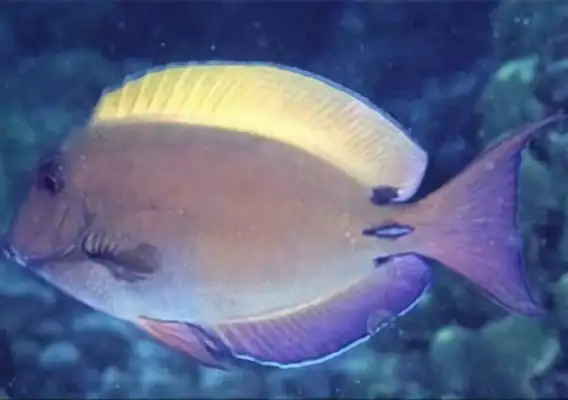
The lavender is strangling and the adult lavender is 21 cm in length, so the artificial raising of the lavender is required to have an aquarium of the appropriate size. In the case of lavender, the method of spawning is that of group spawning.
Lavender is found in waters between 10 and 25 metres deep in clear lakes and surface coral reefs, usually living below the bottom of the wave zone. It is not usually a group, but it is a group that gathers in search of food in order to resist attacks on other territorially fish. It should be noted that lavender slings are toxic and that the raising of lavenders requires a water quality environment similar to that in the wild. Lavender lavender.
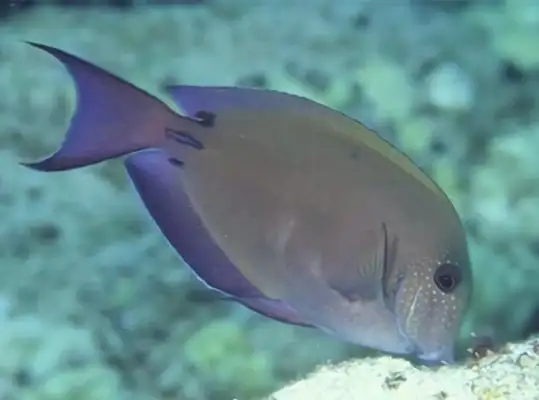
The lavender hangs by the name of the moss, and by name we know that the lavender hangs are mainly fed by algae, and that if the lasagna hangs by hand, they can feed with silk algae as bait.
Many fish friends find it difficult to raise seawater fish, but it is difficult to match water quality. The suitable temperature for lavender hanging in the field is 24-28°C. Therefore, the water temperature recommended for the artificial raising of lavender is less than 30°C, and the amount of lavender suspension and water temperature are also very relevant. In addition, lavender hangings that survive in the field gather in large groups in search of food in order to resist attacks by other territorially fish herbivores.