Designation: PET4457
English name: Red-nicked pond turtle
Character: lively
Nationality: Guangdong, Hainan, Guangxi, China
Vulnerability to disease: decomposition
Life: Overview of species of black-neck turtles around 80 years old
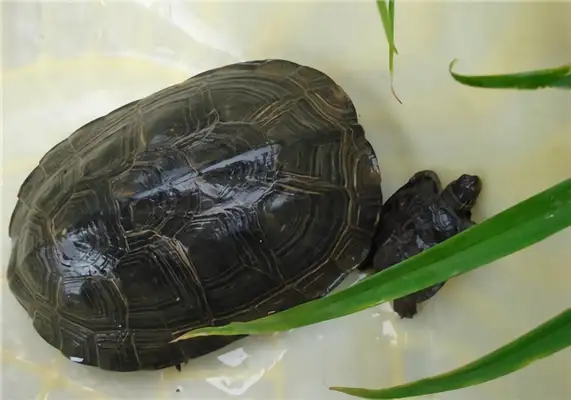
Black-neck turtles are a unique species of our country, and black-neck turtles give a strange taste, so locals also call them stinky turtles, which for a long time have been unbreededed, but in recent years they have become more and more popular with turtles, so the drug prices of black-neck turtles have been moved to the surface, leading to price increases and the scarcity of wild resources.
Chinese literary name: Black-neck turtle;
Latin name: Chinemysnigricans;
English name: Red-nicked pond turtle;
Not to mention: tortoises, mud turtles, triline turtles, watermelon turtles, Cantonese grass turtles;
(a) Context: the animal community;
(a) Gate: vertebrate door;
(a) Amen: Amen for vertebrates;
(a) Outline: climb;
(a) Tortoises;
(a) Sub-Saharan Africa;
Section: Turtles;
(a) Ako: Tourako;
(a) A turtle;
(b) Species: Black-neck turtles;
Region: Guangdong, Hainan, Guangxi, China;
Usually long: 20 cm;
Food properties: Black neck turtles tend to be impurity, foods include insects, screws, small fish, aquatic plants, etc. The food of black-neck turtles is mainly fish, shrimp, earthworms, yellow powder worms, snails, thorium, animal organs, etc.
(c) Temperature: Black-neck turtles are warm and afraid of cold and cannot live long (more than three months) in low temperatures (below 15°C). A suitable temperature of 25°C with ambient temperature of around 18°C for hibernation;
Reproduction: Black-neck turtles lay two eggs each, with an egg length of 51 mm and a short length of 27 mm. The eggs are unknown. Black-neck turtle morphological characteristics
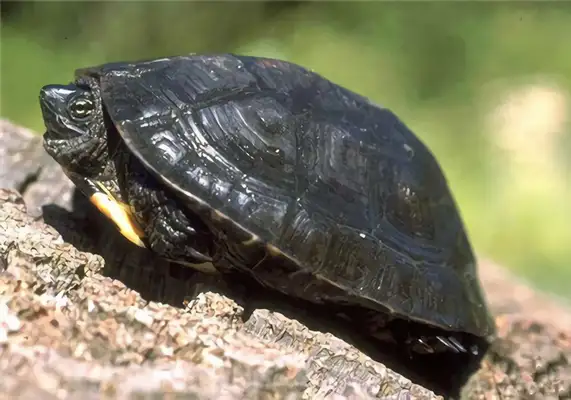
The biggest feature of black-neck turtles is black, which is not just black in the neck, but black in the form of black, which is similar to mature male turtles, unlike black in the case of male and female.
The black-neck turtle is larger, usually 12-25 cm long and 11-19 cm wide. The back is a long elliptical and flat, with a clear line and a no-side. It's tan or black. The larvae's backs are slightly black and brown, and some individuals have a lighter central part of each shield. Abdominal black, larvae, with irregular tan stripes on each side of the shield. Brown, brown or brown grey in the bridge, which differs markedly from the abdomen colour.
The head is large and wide, the kiss is blunt, the kiss is slightly higher than the beak, and it is tilted down inside. The joint angle of the left or right tooth in the bottom is greater than or equal to 90 degrees. The head is black, with yellow and green stripes on the side (orange on the side of the larvae or on the neck). The four limbs are black with no stripes, and their fingers and toes are gilded. It's black and short. The female turtle is larger, has a short tail, and the excretion cavity is closer to the edge of the back of the back armour. The males are smaller in size, have thick and long tail roots, and the excretion cavities are further away from the back edge of the vest. Black-neck turtle care knowledge
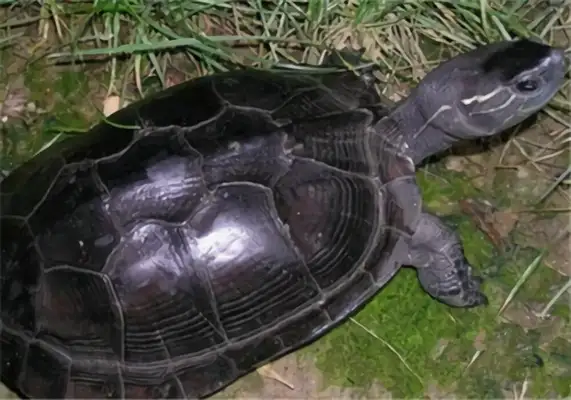
Many people now use black-neck turtles as a means of earning money, which is undoubtedly a very good way of protecting not only wild resources, but also increasing the number of black-neck turtles, but also taking care to grasp the key elements of black-neck turtles so that they do not die.
I. Status of protection of black-necked turtles
Owing to the increasing openness and prosperity of agricultural markets and popular wildlife practices in China's two broad regions, the capture of black-necked turtles has become increasingly intense, leading to large-scale captures of already small populations and their gradual decline.
This category is unique to China and has a narrow distribution, and the prospect of protection without it is worrying. The state of domestication has not yet been reported. See only dozens of Zoos in Guangxi City. In 1964, the Shanghai Museum of Nature acquired a female individual who had laid two eggs in Hainan Island Seaguo City. The species has been included in the List of Land-based Wildlife for National Conservation or of Significant Economic and Scientific Research, published by the National Forestry Administration of China on 1 August 2000.
II. Disease control of black-neck turtles
After growing into 30-50g, the turtle enters the stage. At this point in time, despite the peak in the incidence of infant tortoise disease and the passing of the dangerous period, the risk of breeding technology remains. Neglect of the management of the breeding of juvenile turtles not only hinders growth but also leads to multiple morbidity.
Internal regulation of the nutrition needs of juvenile turtles and external regulation of the ecological environment in greenhouse farming. (c) The tight grip on key rearing management techniques such as “sterilisation, disease prevention, nutrition, promotion” to improve survival and growth.
III. winterization of black-necked turtles
Buried them in damp sand, so as to ensure greater humidity. The hibernation turtles are also subject to occasional inspections. Weak or sick turtles can raise the temperature of their breeding and prevent them from hibernation, and they do not have enough fat to consume during hibernation.
Eating was stopped during the week before hibernation and was immersed with warm water, otherwise the siltation of food and faeces during hibernation in the body could cause gastroenteritis. It is important to ensure greater humidity, otherwise the water will die. The ambient temperature during hibernation cannot be reduced to less than 5°C, otherwise it will die from excessive freezing. The black-necked turtle living environment.
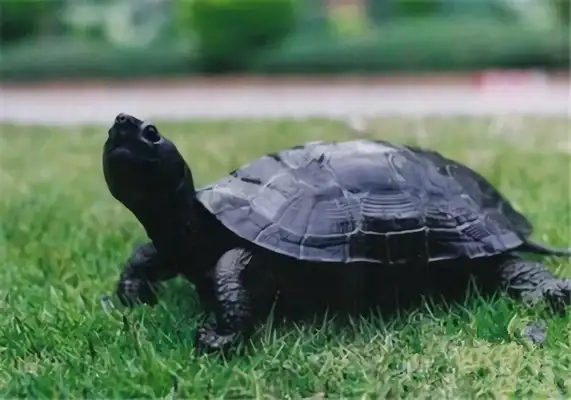
Black-neck turtles, like other water turtles, have different environmental requirements from those of turtles during their infancy, but also require clean water quality, and a brief description of the black-neck turtle environment is given below.
I. Indoor setting of black-necked turtles
In the artificial environment, black-neck turtles are generally treated as water turtles, with small turtles well adapted to the life of aquatic tanks, and shallow aquatic tanks or plastic T-shirt boxes are the most useful breeding grounds for turtle seedlings. Since swimming techniques are not advanced, it is recommended that the depth of the water should not exceed 2 inches (approximately 5 cm) and that a dry high ground for sunbacks should be built at one end of the habitat. So they can breathe under the water without difficulty. Because shallow water is difficult to filter, surplus foods rapidly pollute water quality, a method that requires frequent water exchange.
Black-neck turtles in the natural environment usually tan their backs on logs and rocks, and in the artificial environment, a tan site can be set up with a reflecting light purchased by a hardware store. The lamps should be placed at an appropriate altitude to ensure that the temperature in the light area is maintained at around 32° C, with a full spectrum of fluorescent lamps to provide the UVB light necessary for synthetic vitamin D3 (ccalcium metabolism).
II. Outdoor breeding environment for black-necked turtles
Once the size of the turtle's back is more than 7.5 cm, raising in protected outdoors provides many benefits that are not available in indoors. As black-neck turtles do not fully hibernate, areas where temperatures may be close to zero in winter must be provided with ice-free habitats. The point of black-neck turtle breeding.
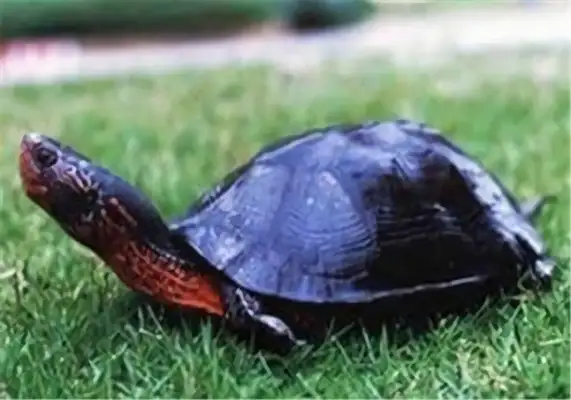
Black-neck turtles are typical groceries, but in raising them we find that they are more likely to eat meat, and it is time to look at water quality protection and avoid intestinal diseases.
I. EQUIPMENT OF THE GUY OF THE RANGE
The larvae eat quickly the food provided. To avoid over-feeding, feeding is recommended every 1 to 2 days. Tortoise seedlings are very diverse, eating insects and melted ice-cream rats, and eating some green leaves and vegetables. As age increases, the share of plants in food increases. Many of the commercial turtle foods available on the market are ideal foods for black-necked turtles. Calcium supplementation is essential to maintaining the health of black-neck turtles. Calcium powder can be spilled on all food. Where commercial turtle food is not used, multiple vitamin supplements should also be used to maintain good fat metabolism.
II. Intestitis treatment for black-neck turtles
The intestinal inflammation of black-neck turtles results in bacterial infections in the intestinal tract as a result of contamination of water quality or deterioration of feed. Symptoms are that the head of the sick turtles tends to look around the right and left, and the faeces are thick and red, and they stink. The appetite is weak, the body is thin.
Treatment: Water change and fresh bait feeding many times a day: muscular injections of gold methin or chlorocin, 0.5 ml per inch per insect, increase to over 1 ml for three days. A small amount of chloroacin or diarrhea feeding is added to the bait.