Designation: PET3455
English name: Pseudemyduraumbrina
Origin: scattered plains in Western Australia
Vulnerability: oral inflammation, aqueous disease
Life: 20-30 years
Price: Overview of the Australian short-neck turtle species 2000-18,000
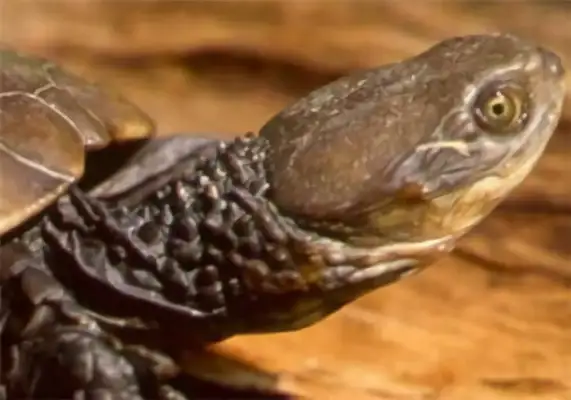
Australia's short-neck turtles have 155 mm long and a weight of 550 g; female turtles have 135 mm long and 410 g long; and juvenile turtles have 24-29 and 3.2 ~ 6.6 g long. Australia's short-neck turtles will have different colours with age and habitat.
The original specimen of Australia's short-neck turtle was collected by Ludwig Preiss in 1839 and sent to the Vienna Museum. The specimen was labelled “New Netherlands” and described and named Pseudemyduraumbrina by Seiberrock in 1901. They were never found before 1953. Australia ' s short-neck turtles are located in scattered plains in Western Australia, ranging from Perth Airport to Brewster, near the Royal Australian Air Force base. Most areas have been cleared for urban or agricultural use.
Context: Animal Animalia
Gate: Chordata Gate
A: Reptilia
Tortoise Testudines
C: Chelidae, the snake's neck.
Yes: Pseudemydura
Australasian short-neck turtle P.umbrina
Australia's short-neck turtles are dormant in dry summers called summers. They feed on insect larvae, earthworms, thorium. World Conservation Union red list listed: Extremely dangerous (CR) Australian short-neck turtle morphological characteristics
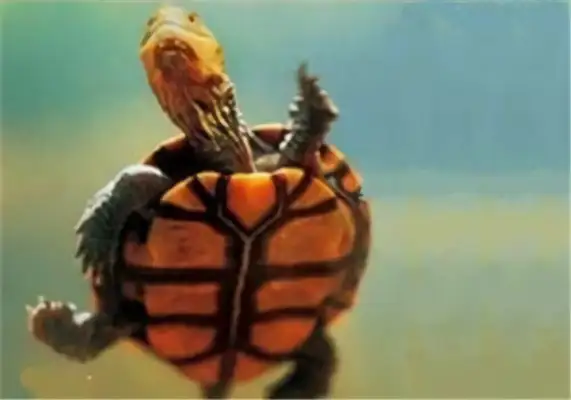
Australia ' s short-neck turtle is a short-neck freshwater turtle and is the only species under the plan. It's a vertebrate door, a climbing platform, a turtle's eye, a snake's neck. They're Australia's smallest snake neck turtles.
Australia's short neck turtles are 15.5 centimetres long and weigh 550 grams. The female turtle shell is 13.5 cm long and weighs 410 g. The turtle shells are 2.4 ~ 2.9 cm and weigh 3.2 ~ 6.6 g.
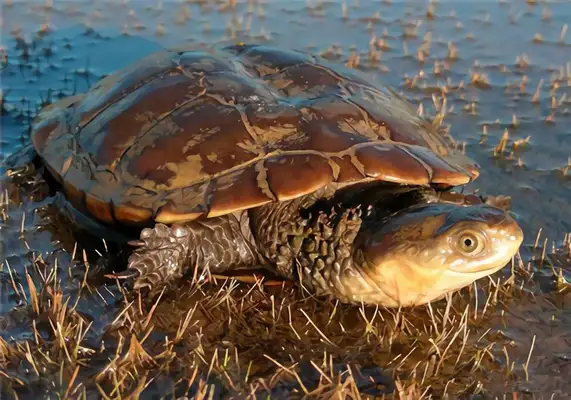
Australia's short-neck turtles will have different colours with age and habitat. The back of the turtle is generally grey and the bottom is white and black. Adult colours range from the yellow brown to the sandy marsh, which is almost entirely black. There are also differences in the colours of the bra, ranging from yellow to brown, and sometimes even black. On the edge of the shield, black, yellow inside, black spots. Their feet are short, they're covered with slabs and claws on their toes. Their necks are short, they have horns. There's only a large plate of shields above your head.
Australia's short-neck turtles are more characteristic, with their throat shields separated from both their throats and their shields, with light brown to black backs, yellow abdomen and their outer abdomen, and black at the stitches of the shields. It can only grow to about 14 centimetres, weighs between 300 and 450 grams and is known to be only 15.5 centimetres and weighs 550 grams, one of the smallest turtles in Australia. Australian knowledge of giraffe care
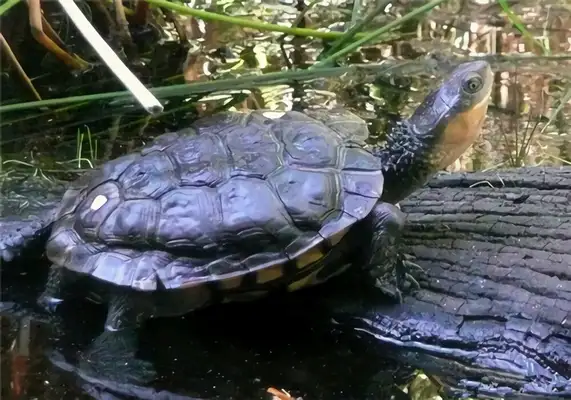
Australia ' s short-neck turtles are extremely dangerous species on the IUCN critical list of endangered species. It is an ancient and unique small freshwater turtle with a spiked and pierced neck, and a turtle's nail is not more than 15 cm long.
The species lives in the Perth region in western Australia, where only two small seasonal marshes have been found and their total number does not exceed 100. Australia ' s short-neck turtles have been in hot, dry summer sanctuaries for months (lower or inactive), followed by breeding and feeding during the rainy season.
Living in rivers, ponds, etc. The back is flater, with a clear elasticity, a sprawl on the side of the head, white on the bottom, neck, inside the limbs and short tails. Two to ten spherical eggs at a time. And when you grow up, you're gonna lose the scales and the shields. The male has a thick tail and the spill hole is far from the edge of the abdomen. The female has a short tail and the spill hole is closer to the edge of the abdomen. Meat-eating, eating fish, shrimp, snails, shellfish, insects, etc.
Australia ' s short-neck turtles are located in scattered plains in Western Australia, ranging from Perth Airport to Brewster, near the Royal Australian Air Force base. Most areas have been cleared for urban or agricultural use. Developments in arable land, housing and mining have led to the loss of many Australian short-neck turtles ' original habitat. The species is also threatened by shorter rainy seasons caused by warming and increasing drought.
After understanding the threat of extreme climate change to Australia ' s short-neck turtle biomeat and habits, the scheme became the only life-saving straw. The plan ' s enhanced conservation and re-introduction of existing wetlands could alter the near extinction of the species. Australia's Neck Turtle Living Environment
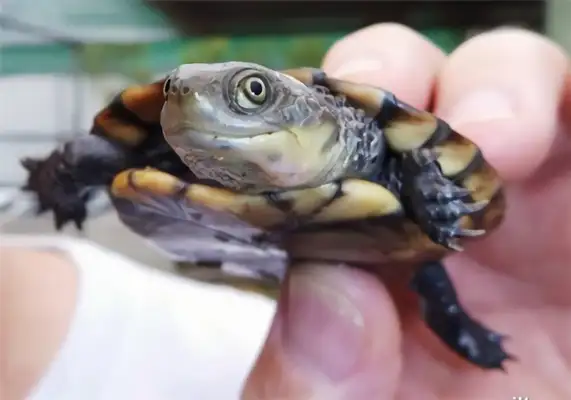
Australia ' s short-neck turtles can be raised in large aquariums with sunback sites and light. The temperature should remain at 72-76 degrees Fahrenheit. You can consider the use of peat and extend some of it to water.
There are indications that if the pH of water is kept at a low level, these turtles can be fine around 6.5 and can avoid some common skin problems, while peat or peat can reduce pH. Some feeders add a small amount of tea to reduce pH.
In warmer or more moderate areas, it would be better if C.longicollis were bred in an outfield with abundant sunlight, ponds and protective vegetation. Short-neck turtles are completely meaty in the wild, eating molluscs, small fish, amphibians, worms and insects. They are well fed by live baits (worms, crickets, feed fish, snails, etc.), dog food and salmon feed.
Australia ' s short-neck turtles live from east to south-east Australia. They can be found in swamps, lakes, tributaries of rivers and waterways with slow currents. Such turtles may migrate to land in the summer, and they are often found on the edge of the water when it rains. Short-neck turtles nested in the spring or early summer, producing 8-24 eggs for approximately 3-4 months. Turtles in wild conditions have a habit of hibernation, but they are still active, even at lower temperatures. The most appropriate growth temperature for Australian short-neck turtles is 23.7 ~32.2 and the average temperature is 27.3. The maximum is 30 centimetres. Australasia short-neck turtle breeding points
Australia ' s short-neck turtles usually eat only live foods, including small crustaceans, insect larvae, etc., at 14-28°C. In the eleventh and fifth months of February, three to five eggs are produced, which take about six months to hatch, and the turtle is 2.4 to 2.9 centimetres to 3.6 to 6.6 grams.
Wild turtles are very edible, including frogs, mice, fish and crustaceans. They need vitamins, thin meat, mice and dried dog food, and of course they're happy to receive canned dog food. The Australian Wildlife Association prohibits the capture of any species of wild turtle. The short-neck turtle is an incredible pet, even if it's just caught in the wild and it'll feed you in a week, and then it'll swim in front of the aquarium when you walk into the room, and it'll swim out of the water when you get close to it. Like many fresh water turtles, they look funny and make the master very happy. Such turtles are particularly suitable for breeding by beginners and by those who are addicted to turtles.
However, Australia ' s short-neck turtles are extremely rare, having once been mistaken for extinction, and at least 400 artificial individuals have been released into the wild since the 1990s. The marshes of origin are usually wet only in winter and spring, and the species grow slowly and generally take more than a decade to achieve sexual maturity. It's an ancient species that is thought to have changed little since the midlife (23 to 5.3 million years ago).