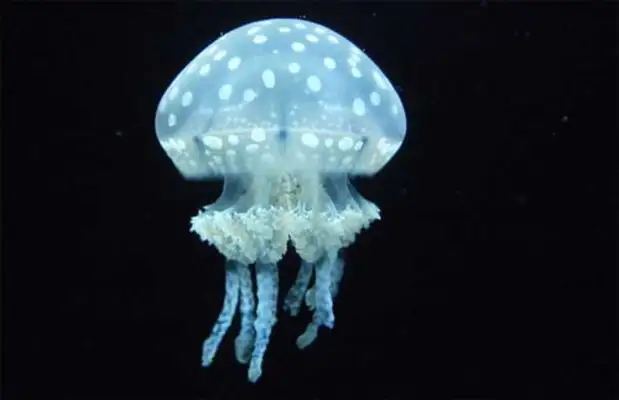
The jellyfish belong to the Cnidaria, and it is hoped that your basic understanding of them is that they have a translucent, mobile body, and that charming umbrella and tentacle. The variety of jellyfish is common, including the Australian jellyfish (Cairns Flamingo Tongue), the purple jellyfish (Chrysaora colorata), the moon jellyfish (Aurelia aurita), and the Chironex fleckeri.
Each jellyfish varies in size, colour, lifestyle and toxicity. Some are mini-sized and suitable for household conservation, while others are highly toxic and need to be handled carefully in a professional environment. Moon jellyfish, because of their moderate character and easier to conserve, are the preferred choice of many new breeders. II. Characteristic characteristics
Jellyfish do not have the traditional “temporals”, they are more like floating art, and as the current slowly moves, they show an elegant, quiet presence. Their “temporal” is expressed in their state of adaptation, response and activity to the environment.
Some jellyfish, such as moon jellyfish, are very gentle, hardly aggressive, do not harm people, but prey on microbes and plankton. Their tentacles and stinging cells are weapons of prey and self-protection, which can cause slight pain and even pain when touched (especially in adjoining jellyfish), so be extremely careful in conservation and observation.
Jellyfish display a static, drifting lifestyle, whose “temporal” can be described as “peaceful”, “gentle”, or “uncontroversial”. III. Livestock techniques
The greatest challenge for jellyfish is to provide a stable and appropriate environment. Environment setting aquariums: It is recommended to use a special jellyfish tank to ensure that the current is warm and not dead. The current must be sufficiently soft to avoid the run-off or injury of jellyfish. Water quality: PH values maintained at 8.2-8.4 and salinity at 1.023-1.025 (seawater standards), requiring regular testing and regulation. Temperature: Depending on the variety of species, it is generally between 22 and 25°C to avoid extreme temperature fluctuations. Filtering systems: Specialized fluid filtration systems are used to ensure that water quality is clean but does not produce strong currents. The bait jellyfish is mainly fed by plankton, such as microalgae and zooplankton. Specially designed jellyfish feed or laboratory-grown plankton are often available on the market. Jellyfish should avoid over-feeding and reduce pollution. It is common to feed small amounts daily to see if they are finished. Maintenance of the weekly partial replacement of water bodies to ensure water quality. Concentrations of ammonia, nitrite and nitrate in water are regularly detected. Keep an eye on water temperature and salinity to avoid mutation. Care is taken to avoid the use of non-earmarked reagents and articles to contaminate water quality. It is operated with gloves, especially when it touches a pedal or toxic jellyfish variety. In the event of an anomaly, the environment is immediately adjusted or professionals are consulted. Hair care? — “Exterior care” for jellyfish
Although jellyfish have no hair, their “look” needs to be nurtured. Transparency and bright colours are key to water quality and environmental conservation. Clear water environment: Clean water quality, avoidance of disillusionment and sedimentation are the basis for maintaining the beautiful look of jellyfish. Avoiding sunlight: a moderate shade of light to prevent UV-induced pigments or algae breeding. Moderately calibrated light: Simulation of natural light cycles can help jellyfish display more natural colours. Regular observation: Identify potential parasitic or polluting signs in a timely manner and take appropriate measures.
In summary, while jellyfish do not need hairdressing as traditional pets do, their “exterior care” is in fact an expression of clean water quality and environmental stability. As long as the conditions are right, they will always maintain that mobility.