Designation: PET3744
English name: Spotted Barramundi
Nature: Violent
Origin: Northern and Eastern Australia
Vulnerability to diseases: albino disease, rotting tail disease
Life: Overview of the Australian Star Point Dragon variety, 3-4 years
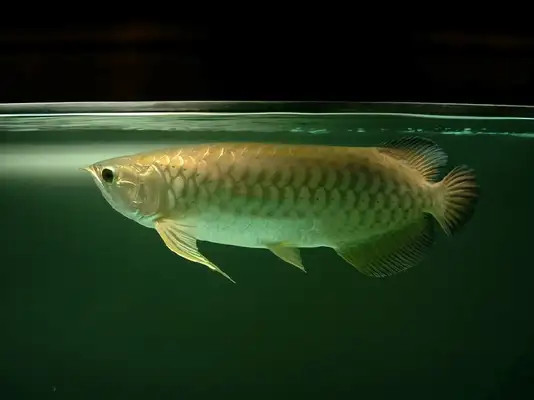
There are two species of Australian dragonfish, Starflies and Starbucks. Since Australia's starlfish are also part of the dragonfish species, the rearing points and the environment are similar to those of common dragonfish. Australia's Starspots are night fish and sexually violent.
Name: Australian starfish
School name: Scleropage
English name: Spotted Barramundi
Origin: Lives in the northern and eastern parts of Australia, respectively. Because of the small differences in appearance, it's common practice to call it an Australian star, a Australian star.
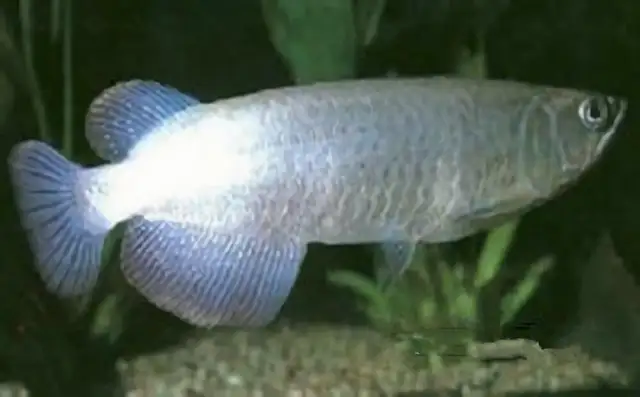
Australia's starfish is also a dragon, so it's also a large fish, and Australia's starling dragon is cruel and can bite fish much larger than it itself. The Australian Starspot is a night fish, and the juvenile fish is beautiful.
The dragons are 50 centimetres long, produced in eastern Australia, are very similar to star-marked dragons, the juvenile fish are extremely beautiful and small in the head, and there are many red star spots on their sides, asymmetric fins, back fins, tail fins with gold-coloured star spots on their sides, and Australian starfish are colored in silver with beautiful yellow in their yellow colours, their back fins are olive blue and their abdomen are silver-colored. Every fin has a black side. Night fish. In recent years, the Australian Government has done so in large numbers. The fish is so hot that it bites fish much bigger than it.
Australia ' s star-point dragons are produced in eastern Australia, similar to star-marked dragons. The juvenile fish are extremely beautiful and small in the head. There are many red star-shaped spots on the side of the body, gold-coloured ass fins, back fins and tail fins on the side of the body. Fish are colored with beautiful yellow in silver colours, olive-coloured back fins and silver light in the abdomen. Every fin has a black side. Night fish. In recent years, the Australian Government has done so in large numbers. Australia's Star Pointing Dragon Feeding Environment
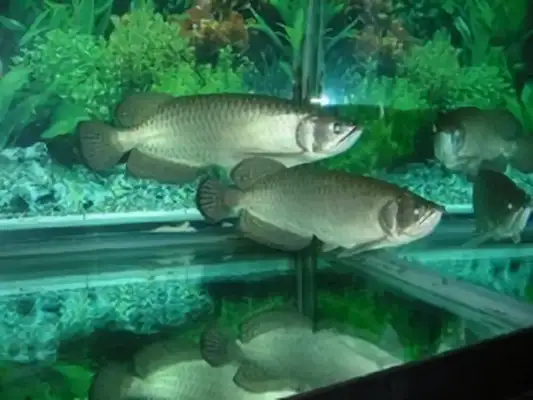
The Austrocs need to be careful to change their water by at least 20% a week, not to change temperature and PH values. You know, for fish, water quality is very important, so that your Austrocs can grow healthy.
The survival of starfish requires weak to neutral water quality and hardness requires soft water (with little impact). PH values between 6.5 and 7.5 and DH values 3-12. Water temperature can be 24-28 degrees Celsius. nitrite content and chlorine content should preferably be zero.
When the new fish has just been bought, the air pump in the fish tank is run for at least 24 hours to completely eliminate chlorine gas from the water. If biological filters were used, it would be preferable to keep water at PH 6-7 and 25°C. Add small salt to the fish tank (approx. 1 or 2 tea spoons added to every 5 gallons or 20 litres of water) to reduce the risk of fungi attacks and to make fish healthy and improve their appetite. If so, it would be preferable to get water back in the original tank of the new fish (if there is no problem with the original tank) and one third of the water has been recovered to facilitate the adverse reaction of the new fish to environmental mutation. It is recommended that the dragonfish be raised from childhood. Austronics feed the food.
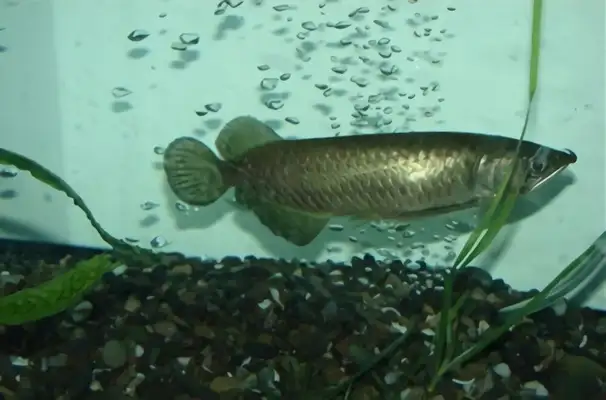
A lot of fish friends worry about the problem of keeping them alive when they get home. Australia's Starfinders are meaty animals, like dragons, so habits make Australia's Starfinders very fond of live baits, but a lot of live baits can cause Australia's Starfinders to pick up. So it's time for Australia's Stars and Dragons to eat something that's very important to fish friends.
Australia's star-point dragons eat too hard and crash into one angle of the tank to cause injury, preferably feeding in the middle of the fish tank. Austronics are meat-type animals, and most of Australia's starling recipes are frogs, mudslides, crickets, goldfish, grasshoppers, shrimps, etc. There is an additional problem with feeding, such as red dragons, where red arrows or shrimps are fed to some extent, because red arrows and shrimps contain redin. Young fish below 12 centimetres have just started eating bait, and at that point you can feed white bread worms, shrimps (which must be cut off at the end, preferably with shrimp balls to feed them so as not to hurt their stomachs), blood worms, and so on.
If you don’t eat more than one day, you can feed four times a day, and the little Australian starling dragon can feed normal breadbugs and shrimps (preferably the shrimp sword) and one. Five centimeters of little fish. At this time, Australia's star-point dragons are growing rapidly and at an alarming level. The number and volume of bait delivered could be increased appropriately. Over 20 centimetres of Australian starling dragons can feed larger fish, shrimp, mud, meat, etc. Live baits, such as insects, can also be fed, which are the food of the Australian Starflies, but be careful not to contaminate them. In addition, the internal organs, especially the liver, are not suitable to feed the Austrocs, and their higher fats cause the Austrocs disease. Goldfish in the live bait is not a good bait, and studies show that goldfish are almost exclusively infected by infectious diseases or parasites that are fed in small aquariums by Australian star-point dragons that specialize in goldfish.
Artificial baits are best used with less fat beef, but if you have the conditions, you can buy the finished Austrostar bait. But at the beginning of feeding artificial feed, the Australian Starfinder would be very uncomfortable and would need artificial bait.