No.: PET5380
English name: Asian Yellow Pond Tourle
Character: Wimble
Nationality: in my country, mainly in the South; Abroad, mainly in Viet Nam and elsewhere
Vulnerability to disease: Decay
Life: 50-80 years
Price: A brief description of the species of yellow throats
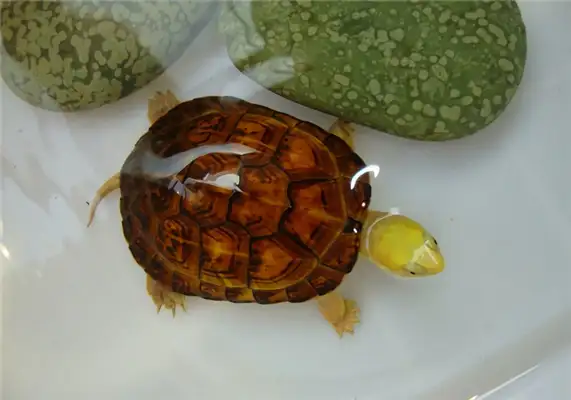
Yellow-throat turtles, one of the most popular species of turtles, are widely distributed in our country, and their prices fluctuate, sometimes at hundreds and sometimes close to a thousand, but in any case they do not stop people from loving it.
Yellow-throat turtles, also known as yellow-throat turtles, rock turtles, stone money, yellow-board turtles, fragrance turtles, etc., are among the most widely distributed and common in our country, except for grass turtles, and are of high appreciation and important medicinal and food value. Its mode of origin is in the Zhejiangzhou Islands.
Chinese literary name: yellow throat turtle
Latin name: AsianYellowPondTurtle
Don't call it a rock turtle, a rock money turtle, a water turtle, a cedar turtle, a yellow turtle, aromatic turtle.
Two words: Maureensmutica
Gate: Pipeline gate
Programme: climb
Tortoises.
C: Turtles
Yes: tortoises
Castes: yellow throats
Distribution region: in my country, mainly in the South; Overseas, mainly in Viet Nam.
Characteristics of the body: The yellow throat is approximately 15-20 cm long and is elliptical.
Lifestyle: Close to grass turtles, most of the daytime is in water, sometimes on the shore, sunbaths, nighttime activities and food.
Eating habits: it is impregnable, it takes a wide range of food, and it prefers animal feed. Yellow throat water turtle morphology
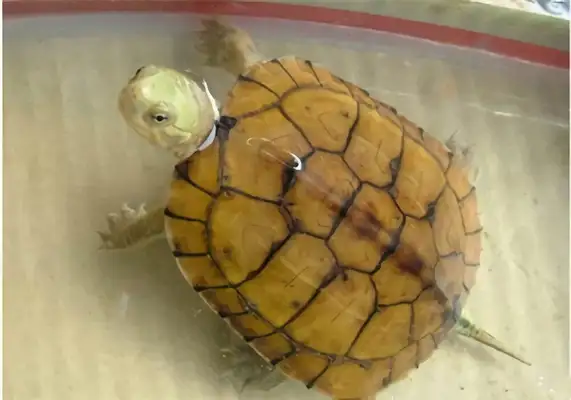
The yellow-throat turtle is called a rock turtle, and some people call it a money turtle, looking at it as an incarnation of a good wish. Why do they have these nicknames? The main reason is its appearance. It's a turtle that changes color.
Yellow larynx turtles have about 15-20 cm long, small heads, smooth heads, olive greens, straight dents in the upper beaks, clear drums, two yellow threads on the side of the head through the eye and light yellow on the throat. The back is flat, brown and green or brown and black, with three ellipses, one of which is more visible in the centre, and has a slightly sawn tooth. There are large ink stains on the outside of each shield. The limbs are flatter, brown gray on the outside, yellow on the inside, five fingers on the front limb, four toes on the back limb, thongs between the toes, short tails.
Yellow-throat turtles grow in a coloured way, with the fastest change in head colour. The colour of the head of the yellow throat turtle may change significantly during the active season if the habitat of the yellow throat is altered in a few weeks or less. It was also found that in the original habitat of yellow throats, approximately the same age group of yellow throat turtles, which inhabit the same stream, have essentially the same colours of limbs and crust. If you live in a stream full of pebbles, the husk of a yellow-throwing turtle will gradually turn black, as if it were a pebble in a stream. Conservation knowledge of yellow throats
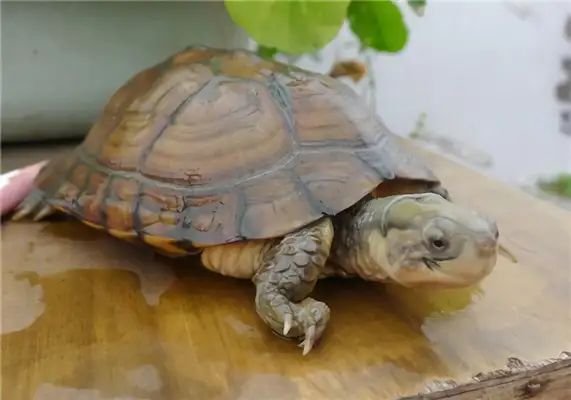
Yellow throats are strong and resistant to hunger. They are surface amphibians, but they live more in water. The natural resources of yellow-throat turtles are now increasingly depleted, and the early development of artificial farming and breeding is essential.
I. Options for turtles
Precious turtles are better purchased from the farm, as the farmer ' s domesticated turtles are adapted to the conditions of artificial rearing and are highly active. If acquired from the market, it would be appropriate in May-August, and check the health of the turtle and whether there are hooks in the mouth. In general, healthy turtles should have three conditions:
1. Responsive, bright, full of muscular limbs and flexible, capable of holding themselves up rather than dragging their abdomen;
2. No trauma or ulceration;
3. Put turtles into the deep sea and they sink.
II. Daily stockbreeding management
1. decoying: Yellow throat tortoises are impregnable and eat widely. Under conditions of artificial breeding, meat may be fed to animals such as small fish, poultry internal organs, or mixed feed may be fed, but adaptation periods may take some time. The first feed should be mixed with fresh bait and mixed feed, condensed into clusters, placed by water and fed several times in succession, and then fed directly to mixed feed once most turtles had adapted. As yellow throat turtles feed in the water, it is appropriate that food be fed on the table next to the water, usually at 5 per cent of its weight. Feeding times vary from season to season, between 4 and 5 October at around noon, June to September at around 8-9 a.m. or 6 p.m., and July at a boom season for turtle spawning, which should be increased.
2. Water quality management: Small-scale rearing ponds exchange water weekly, large ponds release part of the old water every 2-3 days, add new water and spray with 20 mg/furan ketone or 10 mg/L lime water per week.
3. Day-to-day management: Daily management should include on-the-job inspections and records. Patrols provide information on turtles ' activities, growing and feeding, one each morning and night, randomly sample the health of two to three turtles and record temperature, water temperature, activity, disease, feeding, etc. Yellow throat water turtle living conditions
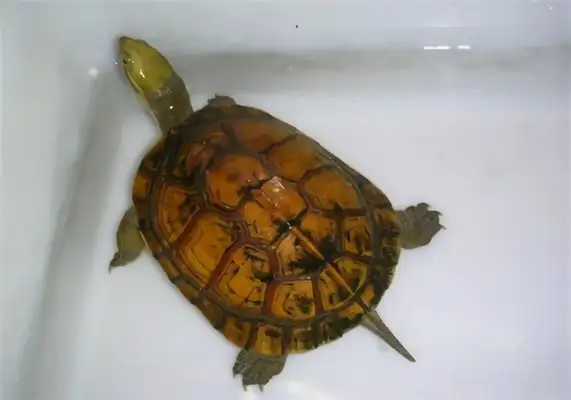
The yellow throat turtle is a stinking turtle, not because it stinks, but because its urine stinks, so it tests the quality of water, which likes to tan, so it has to be given a reasonable space to live.
I. Choice of breeding containers
The rearing containers take into account material and size. Individuals believe that better boxing, easier water exchange, and translucent materials also prevent sunlight and enhance turtle security. Sizes can be chosen by their own senses, and you don't have to worry about scientific data such as rearing density, just like our homes, you feel right. It should be noted, however, that overcrowding affects the growth of turtles, and that there is no sense of safety in space. The water can't be too deep, but it's enough for the turtles to come out of their noses.
II. Settings in rearing containers
A tanner shall be installed in the rearing box. Yellow throats love the sun! The sunstand is best used as a big pebble, and turtles can “wow their claws” as they climb to avoid the length of their fingernails. Some yellow throat picture nails are often seen in the forum as “extremely long”! It is extremely undesirable for a person to feel that a friend who has raised a bird should know that he has to fix his claws regularly, as do turtles. In natural growth conditions, turtle nail lengths must be sharpened, and this is one of the lessons to be learned in determining whether turtle pets are “live”. The tortoise nails should be trimmed, with only three quarters of the tip of the finger.
An appropriate amount of water is fed with “slubber”. Personally, it is considered very good to keep the water in the box. Not only can water be purified, the sun covered, but turtles can eat directly. It's more beautiful!
Water quality requirements
1. Despite the low demand of yellow throats for water quality, you have to pay attention to the healthy growth of turtles! Chlorine gas in the piped water has an impact on turtles, especially in areas where water quality is different and chlorine levels vary. Fish-raising friends know that when water is replaced, the body is filled with bubbles, “head-heavy”, followed by blood from the fish, and then “ hanging up” in a little while. So, water for taps is subject to more than a day of “crawling water” before changing it for turtles.
2. The personal perception of water exchange frequency is two to three days.
3. Every morning, water impurities are extracted from the web. The yellow throat feeder.
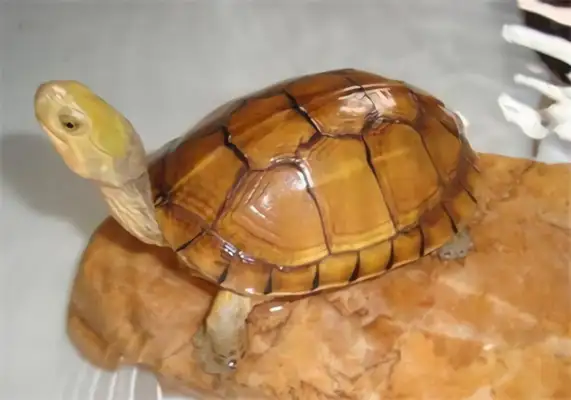
Although yellow throat turtles are impregnable, in practice, artificially fed yellow throat turtles rarely eat vegetable food, and yellow throat turtles are very fond of shrimp, and shrimp is a good food option for yellow throats, so they can be considered.
Food choices
Yellow-throat turtles are impregnable, with a wide range of feeding and a preference for animal feed. Animals are fed to poultry, pork and internal organs, mixed feed, and plants to melon fruit and vegetables. The yellow throats feed in water, and when eating, climb close to food, stare at it, then stretch out the neck, bite and swallow the food. If the food is too large, it is torn with two front claws and then swallowed.
II. Frequency of feeding
Yellow-throat turtles are fed once a day at 7-8 points a day. Home-breeding turtles have a small amount of activity, so they can't feed him enough to digest him one day and feed him the next.
III. Feeding time
It's best at 7:00 or 8:00 in the morning, when the tortoise eats, the sun is high, the stomach is full, the sun is tan, the sun is tan!