No.: PET4906
English name: Ceratophrys cranwelli
Origin: Grand Canyon, Brazil, Argentina, Bolivia
Epidemic diseases: anchor disease, aqueous disease, albino disease
Life: 5-6 years profile of frog species in South America
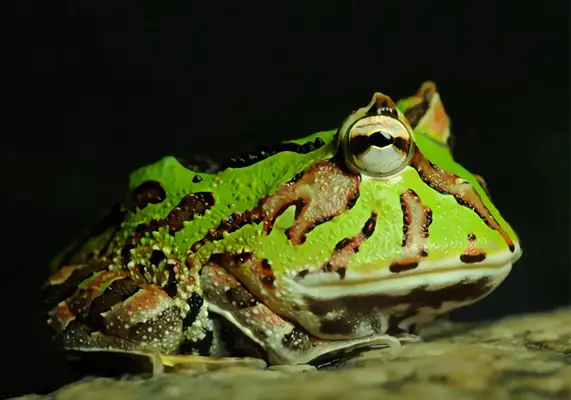
Frog.
In addition to the horn frog, South American frogs are the most common frogs, and those interested in frogs may also see many South American frogs on the market. The South American horn frogs are from South America and are more common in Brazil, Argentina and other countries and belong to non-dangerous species. In addition to South America, South American horn frogs are found in many other places as a result of human rearing.
For many, South American horn frogs are somewhat strangely grown, with short limbs and large bodies that appear to be less in harmony, and with their pellets all over their bodies, those who do not like them simply want to go far. However, as one of the largest pet frogs to be raised, South American frogs also have many advantages, such as the difficulty of raising South American frogs, which is certainly a good option for some newcomers.
Under the natural environment, if caught in the dry season, the South American horny frogs would go underground to sleep, and once the rainy season was short and full of rain, they would go underground and begin to breed the next generation.
Chinese literary name: South American frog
Two words: Ceratophrys cranwelli
Context: Animals
Gate: Pipeline gate
Amen: vertebrate Amen.
Programme: amphibious programmes
ANALYSIS: SLUE ASPECTS
Objective: No tails.
AA: New Toad
Section: Toy Section
Species: characteristics of the South American horn frog shape
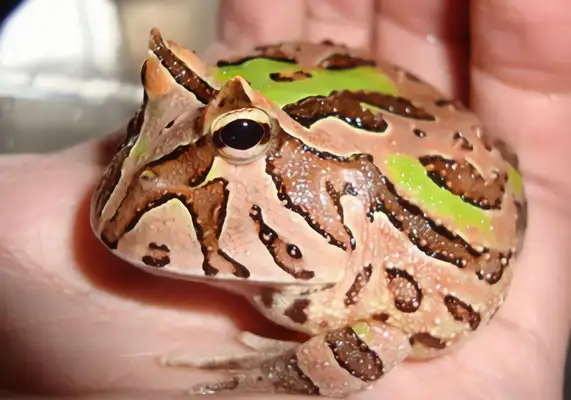
South American horn frogs are a very reminiscent animal, and first we can see them as large frogs, with a size of up to 150 mm and not less than 75 mm. Although large, masters do not have to prepare too many frogts for them, because South American frogs are used to “sitting” life, even in small space.
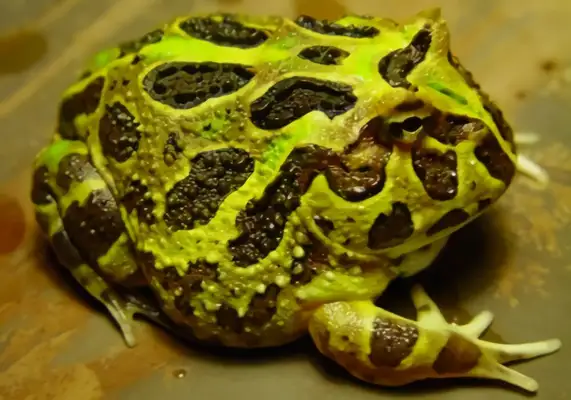
Second, the South American horn frog is also a “pretty” frog. In general, the colours of South American horn frogs are green, yellow and yellow, and they have irregular stripes of brown, black and brown. Many people like them because of their appearance.
Thirdly, the size of the South American horn frogs is too incoherent, and for some, the short limbs and fat bodies of the South American horn frogs seem to be a little out of step, although this does not affect the love of those who love them, and even some people love them at first sight because they do not.
South American Cape Frog Characteristic Description
Length: 75-150 mm.
Body colour: The background colours are fresh green, yellow, yellow and brown, with brown and brown stripes.
Head: Big.
Face: Y stripes.
Eyes: Angular bump above.
Mouth: Big.
Body: Entire pellets.
Four limbs: Short. South American frog conservation knowledge
South American horn frogs come from hot South America, but that does not mean that they can also enjoy the sun's bath when they are raised. In fact, when raising them, the owners try to avoid the direct exposure of South American horn frogs to sunlight. When summer comes, the owner puts the frogtray in the cool air, not only to avoid direct sunlight, but also to keep the South American horn frog away from high temperatures, which is a double advantage.
Those who have some knowledge of the frogs in South America will know that the frogs in South America eat other frogs, so that in order to avoid the tragedy of the frogs in South America eating other frogs, the master must refrain from raising them together with other frogs or frogs of very different sizes. In addition, there was the host reaction that he had been bitten by South American frogs while feeding them, and that some South American frogs would bite you. If that happens, you can soak them into the water, and in a minute they'll untie your mouth.
In placing frogtrays for South American horn frogs, some owners would like to bring their inner environment as close as possible to their original ecological environment, so they would put some stones in them, etc. It is particularly important to note that there must be no hard-earned stones in the frogt, otherwise the South American frogs may be injured during their activities.
The regular cleaning of frogts is an imperative for the masters to provide a privileged living environment for the frogs of South America. In cleaning up the frogtray, the master must first move the South American horn frogs to a clean place and then clean up the frogtray. The masters do not come into direct contact with the frogs of South America when moving them, and if they come into direct contact with the frogs of South America, the master washes his hands. In addition, once the frogtray has been cleaned, the master has to wash his hands. South American Cape Frog Living Environment
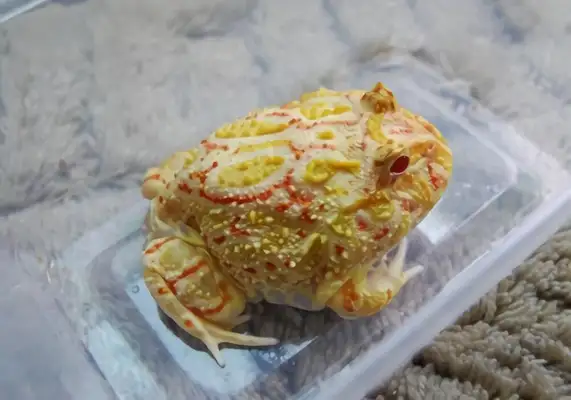
The difficulty factor for raising South American horn frogs is low, so they are well suited for new breeders, although while they are well nourished, the masters cannot ignore the environmental work of South American frogs. For South American frogs, too much space is not really necessary, because they may sit in the same place for a long time each day, so those who want to raise South American frogs do not worry that they will take up too much of your living space.
Although the South American horny frogs do not have the same size as their dwellings, they are less vague when confronted with water problems. To live in a space of water, the water in the frogtray is not too much, and the water is based on the principle of not less than half their height. In addition, wet moss or sponges may be used to lay high above water. During the rearing process, the owner is required to keep the water clean and, if any problems arise, to change it in time.
The desirable growth temperature of the horn frog in South America is around 27 degrees, and during the higher temperatures, the owner is required to put the frogtray in a cooler place, while in the lower temperatures, the owner is required to keep the temperature. In addition to some requirements for environmental temperature, the requirements for humidity are equally high in South American horn frogs, and in order to avoid low wetness in frogts, the owners need to spray water regularly in frogts.
To make South American frogs live better, the owner also needs to watch the cleaning of the frogtray. Are there any food residues in it, and if so, you have to clear them in time, otherwise there is a risk of affecting water quality, etc. It's a cumbersome job, and if you're not a patient person, then you're not going to raise a South American frog. South American horny frog feeding points
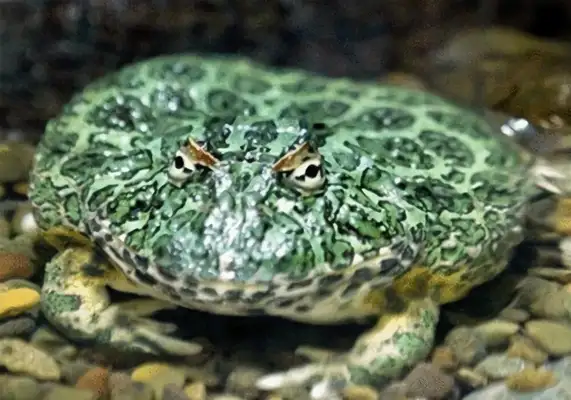
Look at the big mouth of the South American horn frogs, you can imagine they're very edible animals. In the natural environment, South American horn frogs eat a lot of food, they eat insects, they eat lizards, and sometimes even other frogs. But South American horn frogs are not active animals, and they usually sit quietly in a suitable place to wait for the moment, and when insects like them pass through, they hunt.
Because they have a lot of food to eat, the owner has nothing to worry about while raising. For the smaller South American horn frogs, the owner can buy crickets to feed them in the pet market, in addition to earthworms, goldfish, etc., which are acceptable to them; for the larger South American horn frogs, the owner can feed them to the mouse, but not to feed them too often, once a week.
If the frogs of South America are fed with live bait, they tend to feed themselves. And if it is not living baits that feed the horn frogs of South America, the master can shake them around with a sling in front of them to stimulate the frogs of South America.
Feeding to frogs is also a regular practice, with mornings and evenings being the best feeding time, and at other times South American frogs may also eat. Although South American horn frogs are good at eating, masters do not over-fed them, which may cause not only the back-up of South American horn frogs, but even the death of South American frogs, whose health is best served by a scientific diet.