Designation: PET5691
English name: St. Vincent Amazon
Vulnerability: respiratory, digestive diseases
Life: Overview of the species of parrots in St. Vincent ' s 5-6 years
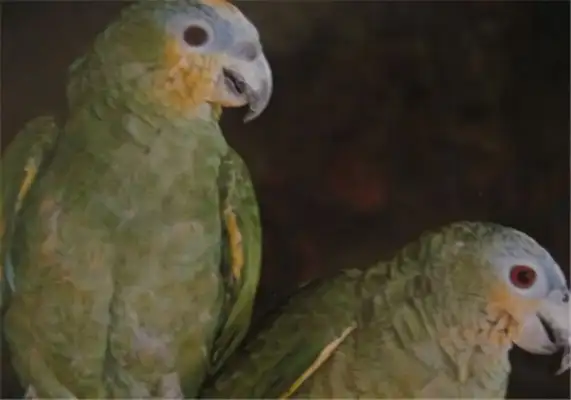
Speaking of the brightest and brightest parrot in the feathers, the St. Vincent's parrot, the larger parrot, whose feathers are colourful, known as one of the most beautiful of the parrots in the Amazon, has become extinct due to the fragility of their small island environment in the wild. This has led to a decrease in the number of livestock raised.
Chinese literary name: Saint Vincent and the Grenadines
English name: St. Vincent Amazon
Context: Animals
Gate: Pipeline gate
Amen: vertebrate Amen.
Programme: Birds
APA: Today ' s APA
Look: Parakeet.
Section: parrots
The Amazon parrot.
Distribution: St. Vincent ' s Island, located only in the small Antilles in the Central American Caribbean Sea. St. Vincent's Amazon parrot form.
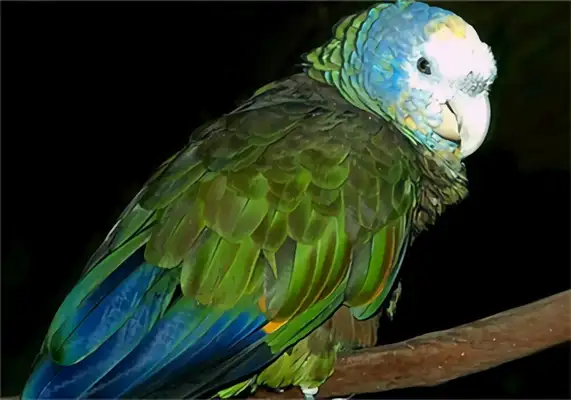
The ideal length of the Amazon parrots in Saint Vincent should be around 41 cm, the ideal weight should be between 660 and 700 g, and the weight of the parrots, because it is larger than that of the other parrots, has changed significantly in their feathers, which can be classified essentially as green, orange and brown.
The front, head and eye parts of the parrots of St. Vincent are slightly light yellow, which connects behind the neck with orange yellow, with blue purple on the cheek, throat, ear feathers and over feathers, with the feathers of the neck spread from green to olive green and a little black on the edge; the chest and lower abdomen are brown, each with a narrow white edge; the feathers below the tail are yellow green; the feathers below the shoulder, under the back and above the tail are turned to blue brown to green olives, with the feathers on the tails being green; the first half of the main flight feathers of the wings are green to brown, followed by orange yellow browns, with the final blue purple; and the flight feathers on the inner side are green to green blue purple feathers. The tails are blue purple and orange bottoms, which then spread from yellow to orange; the beaks are white and the iris are orange red. Saint Vincent and the Amazon parrot lives in an environment.
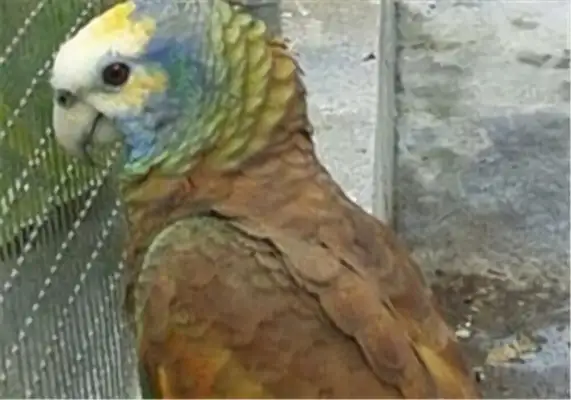
St. Vincent's Amazon parrots have very high temperature requirements, especially in hatching parrots. As a result, the fertility rate of these parrots is very low, making it difficult for the general population to breed successfully. The limited number of birds added to this has made the purchase a major challenge, and the prices sold are very high.
Saint Vincent's Amazon parrot prefers to dwell in the humid forests of the island and in valleys between 300 and 700 metres. There is also a preference for activities in forests that are not very thick but still have trees to hide. Often acting alone or in pairs, they sometimes gather around 30 groups, preferring to dwell on the top of tall trees, whose feathers provide a good cover, but whose noisy voices are easily discovered. Areas not being hunted can be observed to a limited extent and usually only fly when eating and fighting. In the morning and in the afternoon, a loud cry will be heard, and if there is a dangerous situation or a warning from one's companions, the whole body will fly and make a warning. Sometimes they scream when flying, they're rather noisy parrots. St. Vincent's Amazon parrot breeds knowledge.
Even though Saint Vincent's parrot breeding rate is low, are you afraid that if you're right, it won't work? To put it bluntly, Saint Vincent's Amazonian parrots have stricter requirements for temperature during breeding, and this is followed by feeding, so there is no problem of adding some complementary foods to the two. St. Vincent's parrot breeds in the form of eggs. The reproductive period in the wild is from March to July, and the reproductive period of the artificially raised Amazonian parrots begins about spring. St. Vincent's macaw feeding point.
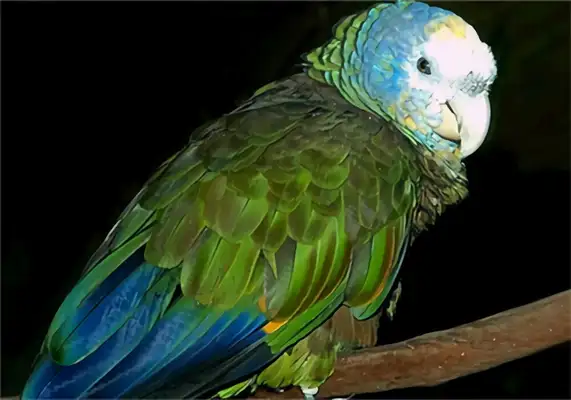
Not to mention the domestic market, even the international flower market does not necessarily see a shop for the sale of Saint Vincent's Amazon parrot, so it becomes a dream bird of many who love Saint Vincent's Amazon parrots. Not only is it expensive, but even reproduction is a major problem for Saint Vincent's macaws.
In the wild, the foods of the Amazon parrots in St. Vincent are mainly seeds, berries, nuts, palm trees, flowers, plant buds, etc. Home-grown parrots in Saint Vincent and the Grenadines generally recommend feeding, with snacks based on common fruits, nuts, etc.