Designation: PET5461
English name: Glyptemys insculpta
Character: Smart, interactive.
Origin: Distribution in North America
Vulnerability to disease: decomposition
Life: Overview of species of carving turtles, 50-100 years
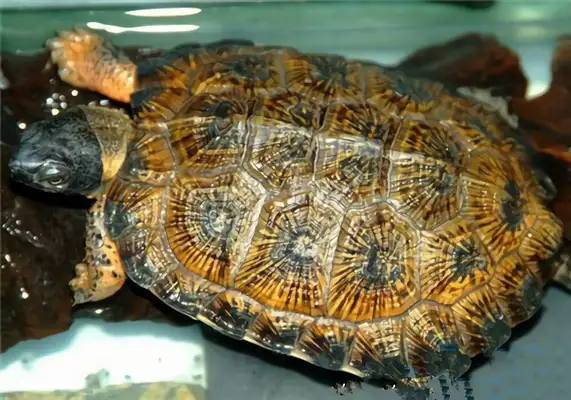
Wood-carving turtles are born in the United States, and raising them is not difficult, but expensive, known as the world's smartest turtles, highly interactive with their masters, environmentally resilient, medium-sized and popular.
Chinese literary name: Wood sculptor turtle
English name: Glyptemys insculpta
Two words: Glyptemys insculpta
Context: Animals
Gate: Pipeline gate
Programme: climb
Tortoises.
K: Zetoru
For: Wooded turtles
Speculation: Wood sculpted turtles
Distribution: North America, Nova Scotia, to the north of Virginia, and to the south of Québec and the Great Lakes region, which are not connected to the west, up to the east of Minnesota and the north-east of Iowa.
Living environment: cool creeks, red marshes, swamp pastures, and rural farms in forest land.
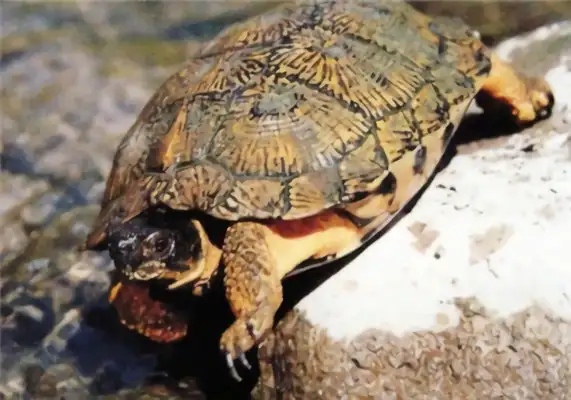
morphological description: back-clothed brown, elastic, rather rough and slashy. The abdominal yellow, usually followed by black stains along the edge of the shield; there were no chains.
Food: Wood sculpturing turtles are typical greasy turtles, animal baits such as insects, fish, shrimp, earthworms, snails, snails, and strawberries, blueberries, etc., and fruit, and wild mushrooms are daily staples. Basically, they are active feeding turtles, which are fed as long as they have access to imported food, so that artificial feed can be easily accepted and there is no problem with feeding. They are also very resilient to the artificial environment, which is considered a healthy turtle.
Reproduction: spawning between May and June; 6-8 eggs per nest, elliptical, flexible shell, 1 5/8 " (41 mm). Shells from September to October. But in the north, it's possible that the turtles will get through the winter in the nest. Wood sculpture characteristics
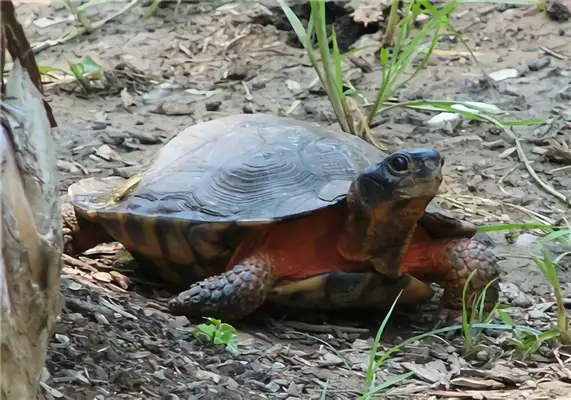
Wood sculpting turtles, which were once considered to be branches of profit-making water turtles, have been distinguished by separate species of wood sculpting turtles, which are semi-aquatic species, after expert studies have found that the genes of the two turtles differ.
I. THE LOOK OF THE HOLDOWER
Wood sculptor turtles can live 24 cm long. They're brown, their shells are carved, and they're shielded with a cone. They have two dominant forms: the orange-colored foot, yellow-ringed pupils, and the yellow-shaped, black pupils. Yellow feet appear to be scattered in the west. Their tortoises are much larger than their bras. The female tortoises are longer than the tortoise shell, which can be used as a gender recognition. Adult carving turtles are more sexist. The male has a long tail and the excretion cavity is later in the tail. Male turtles also have longer claws and the extent of dentures in the chest is more pronounced. It's hard to tell the sex of the turtles until they reach 4-5 inches.
II. Distinction between wood sculpting and profiting water turtles
Wooded turtles range from small to medium size: An adult male can grow up to 9.4 cm (3.7 inches) and a female to 8.9 cm (3.5 inches), while a wooden carving turtle, regardless of sex, can grow to 14 cm (5.5 inches) to 20 cm (7.9 inches). The adult fish turtle weighs 110 grams (3.9 ounces); and the carving turtle weighs on average as much as 1 kg (35 ounces). Smaller-sized and bright spots on both sides of the neck can be distinguished from fish turtles, while wood-sculpting turtles have important features from grey to black on the head and orange on the abdomen. Wood sculpting turtle care knowledge
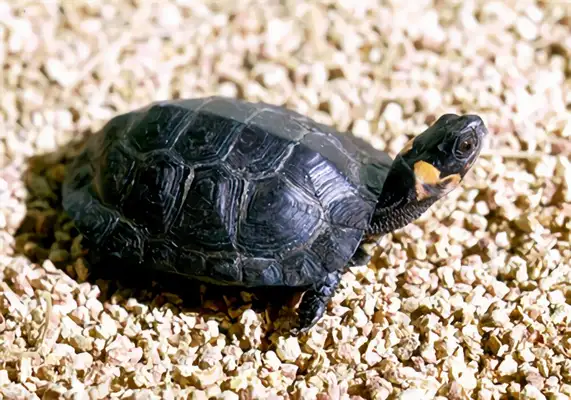
Based on the distributional characteristics of the carving turtles, which can be judged by their environmental needs, and which are located in cold areas, the tolerance temperature is low, but relatively short in time for their activities, during which time they complete spawning and breeding.
Distribution of wooded water turtles
Wood sculptor turtles are the largest of the Clemmys. There are two major regions, one extending to Canada in the north-eastern states of the United States, and the other in the area around the Great Lakes, which is quite extensive. Because the distribution area is close to the cold zone, North American wood sculptor turtles are particularly able to withstand cold turtle species that are active even at 5°C, although they usually eat at more than 15°C. If the temperature is less than 5 degrees, they will still sleep in the mud at the bottom of the river.
II. Cultivation of water turtles
Wooded water turtles lay eggs between May and June; each nest contains 6-8 eggs, which are elliptical, flexible and 15/8 " (41 mm). Shells from September to October. But in the north, it's possible that the turtles will get through the winter in the nest.
Wooded water turtles are also not difficult to breed, with female and male identification usually similar to that of other species of the same species, with larger male tails and a slight dent in the abdomen. Female turtles usually lay eggs once a year, each giving 5-13 eggs for a relatively short incubation period, which can be hatched at about 40 days at 30 degrees Celsius. It is noteworthy that, according to expert studies, the sex of wood sculptor turtles is not determined by the incubation temperature, but by genes, which is different from the general turtle species. Wood sculpted water turtle living environment
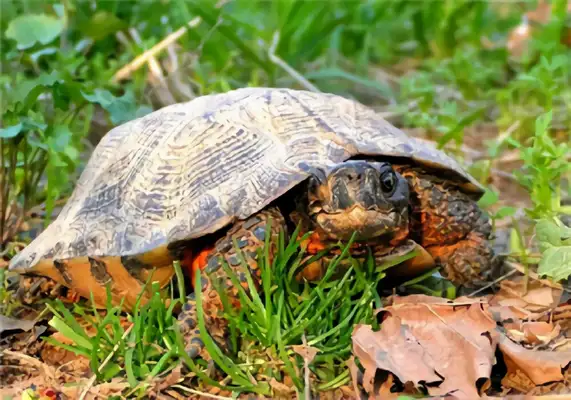
Since wood-cruising turtles are semi-water turtles, there must be water and land in the breeding environment, and in the wild, wood-cruising turtles spend half their time in water, half their time on land, not absolutely.
Wooded water turtles generally live alone, but in limited space they create class. Leaders will eat first and stop other low-grade foods. They are one of the most intelligent turtles. They are also able to escape and often seek escape routes. In a labyrinth experiment, they were found to have the same learning skills as all rats. They are higher than star-point turtles, but less so in water.
Wood sculpting turtles should choose open, sunward, backwind, quiet, well-watered and well-watered places to build ponds, the size of which may be determined by conditions and size of farming, round, ellipse, rectangular or irregular shapes, deeper than 1 m, which are connected to the 25-30 degrees slope of the park. The courtyard can be used to lay the bottom and the four walls, then sew and wipe them with concrete sand, lay 20 cm thick sand on the bottom, and build a table measuring 3-5 m2, 70 cm and 100 cm high, with rest and back.
An spawning field of 5-8m2 on the side of the sun, with 40 cm thick sandy soil laid on it for the turtle to dig and lay eggs. A rain-proof shed is built over it, with a few bushes of grass or vines planted around it to provide the turtle with a hidden and safe spawning environment. The new tortoise ponds are sprayed with raw lime water, exposed to the bottom of the tan pool for 5-7 days, refilled with water when enemy organisms are eliminated, then sprayed with bleach solutions, drained out of the water for fresh water, and dropped to a turtle or plant. Wood sculpture turtles.
Wood-carving turtles are culpable animals, and in wild environments, the variety of wood-cruising turtles is so abundant that they can ensure a balanced nutrition, so that in artificially raised environments the diversity of food is also ensured in order to ensure a healthy diet.
I. ELEMENTS FOR THE SUPPLEMENT OF THE GROUND TORTURE
Wood-carving turtles are typical of greasy turtles, and animal baits such as insects, fish, shrimp, earthworms, snails, snails and snails, as well as strawberries, blueberries, etc., and wild mushrooms are daily staples. Basically, they are active feeding turtles, which are fed as long as they have access to imported food, so that artificial feed can be easily accepted and there is no problem with feeding. They are also very resilient to the artificial environment, which is considered a healthy turtle.
II. Attention to wooded water turtle feeding
Water is exchanged half an hour after feeding, and containers are cleaned when changing water. If its own water quality is contaminated, it can be replaced without adding too much new water to the abdomen of wood sculpted turtles, half an hour after it is fed. Food diversity is a guarantee of the health of wooded water turtles. Some vitamins, calcium tablets, licin, etc. may be added from time to time. There is no other way to throw it out, so how much should be fed is appropriate to sum up after a few throws, not how much as a percentage of weight. Food must be unfrozen and then fed.