Designation: PET2924
English name: Yellow-bibbed Lory
Nature: Live and play.
Origin: Eastern Solomon Islands
Life Life: 30-year profile of the species of yellow-collar parrot
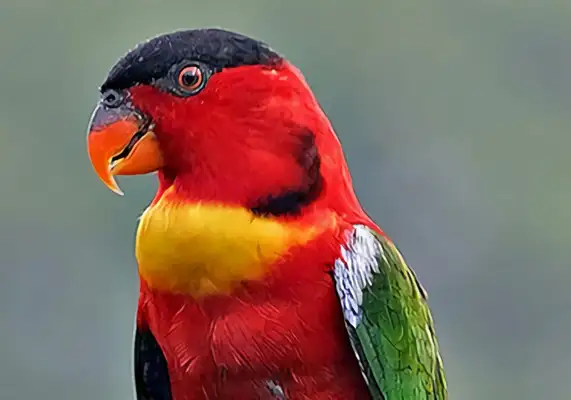
There may be places where there are very few yellow-collar parrots, but in Solomon Islands the situation is completely different - This is the habitat of wild yellow-collar parrots, which many locals tend to feed as pets. In appearances, the yellow-coloured parrots are very attractive, with red, yellow and green colours on their bodies, so many of them will be attracted to them at first sight. Moreover, yellow-collar parrots are also a highly imitating parrot, whistling or something, but while they often whistle, they don't make you feel loud.
Many birds are afraid of people or shy, but yellow-collar parrots are not in their ranks, and yellow-collar parrots are live birds. If you want to raise such parrots, the masters do not worry about their difficulty, and in fact, they are not very difficult to raise.
Yellow-coloured parrots are also known, some as yellow-collar parrots and others as yellow-collar parrots, while their English name is Yellow-bibbed Lory.
Chinese literary name: Yellow-collar parrot
Two words: Lorios cholocercus
Context: Animals
Gate: Pipeline gate
Amen: vertebrate Amen.
Programme: Birds
Look: Parakeet.
Section: parrots
Acco: Acco on a mermaid.
From Lorus
Castes: Characteristics of the morphology of a male male parakeet
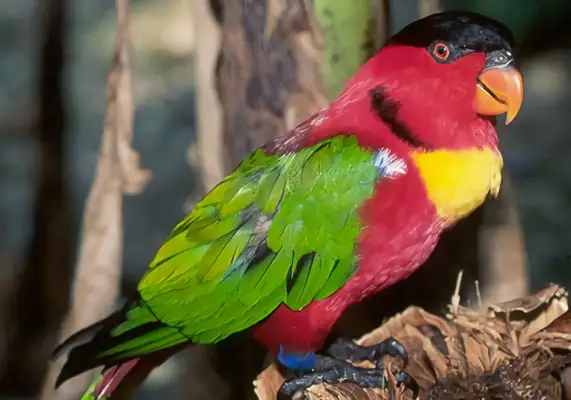
There are many reasons why the yellow-coloured parrots are loved, among them the beautiful appearance. Their bodies are mainly red, and because of their colour, they are easy to notice. In addition to red, we can find many other colors on the yellow collar-sucking parrot, such as yellow above the chest, green on the wings, deep blue on the thigh, etc.
If you look closely, you find that yellow-coloured parrots have longer beaks than average parrots, and that they have brushed tongues (we use long, brushed tongues as brushes), which, unlike some other parrots, allow them better access to their favorite foods — pollen and nectar.
In the case of yellow-collar parrots, there are no gender differences in their appearances, although the appearance of young birds is different from that of adult birds, usually the yellow feathers above their chests are not thick and their abdominal feathers may have other colours.
The morphological description of the yellow collar.
Size: 28 cm.
Weight: 53-225g.
Top: Black.
Head: Black.
Ole: Orange red.
Iris: Orange red.
neck: black.
Throat: Deep blue on both sides.
Chest: Half-round yellow feathers above.
Wings: Green, inner covered feathers blue, bending in shallow blue, internal flying feathers with a wide pink strip feather.
Tail: Deep olive yellow, upper red, sharp green.
Legs: Dark blue.
Young birds: There are no black feathers on either side of their throats; the yellow feathers above their chests are not as thick and visible as birds; in addition, the larvae are not bird-like oranges. Yellow-coloured parrot living environment
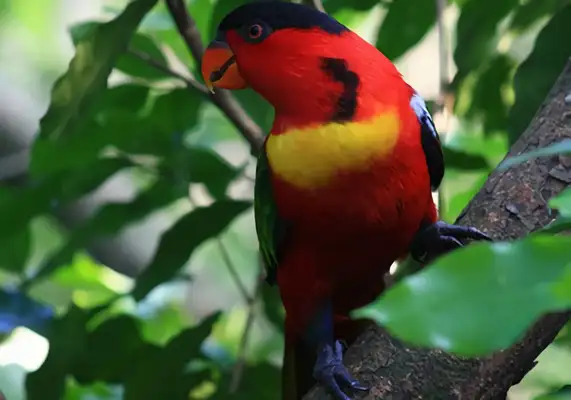
It is necessary to provide proper living conditions for the yellow-collar parrots in order to keep them well. Usually, masters are the first to consider the issue of cages, which are 28 cm long for yellow-collar parrots, and therefore are particularly important for them because of their size. In addition, for yellow-coloured parrots who prefer to bite, the master has to take care of the contents of the cage, which is the best option. In order to ensure a clean and healthy living environment for the yellow-collar parrots, the owner regularly cleans cages, cleans daily food and water tanks, etc.
Yellow-collar parrots have a life of up to 30 years, and if you want to raise them, it means that you may have to take responsibility for their lives for 30 years, so don’t easily raise yellow-collar parrots if you don’t think that you can really take on that responsibility.
Wild yellow-coloured parrot living environment.
Wild yellow-coloured parrots inhabit Solomon Islands, although they are not seen everywhere, and are more readily visible in forests, coconut plantations and some vegetation areas. In looking for them, you have to move your eyes up because they prefer to move on higher fruit trees and branches with flowers. The yellow-collar parrots generally do not operate alone during the breeding period, so their objectives will be greater. At the same time, the distribution of yellow-coloured parrots varies from region to region, as in the case of higher latitudes where the number of communities is higher. Of course, altitude also affects the distribution of yellow-coloured parrots, for example, in certain areas where yellow-collar parrots tend to live more in high-altitude areas. The point of yellow-coloured parrot breeding.
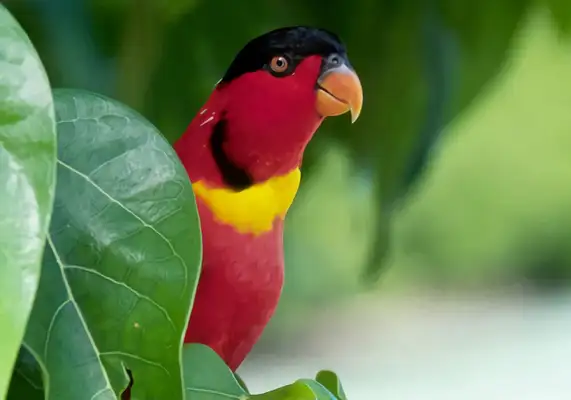
The difficulty of breeding is one of the reasons why the yellow-collar parrots are popular, so that masters do not have to worry that they cannot raise them well. However, while yellow collars are easy to breed, this does not mean that the owner can “leave to them”. In fact, only if they are ploughed scientifically can the yellow collars keep them healthy.
I. FOOD
In addition to the wild yellow collars, whose food consists mainly of nectar, pollen and fruit, they eat seeds and even caterpillars. So how do the masters feed them under conditions of artificial rearing? The masters can buy feed that is specifically designed for their development, and some of them also make their own food for the birds, taking into account, for example, whether they feed the birds themselves.
Environment
In order to ensure the health of the yellow-collar parrots, the master must provide them with a good living environment, such as the daily cleaning of the parrot's food and water tanks, the regular cleaning of bird cages and the control of ambient temperature. Sometimes you may find these things very trivial, but don't let them be too trivial, knowing that if you don't, it'll affect the health of the bird. (Reference article: what's the living environment of the yellow-collar parrot?
III. Reproduction
First, the master will prepare a proper nest box for the yellow collar. Second, similar to some parrots, male yellow collars during reproduction are aggressive, and owners must pay particular attention to this when raising. Thirdly, in theory, a yellow-collar parrot can reproduce four seasons a year, but in practice summer is not a good season for yellow-collar parrots, and the owner can breed the birds in other seasons. Fourthly, if birds are to reproduce twice a year, or even more, the master must raise them scientifically.