Designation: PET5771
English name: Introduction to Red-hiskered Bulbul Red Ears
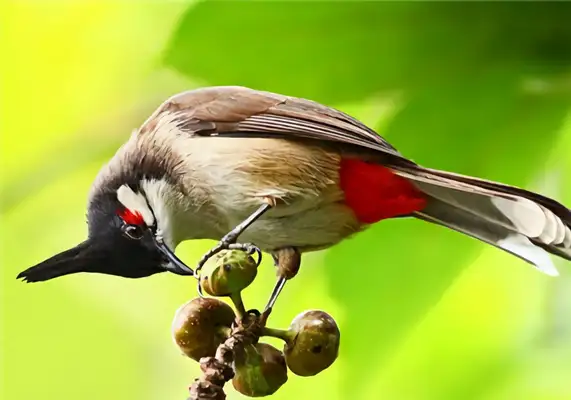
Red-hiskered Bulbul is more widely distributed, mainly in south-eastern Tibet, south-eastern Yunnan, southern Guizhou, south-west Guangxi, and Guangdong, as well as in India, Nepal, Sikin, Bhutan, Bangladesh and the south-central peninsula. In southern Thailand, Yala Province holds an annual red ear singing contest every March to reward the winning red ear-breeding owners.
Chinese literary name: red ear
Chinese aliases: High Chicken Crown, High Crown Bird, High Crown, Black Head, Koshiro, etc.
English name: Red-hiskeredBulbul
Two words:
Area: Animal
Gate: Phylum Chordata
Amen: Vertebrata
Aves
♪ The world's most beautiful world ♪
(a) Passerformes
Section: Pycnonotidae
Yes: Yes
Cast: red ear
Distribution: South-East Tibet, South Yunnan, South Guizhou, South-West Guangxi, Guangdong, India, Nepal, Sikkim, Bhutan, Bangladesh and the South Central Peninsula. Red ear morphological characteristics
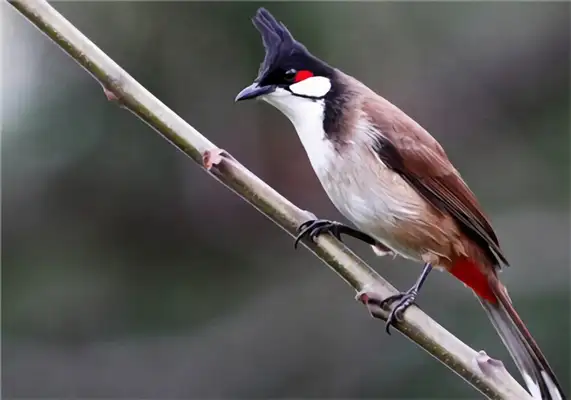
Red-eared feathers are more beautiful and the bird is easy to breed, has a very active personality, likes to sing, sounds very beautiful, and is one of the very suitable pet birds for the family. There are often more than 10 small groups of activities, sometimes integrating more than 20 to 30 large groups, and sometimes with red hips and yellow hips. Most of the day, they spend their activities and foods in the canopy or bushes.
The forehead of the red earl is black to the top of the head, with a high black crown on the head, and a deep red plume is behind the eye, forming a red spot; and the ears and cheeks are white and closely bound to the bottom. The rest of the upper body, brown or tan, such as the back of the neck, back to tail, have brown-red bounds. Dark or brown tails, except for the one-to-two tail feathers in the centre, with the remaining tail feathers bearing white end marks and increasing towards the outer side of the tail end of the tail, which expands to the whole end. The feathers of the wings are the same colour as their backs, and the feathers are dark or black, and the outer lumber is a little tan or light tan. The cheeks, the larynx are white and there is a black line between the cheeks, extending from the cheeks along the cheeks to the back of the ear feathers. The rest of the lower body is white or near white, both of which are light brown or light smoke brown, each side of the chest has a wider dark brown or black ribbon extending from the lower part of the neck to the central part of the chest, which is thin and narrow, and which is finally interrupted in the centre of the chest, forming incomplete braids and light red or orange feathers. Iris, brown, brown or dark brown, mouth, black feet. Red-eared living environment
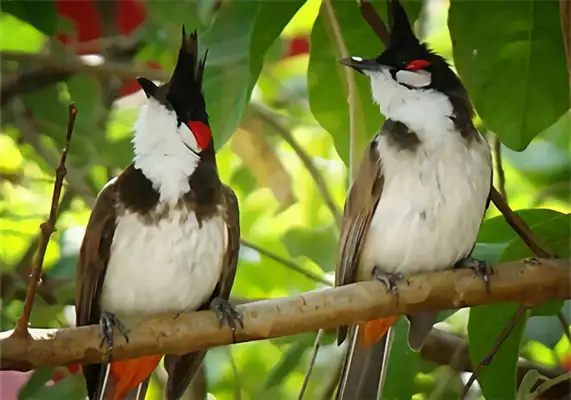
In the field, red ears prefer low mountains and hilly hills below 1,500 m above sea level, and occasionally see them by roadside, by stream or in fields, and sometimes in the yard.
A living bird with red ears can be domesticated in a dark cage for one week and then raised in a eyebrow. Large cages can be fed directly, with 20 to 25 cages of 2.5 metres high, 3 metres long and 2 metres wide, multi-fitted to provide shelter, jump and fly, increasing mobility. Clean and clean management. Red ears like water baths, which can be given two to three times a week, should be kept warm during the winter, and should stay indoors at temperatures below 0°C. Red ear feeding point.
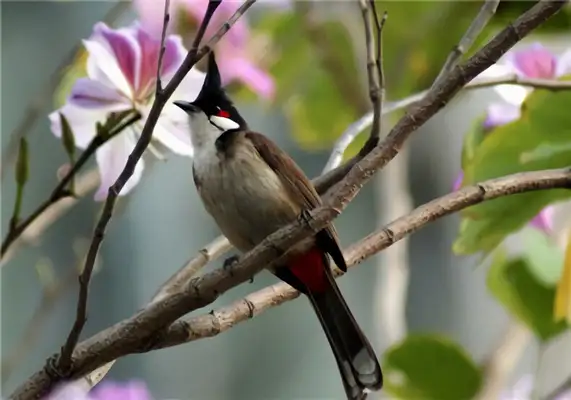
The voice of the red ear is famous, the voice of the new home is more monochromic, the breeding will improve over time, and the singing of the inclement period will become more exciting. A living bird with red ears can be domesticated in a dark cage for one week and then raised in a eyebrow.
The main feed for red eardrums is powdered in six pieces, soybeans in one piece, eggs in one piece, fish in two pieces of meat, egg rice (500 gm and yellow in five eggs) and green fodder in apples, bananas, tomatoes, green vegetables, etc., for proper supply of insects. Alternatively, 20 per cent of soybean flour, 50 per cent of corn flour, 10 per cent of fish flour or silk powder and 20 per cent of ripe egg yolk are fed daily with mixed feed, supplemented by vegetables, guacamole, bread worms, etc. Water basins are watered twice a day, egg rice is supplied in sufficient quantities, powder, green and green feed is fed twice in the afternoon, and deterioration is prevented during the summer and surplus feed is cleared in an hour.