When people talk about dogs, they call them best friends of humanity. But for now, it's better to call it the master's best friend. We must be sure that dogs are animals that gather loyalty, moderation and vigilance, which are their essence and do not change with external factors. In daily life, they are attached to their masters, who are the subjects of loyalty and obedience, and who are therefore responsible for their actions. But reality is not as good as it should be, for example, where are their guardians or feeders and what are they doing every time they inconvenience or disgust others? Are the dog owners doing their duty to teach the dog? Are the civilized rules observed when taking them out? Dogs are repulsed and even killed by a large number of people and, to say the least, most of them are actually in the hands of their owners. Because, no one can get in trouble with an animal for no reason.
When it comes to dogs being good friends of humanity, many disagree, and you understand why. What kind of animals are dogs, and most people are just judging from their apparent behavior. Nationals have had dogs for thousands of years and have lived with dogs for a long time, so there is a certain understanding of their habits. The wisdom of the ancients is expressed in the way dogs do, and is easily understood, of course, as part of Chinese culture, and as the fruit of the wisdom of the ancients. What we know is not so ugly, but the next is not so poor. The emphasis on being a person must be filial, or else it would be considered a big offence. But when a dog looks low, it means that it treats different people differently. In human terms, it means that some people are of inferior quality, reflected in the fact that they hate or laugh, or that they have the power to despise poverty. It's shallow, but deep.
The ancients use dogs to describe people's words. We don't have to list them all. We're just reading the substance and causes of some of the psychological behavior of dogs. In order for a large number of dog owners to learn more about dogs and to help them to teach them better so that the dog's habits of differentiating between humans have improved, although not as much as humans might call it, and it is effective for the master to influence them with positive behaviour if he is genuinely trying to teach and correct them. Don't underestimate the invisible but powerful influence of the owner on the dog.
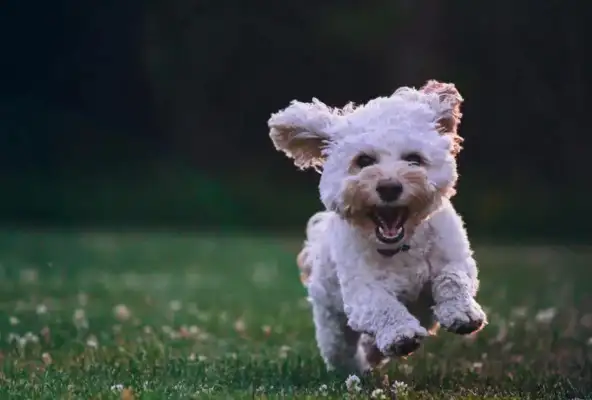
The way the dog looks down on people, it's what our ancestors drew up. At that time, almost all the families had dogs, and the dogs were faced with those who came to or were passing by, the most violent were those who were asking for food or dressed in rags. They do not like people who not only wear broken clothes, but also carry sticks, which in the eyes of dogs are a threat to themselves or to their owners, and who, out of their safe instincts, must bark away or attack. But they have shown loyalty to their owners, who are also dressed in decay, and the virtues of poverty. On the surface, they are a combination of contradictions.
We are well aware that dogs are never too strong, even if they are equally vigilant, if those who pass through or enter the house are dressed with dignity and courtesy. Where does a dog come from? The substance is still on the master. Dogs are very good at observing and imitating master behaviour. Here, we must admit that they have some spirituality. In the face of the powerful, the master shows humility and a little fear, and his seemingly delicate mind cannot escape the eyes of a dog. Their habits are shaped by the long-term influence of the master, and they are magnified versions of the external behaviour of the master.
In the context of current realities, we take dogs out of the country, and dogs are more alert to, and guard against, such workers as sanitation workers or sellers. What's the problem? The pet dogs still carry low-profile genetics, and after all, thousands of years of habits will not disappear. First of all, sanitation workers, while wearing non-devastateable clothing, work with tools and often bend or crouch, which poses a security threat to dogs. In addition, the expatriates rushed through various environments for short periods of time, and the smell of them was so heavy that dogs were difficult to judge and alert to confusion. And the sour spicy in food is the same thing that dogs need to avoid. But they don't have a big preventive mind about people who talk to their master.
Dogs can look down on people, either because of the habits that have developed over the years, resulting in genetic retention, or because they are influenced by the masters, who know that they are not very fond of them, and even though they do not say so, the masters' minor actions are precisely captured by them, thus affecting their minds.
What about dogs who hate people who don't talk and do low jobs? Isn't it wrong for dogs to be poor? Rather, if its owner or family, as well as a low-income person or a better person, remain faithful. Didn't we see a lot of homeless people with dogs? It is clear that the influence of the master is great, and his behaviour determines all their behaviour. Therefore, feeding a dog, the owner should act in a manner that affects the dog more than the good side.
The master is equal to all, and the dog who sees the master as everything, is certainly not willing to go against his will and do what the master does not like. The master is too poor to be rich, and the dog will go even further. The influence of the master is invisible and the dog's behaviour is tangible. You take it out and let it go blind, and it will think that the master is happy with it, and that it is born to accept its acquiescence. It bites others, the master intervenes, pleads, defends, it thinks it's right, and it knows very well that the master is protecting it. Its bites are recognized in the eyes of the master, and then they become inevitable.
In short, the low human face of the dog, thousands of years ago, is still the same. For that reason, the root cause lies in the influence of the master ' s behaviour on others, which has led to an inherent habit. Therefore, the masters must be good and good and influence them more with their own good deeds, as is the case with good men and dogs. Dogs have shown confidence in their masters, not least because they love wealth, but of course safety is the first choice in food and safety. While positively influencing dog behaviour, the master is also teaching dogs to stay away from strange foods and not to live with strange food temptations, and most end up in bad shape. It is only by looking at the dog from the point of view of his or her actions that he or she will be given the necessary instruction and instruction to the dog, that he or she will be given good habits and that he or she will truly protect them.