Designation: PET2068
English
Character: Strong, tough.
Vulnerability to diseases: manicure, trauma
Life: Around 50 years of age
Value: A brief description of the variety of Harera turtles over $5,000
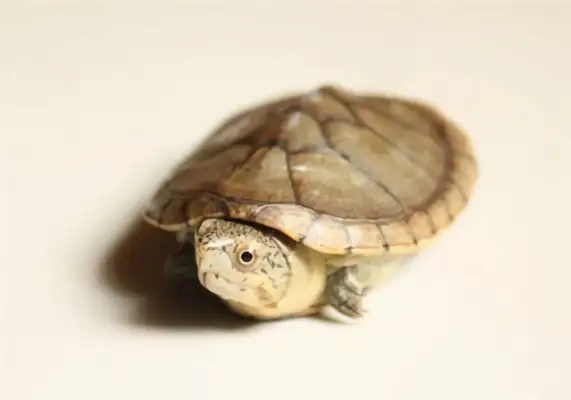
Harera turtles are a tougher species of turtles, with their appearances similar to those of tiger-striped razor turtles, but they are like narrow bridge turtles, and they are very interestingly raised, i.e. they are a more expensive species than other turtle species, so that there are not many breeders.
Chinese name: Harella turtle
English
Latin name: Kinesternon Herrerai
Lifestyle: Harera mud turtles live in intermittent waters below 800 metres above sea level, as well as in freely flowing streams, where they live with some salinity.
Body characteristics: Larger size of up to 17.5 cm, with a slightly half-turned shell.
Eating: Harera turtles are impregnable turtles, fed by wild figs, beetles, ants and pedestals and invertebrates; in an artificially raised environment, they are usually fed to meat or small fish; the turtles have a record of activity during the day and at night.
Reproduction: Eggs.
Price: Around 5,000, depending on size. Harella Mud Turtle Characteristics
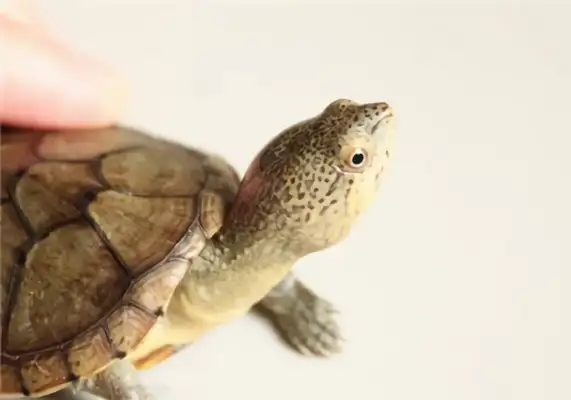
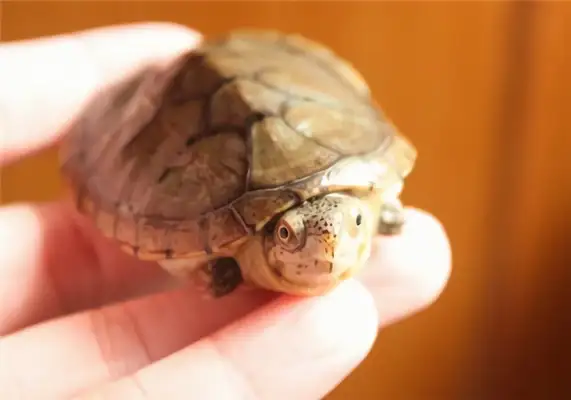
The appearance of the Harera turtle is not too special, it looks like an egg from the top down, and it looks like a tiger-edged razor turtle, but its head is bigger than the normal egg turtle and its back is more round.
Larger sizes can be up to 17.5 cm, with a slightly half-turned shell, a wide area in the middle of the back armour, and the first vertebrate shield stretching back and forth, and very narrow, so that it is not in contact with the second boundary shield. The width of the 2 ~5 vertebrae is greater than its length, or is no different from its width.
There is only one vertebrate bone in the mature Harera turtle, and perhaps one more visible, cross-cutting vertebrae on both sides of the larvae. Blocks 10 and 11 are higher than previous ones, and the back armour is usually olive or brown, with a black suture between the adjacent shields. The abdomen are narrower and the end is dent. The male front is longer than the latter, while the female is the opposite.
The abdominal and alpha bridges are usually yellow or light brown, with no visible spots or stripes. The large head has a slightly prominent nose and nose and a strong hook-like upper jaw, with light gray on the head, spots on the back and on both sides, black stripes on the creamed top and lower jaw, two visible tentacles on the chin, shallow grey and coffee-colored spots on the limbs, and horny tails at the end of the tail. The turtle has 56 pairs of biological chromosomes. The male is larger than the female and has a long and thick tail. The thighs and lower limbs are marked with horned, stylized drops, while the female has a larger abdominal armour. Harella's knowledge of the nursing of turtles
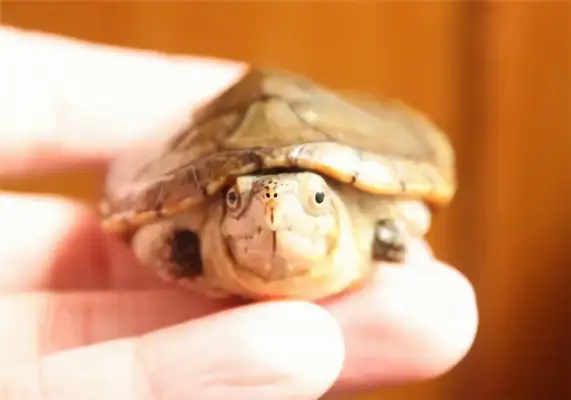
Some of Harera's turtles tend to try to mix, which is highly incorrect, because Harera's very fierce turtle species are not suitable for mixing, and of course there are other issues that the owners have to pay attention to.
I. Environmental requirements for the Harera turtle
All turtles are land-based (especially fruit cores and helmets) and must be equipped with a place to tan their backs in order to prevent fur and rotting armour. Muscles can sometimes be used, especially razors. Harera turtles, while not demanding light, are also necessary for proper sunlight, and do not expect your imported equipment to replace the sun.
II. Temperature control of Harera mud turtles
Personally, the temperature difference between water temperature and temperature is kept within 3 degrees, and your turtles are almost free from cold or even pneumonia.
III. Water-for-water exchange for the Harera turtle
Water exchange is necessary, but too many or too many is not desirable. In fact, if you have a filter, you can get at least one third of the water in a week. Water exchange can also lead to cold and skin. So you have to control water temperature, especially winter.
IV. HARELLA MURLOW FOOD
Harera turtles are almost two to three days enough to feed them, even if it's day-to-day. If you feed too much, it will only increase its stomach burden.
Can Harella Tortoise mix?
Harera turtles are a very violent species, so try not to grow together, if you really want to. It's highly recommended that the feed fish should not be in there, because if your tortoise bites each other, the tortoise fish will attack the wound, which is very bad for the turtle and causes bacterial infections. Herrera's turtle living environment
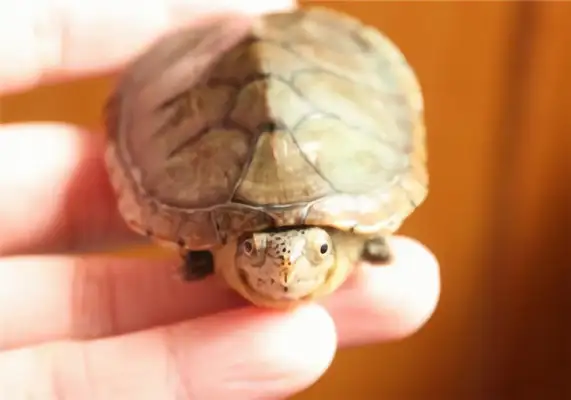
Harera's breeding environment does not need to be cumbersome, and we don't need it to be green turtles, so just keep water quality and water temperature, and also sunscreen and mixage, as described below.
I. Water level requirements for the Harera turtle
Harera mud turtles, although watery, are better than some national turtles, are better off with backs, which can deepen to above 5 cm and above 25 degrees. Do not rush into deepening water levels and over-feeding, so that the seedlings are basically well maintained. It is better to have sunken wood in the water, with two effects: first, climbing to the gas saves physical strength and sleep or sunburns; and second, improving water quality, with the Harera turtle generally prefers acidic water. The turtles are best equipped with floating islands or out-of-water tans, and the water is not too deep, and the water is no better than musk.
ii. Can Harella turtles mix?
It's a question of hybrids, but Harella's mackerel is so ferocious, he must be aware of density! The bigger the space, the more necessary it is to hide from it. What is the extent of Harella's battle? It'll be red by the time you find out! It happens when the eyes are blind, the claws bite off, and the neck bites are cut in half. Don't underestimate the force of Harella's turtles, but it's a threat to their kind!
iii. Harella Mudback
Take a container, put a little water on it, put the tortoise in it and put it in the sun. The container should be white, the turtle cannot climb, and as for water to prevent the turtle from dehydration, not more, a small layer of water, that is, the level where the turtle can drown its head. Time should not be too long, and about an hour is best, two or three times a week. Here's the point of Harella's turtle breeding.
Harella, can you eat turtle food? Many agree that the effects of turtle grains are comprehensive, but after all there are some preservatives, so it is not recommended to feed turtles for the long term, is it really okay? Look at the explanation, you'll see.
One, can Harella turtles eat turtle food?
Food is based on good quality feed. Maybe some people think the feed's bad. It's preservative, color. But what I'm saying is that at least these two feeds are definitely good and bad, and there's nothing perfect in the world, so don't expect to have a perfectly good diet for turtles. The result of long-term shrimp feeding is the high risk of back-to-back malformations when shrimp are often fed, as well as the potential for gastrointestinal problems of turtles, especially for turtle seedlings and new arrivals.
Two, Harella, can you eat fish?
If you really like feeding fish, it is recommended that fish should be fed for a certain period of time so that they can clear up their stomachs, or freeze their refrigerators and feed them to turtles. In any case, I've always insisted on the idea that turtles don't eat shrimp and fish. Because good turtle food already has all the nutrients it needs. A major advantage of turtle food is that water quality can be controlled from the side, because fish and shrimp proteins are too high and the meat left in the tank can easily make the water stink, which is actually the protein.
III. HARRELA TURKEY
A proper measure of shrimp feeding in good condition is desirable. Long-term feeding of fish is also undesirable, as small fish are living in the environment, with many bacteria and parasites, and the sudden death of fish eaters for turtle seedlings may be the cause of fish bones, because turtle digestive systems are fragile. A lot of people may be fine for a long time, but one fish in 100 is fatal to turtles.