Designation: PET2661
English name: Rusty anglefish
National origin: Japan, Philippines, Western Pacific
Vulnerability to diseases: albino disease, rotting tail disease
Life: Overview of Red Lightning Fish species, 4-5 years
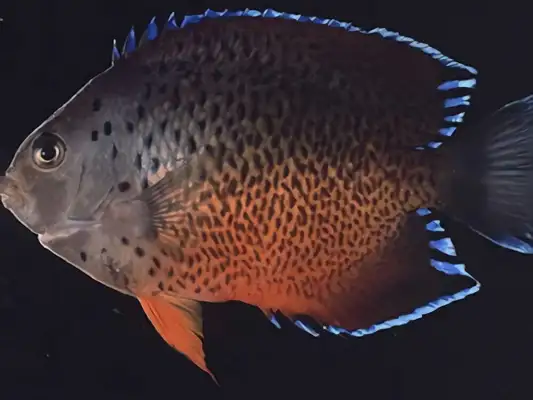
The red lightningfish, also known as the red bride, is characterized by the colour of the lower half, which is rusty, but the upper part of the body is black. The main sources of red lightning are Japan, the Philippines and the Western Pacific.
Chinese name: Red Lightning
English name: Rusty anglefish
School name: Centropygeferugatus
Minimum aquarium size: 120 litres
Difficulties in raising livestock: medium
Feeding requirements: salinity 1.020-1.025; alkalinity 8.1-8.4
Relationship: Must be aggressive.
Maximum aquator size: 10 cm
Coral compatibility: Be careful.
Food requirements: Miscellaneous
Main sources: Japan, Philippines, Western Pacific
Kind of: the shape of the marina fish
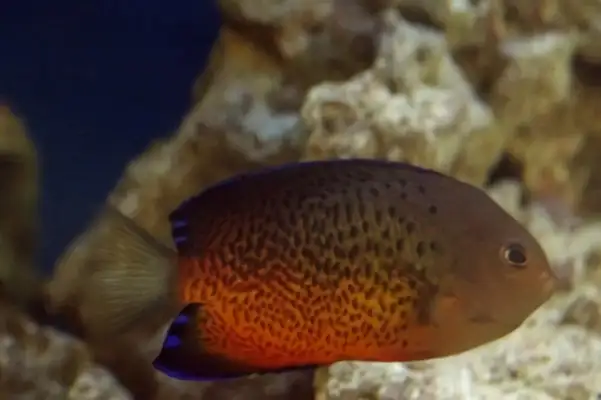
Red lightningfish is also called Red Bride, which is a greasy fish. It's their colour that's more characteristic of the red lightning fish, which is very special in the aquarium because it's not just red, but red rust.
The color of the lower part of the red lightning fish is rusty red and the upper half is black. The chest fin is red, the hip is dark blue, the back fin is black and the tail fin is khaki. Shelters, living stones and more than 120 litres of aquariums are needed to feed them. Red lightning fish breeding environment
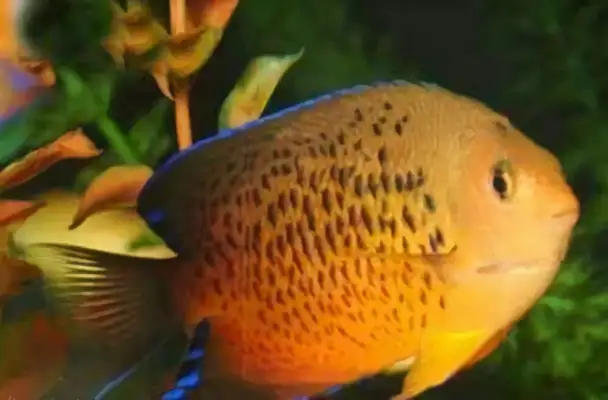
The difficulty of raising red lightning fish is moderate, so in raising red lightning fish it is important to ensure the stability of water quality. The salinity of red lightning fish is recommended to be 1.020-1.025 and the alkalinity of 8.1-8.4.
Red lightning fish are fed in the form of live stones and live stones, where they hide. Attention is drawn to the need to raise more than 120 litres of red lightning fish in aquariums. Moreover, red lightning fish is not suitable for placement in coral casks, and it eats corals and molluscs. It is recommended that only one red lightning fish be placed in a tank.