Designation: PET1211
English name: Black-headed Munia
Vulnerability: respiratory, digestive and parasitic diseases
Life: Overview of the species of chestnuts 10-12
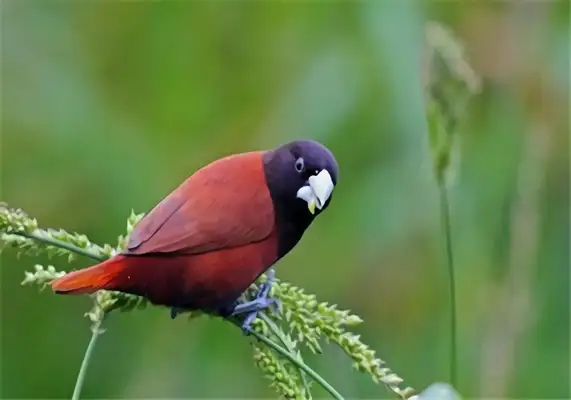
The Black-headed Munia, most of the feather colours of their bodies, the main meaning of which is also given by this characteristic of the bird. Chestnut birds are distributed more widely, mainly in the Philippines and Taiwan.
Chinese literary name: Chestnut.
English name: Black-headed Munia
Two words:
Area: Animal
Gate: Phylum Chordata
Amen: Vertebrata
Aves
♪ The world's most beautiful world ♪
"Passerformes"
Section: Cloceidea
From: Lonchura
Speculator bird
Distribution: Philippine, Taiwan island chestnut bird morphological characteristics
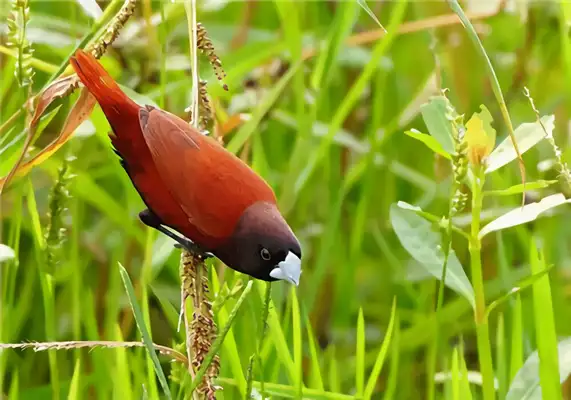
The chestnuts belong to small birds, with an average length of 11 cm after adulthood. Unlike other birds, it has a colourful feather, which is very simple, but it doesn't seem to be fascinated.
The chestnuts' mouths are blue and gray, their base is thick, they are sharp, they are conical, their feet are blue and gray, their heads, necks and upper chests are black, the rest of their feathers are brown, or their lower chest and belly are covered in black. Chestnut red.
The whole head, neck, neck, neck, jaw, throat and upper chest are black, the back, shoulder and two wings are pale and the back and tail are dark and radiant. The long-tailed plume is orange or yellow, the tail is brown or chestnut red, the plume is orange or yellow, the plume is brown and the plume is brown, the plume is brown and the plume is brown, it has a similar colour and a similar back, at times an ash on the back, and the lower chest and two twilight or dim. Black or brown in the lower chest, stomach, anal weeks and tails. The juvenile head and neck are not black, and the whole upper body, from the beginning to the end, consists of two wings of covered plume and flying plume surfaces of light brown and lower skin yellow. Ionous or dark brown, blue gray mouth, blue gray feet or lead grey. ♪ Chestnut ♪
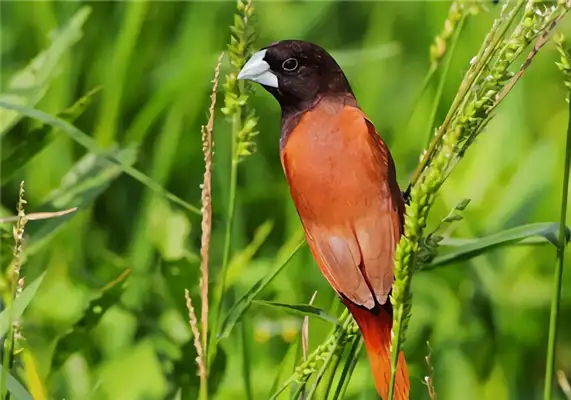
All the birds like to fly, so do the chestnuts. Being accustomed to free flying birds, when you limit their freedom, they are depressed, and when you decide to raise a chestnut, the more important part of the time you set him up is how to buy them.
A bird cage of a city animal is sufficient and the size of a bird can fly in a cage. An average pair of birds has at least 40 cm on each side of the cage. If the purpose is reproduction, it would be preferable to choose a bird box wider than a bird cage.
2-3 nests and medium nests should be placed inside the cage. A kettle-like nest made of straw is available in a normal pet shop.
When choosing the habitat used by all birds, care should be taken of the size of the branch, the size of the foot, which is too thick or too thin to be stable, and preferably purchased together in the shop when selecting the bird.
In the wild, the chestnuts are mainly found in the bushes, grasses and agricultural fields of the low hill hills and plains below 1,000 m above sea level, as well as near orchards, reeds and village houses.
The chestnuts, adapted to their environment, are strong enough to raise a warm birdhouse in temperate areas for winter. They are kept in birdhouses in larger areas of active space, removing their stress. Chestnuts raise knowledge.
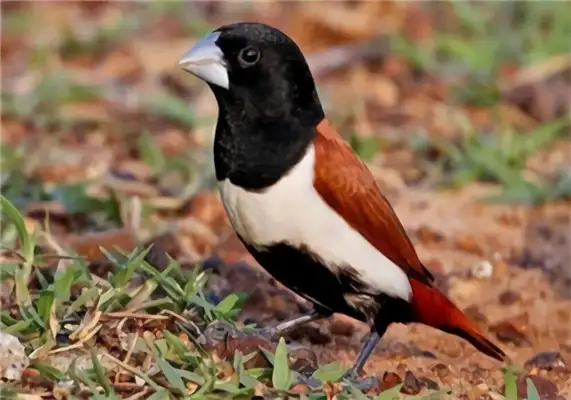
The chestnuts are more lively and courageous, and fly in the wild in waves. Their voices are sharper, and family breeding requires early consideration of whether birds can be heard.
The chimpanzee barks like a flute. Three tremors were raised during the flight. The sound of prostration and the silence of the mouth ends with a whistle.
Households can choose to import seeds for freckles and feed them with tungsten, which is the preferred food for chestnuts. The chestnuts also eat green food in the birdhouse and catch insects such as aphids. They peck herbs and make nests from grass.