Designation: PET4712
English name: Acridothes cristatellus
Origin: Distribution from south-west to south of Yangtze Province, Taiwan and Hainan Province
Illness: parasitics, Salmonella, enema
Life: 22 years
Price: Summary of bird species 25-100
Hati!
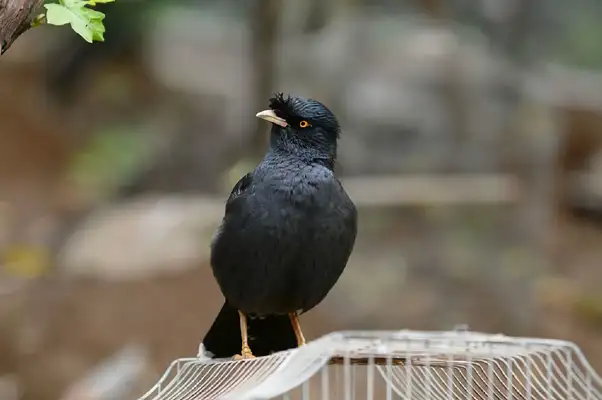
The Octopus is one of the most common viewers in China and one of our own. Since ancient times, eight birds have been the object of play by the nobles, and have been mentioned in many literatures and historical literature. Today, because of their spirituality and their distinctively black appearance, they are increasingly being raised as pet birds. According to the General Encyclopedia of China, the average life expectancy for males is around 8-10 years and for females about 10-12 years. Mr. Wildie's life is 1-2 years shorter than that of a cage! The history of Tang Dynasty recorded a large family with a female 8-year-old family with a life expectancy of 22 years.
Chinese literary name: Brother 8
Latin name: Acridothes cristatellus
Don't call it "Big Brother" and "Big Brother" and "Big Brother" and "Big Brother" and "Big Brother"
Gate: Pipeline gate
Amen: vertebrate Amen.
Programme: Birds
APA: Today ' s APA
FREEDOM: FREEDOMS
AMAYA: MOUNCHAKE
Section: Birdry Section
He's eight.
Cast: Qiu
Distribution: The provinces south-west to south of the Yangtze, Taiwan and Hainan Province are distributed. An introduction to the morphology of the octopus.
Hati!
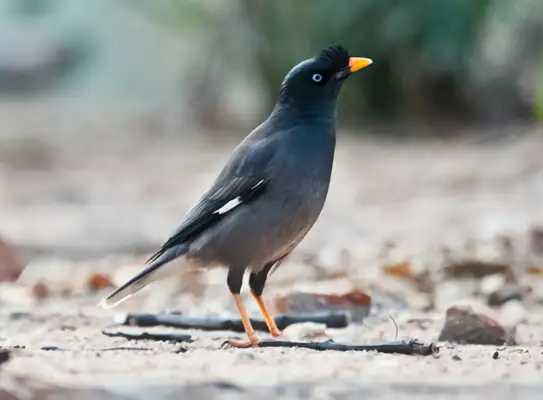
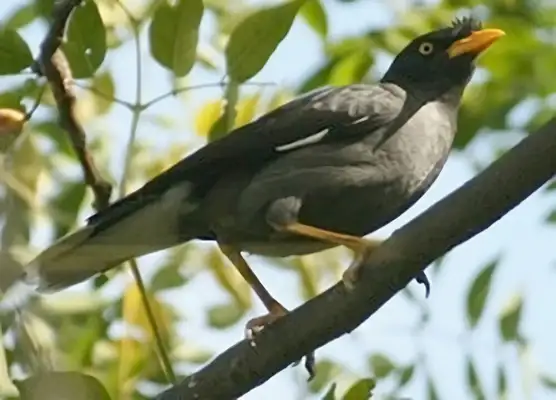
The octopus is black and looks like crows, but it's quite different from crows. The eight birds are best served by white feathers with yellow feet, tail feathers, white feathers with white tails, black feathers all over the body and metal-lighted males. With a lot of balls, singing, standing chests, bright wings, bigger octopus. The octopus is far smaller than the crows (50 cm long, 25 cm long) and the octopus is yellow.
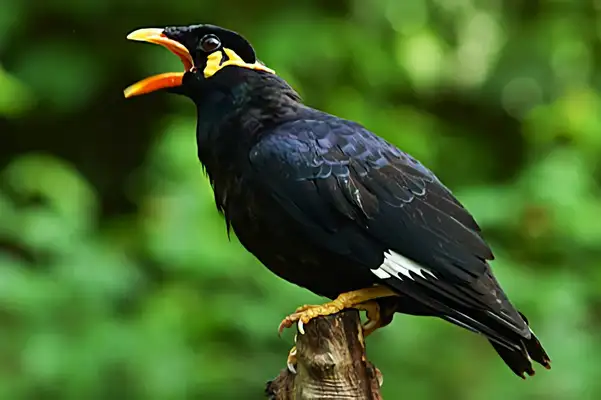
The 8th bird has a distinctive forehead plume at the intersection of the beak to the head, looking at the plume of the neck, there is a green metallic glow in the black, and the primary plume and the base of the plume are white, so there are clear white spots in the center of the two wings of the flight, looking from the bottom, and the two white spots appear in the “eight” font, which is also the source of the name of the 8th brother, and the contrast between the two white spots and the black plume is also an important distinguishing feature of the 8th; the tail plume is white.
The plume of the octopus is undeveloped, its color is not as black as a bird, it is a bit of coffee, and the octopus of the octopus is blue and gray, and orange after about 45 days. The 8th bird's daily conservation knowledge.
Hati!
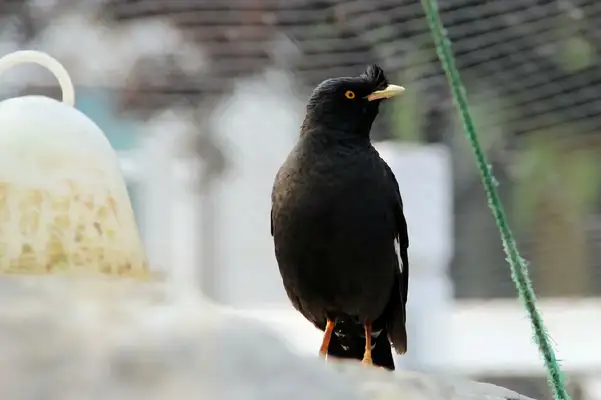
Since ancient times, eight birds have been a court-playing bird, and today we have a very high rate of breeding, and eight birds have been sold abroad and enjoyed by all peoples. H8 has a strong imitation capability, so that they can imitate the voices of many animals, or even learn to speak as human beings, if they are trained in daily breeding. The octopus is very smart and not afraid of human beings, so it is more important to focus on domestication in the day-to-day breeding process.
I. Bath
Give special attention to bathing the octopus, too young to bathe him. Because he's weak, he can catch a cold if he doesn't pay attention. As a rule, the birds also comb their own feathers and keep their bodies clean. So we don't have to shower it often. Of course, if he's dirty, it's necessary to shower him completely.
There is an online strategy: I think it's best to wait until the sun is heavy and get it out of the sun (of course it's not too long to cover a bird cage with a cloth, so I can't let him have heat or dehydration). And then with a big pot of hot water (not the cold water, otherwise the octopus is easily sick), you put the octopus in the water, and then the octopus will go to the poaching, and in the process you just help the octopus to bathe. When 10 minutes have passed, the octopus washes it and then takes it out and drys it with dry towels (or drys its feathers with a blower).
Training methodology
1. The training of eight brothers in the language of speech begins with the young bird. The time frame for reflection has been largely solid and the training has been more than half successful. In the future, every time a cage is released, attention is drawn to the need to reduce shock and not to keep it in the cage for long periods of time, affecting the results of the reflection consolidation. When training is successful, do not forget to place a few insects in the cage for reward.
Time. It is the best morning, and the birds are the most active in the morning, when the birds are not fully fed and teaching is good.
Environment. Quiet, no noise and no conversation, otherwise the birds will be distracted and the birds will learn what they should not learn. It is therefore preferable to choose teaching in a quiet room.
4. Content. At the beginning, you have to select simple short names, such as "Hello", "Welcome", "Goodbye", "Bye" and "Thank you". Note that the sound is accurate, clear and slow, not in dialects, preferably in Mandarin. Every day, the same words are repeated and consolidated. Birds during teaching cannot hear boring or inappropriate words. Birds are particularly sensitive for a short period of time, when the sound of the outside world is highly replicable. Once this sensitive period is discovered, it should be seized in a timely manner and put to good use. Elements of the family environment
Hati!
Octopus is a better breeder bird because they are good at imitating people and other voices and are very popular. The G-8 is beautiful, and it is possible to distinguish the female from the male by beeping, the beautiful, the embroidered is the male, and the low, the displeasure is the female. The wild eight live in mountains, plains, villages, and the family should respect their habits, otherwise sudden environmental changes can lead to discomfort.
I. Selection of bird cages
He's a big cage, big one. Cages should have a light bottom and a tossboard because of their edible nature, their high level of food and their high defecation. Furthermore, he has a strong mouth, a healthy body and a strong cage. One shark-skinned pole, one water-eating tank, one soft-eating tank, is deeper, bigger and stronger than the average bird. It is worth noting that octopus cannot tolerate co-existence with other birds, so that octopus is usually grown in cages to prevent fighting.
II. The livestock environment
The octopus prefers a quiet environment, raising the octopus in cold winters, and it is important to be careful about keeping warm, and to wear a coat when walking in winters. In the morning, eight-occupets can be removed from the house after a window or outdoor air break of 1 - 1.5 hours. What do you want to eat?
Hati!
Now people are raising pet birds that are fine, fine, and a little unusual, which is very worrying. The same is true for the masters of the birds, so it is the most healthy way to feed them according to their different growth and development periods and seasons. In fact, despite the diversity of their variety and the variety of their own methods of feed, they all come together, and what we need to ensure is that G-8 can guarantee its nutritional needs at different times and in different contexts. Therefore, the feeding requirements of the octopus can be analysed in nine respects.
I. Young 8 feed [soft food]:
Note: Considering that most of the eight members fed by friends are around two, the minimum allocation is applied. It was prepared and placed in the safe in the fridge and fed within a week.
Chicken feed is half a pound, eggs four, yeast five. If fish powder is added, the eggs are reduced accordingly. Turn to porridge.
Feeding: (a) At an early stage, in accordance with the biological characteristics of the bird, full excretion after two hours of food is available and can be fed several times a day. Especially at night. (2) After about 10 days, ink bone powder [or calcium tablet] is added.
II. Feeds for food replacement periods:
At this point, the feed is basically the same as the feed of the child, which can be fed with shredded vegetables or fruits [added when fed], and with ketchup, which is most convenient and can be mixed with eggs. There are more formulations. Special attention must be paid to the preparation of eggs in more than three stages, after the previous feed has been dried. Overloading at a time will result in the loosely dispersing of the feed particles into powder, affecting the harvest of Brother 8.
III. Daily feed:
A chicken feed, an egg, a yeast. Five slices of ink bone powder.
IV. Forage replacement:
Prior period: chicken feed only, and quantity reduced. It takes 4-7 days.
2 Medium term: Increase the percentage of eggs in “daily feed” with 2-4. Double the ink bone powder. Add two or two peanuts.
3 Late: Gradual reduction of the ratio of eggs to ink bone powder and restoration of daily feed feeding.
V. Autumn end, winter feed:
It's basically the same formulation as the daily feed. It's just an extra egg, and an appropriate amount of extra vegetable oil. Or peanut powder.
The feed is considered in the most economical sense and contains nutrients that meet the growth needs of the G-8. Of course, the number of family feeding birds is limited, and many friends do not take science into account, always trying to improve their lives and fatten them.
VI. Selection of fruits and vegetables:
Minerals and vitamins in fruit are far from comparable to vegetables: Vegetables and carrots have vitamin C about 10 times higher than apples, pears and peaches; peppers and vegetable flowers are 2-3 times higher than strawberry and citrus. The vast majority of fruit vitamin C is low and other vitamins are more limited. The protein content is less than 1 per cent and contains virtually no necessary fatty acid. Moreover, nutrient degradation due to longer storage times is far less than fresh vegetables. In fact, birds are selective, and if there is fruit in the cage, the birds have no choice.
Portability and nutrition are different concepts, and many vegetables are processed slightly to birds, i.e. economically more nutritious. After all, fresh vegetables are everywhere, and fruit is seasonally harvested.
Numerical elements, minerals and other supplements:
It has been proven that, because of its status as a larvae, the feed contains enough nutrients to meet its growth needs. It is sufficient to crush eggshells each time the feed is made, with some additional supplements added to the special phase. There is no need to add vitamins.
viii. Stick to the yeast:
This is not merely to help the birds digest, but, more importantly, the yeast contains a wealth of nutrients lacking in various feeds. At the same time, fat soluble vitamins can be fully absorbed by birds.
9. Sand:
The sand is often placed in the sand cans in the cages to allow the birds to eat freely, the freedom space of the birds is small, the digestive capacity is naturally reduced, and the sand is the cheapest and most practical thing to do if all nutrients in the feed are to be absorbed by the birds.