Designation: PET3797
English name: Oaxaca mudttle
Origin: RioColotepec and RioTonameca Basin on the Pacific Coast, and Mexico
Vulnerability to disease: Decay
Life: Overview of species of Mahaka, 30 to 40 years old
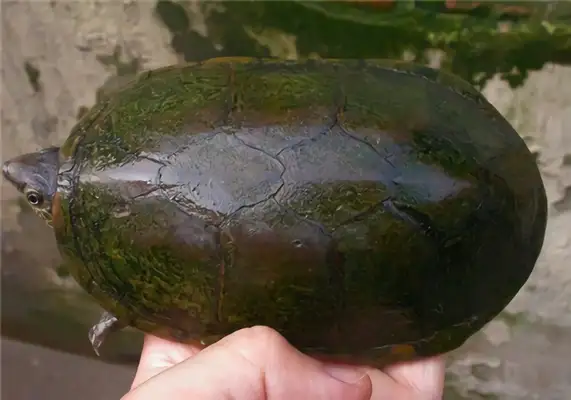
Wahaka turtles are one of the egg turtles that have the habit of sanctuaries, which in summer cool their bodies in the mud, and are therefore known as mud turtles, who live in slow-flowing rivers, hunt some fish shrimps in water, which are culinary, predatory turtles.
Chinese literary name: Wahaka turtle
English name: Oaxaca mudttle
Latin name: Kinisternon oaxacae
Context: Animals
Gate: Spinal gate
Amen: vertebrate Amen.
Programme: climb
Tortoises.
Section: chest tortoises
It's a musk turtle.
Crop: Wahhaka turtle
Distribution: Oaxaca mud turtles are located only in the RioColotepec and RioTonameca basins along the Pacific coast, and also in Mexico.
Appearance characteristics: Wahhaka turtles are larger, 17.5 cm long. The color of the back armour is generally brown or black.
Reproduction: Eggs. Females can produce two eggs in a year, approximately one or four per nest (from May to mid-June or early July), and females tend to lay the eggs in sand and not deep caves or near the river.
Lifestyle: Wahaka turtles live in non-permanent waters of coastal plains and in lakes with more stable water flow from hilly highlands.
Eating characteristics: impregnation, the Wahhaka mud turtles in the wild tend to hunt for any less than their own animals, such as fish, shrimp, etc., and even other turtles, where some aquatic plants or fallen fruits are eaten. Wahhaka mud turtle morphological characteristics
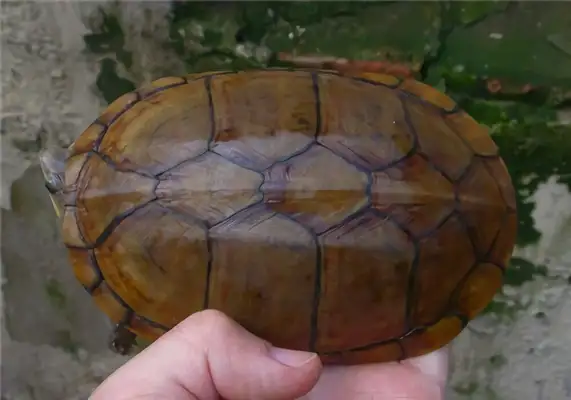
Wahaka mud turtles have smaller heads, have an elliptical back armour, are not visible, are more diverse in colour, have black backnails, have a sharp contrast to shield armour colours, have brown abdominal armour colours, and have black stripes which complement the backnail colours.
Wahhaka turtles are larger, 17.5 cm long. The backnail colours are typically brown or black, and there may be black spots or black seams, with slightly overlapping signs of shielding. In addition, there are three visible vertebrae bones on the back armour.
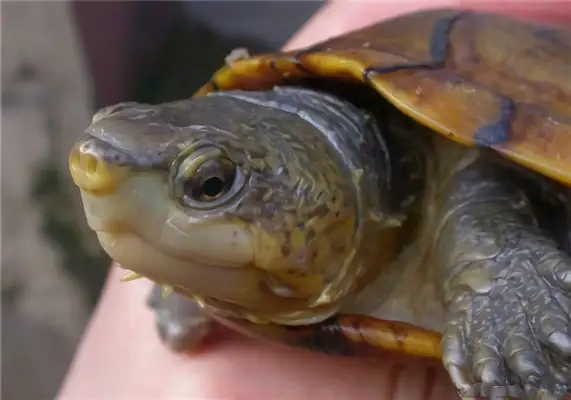
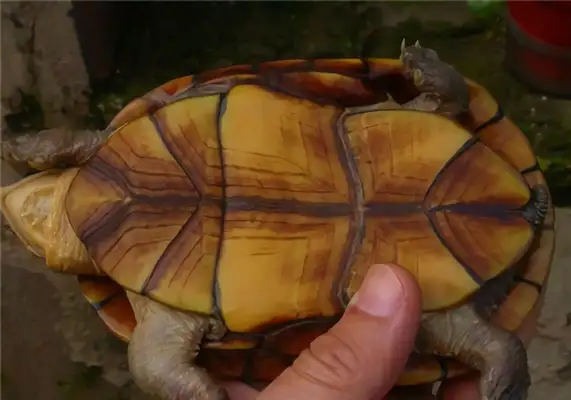
Wahaka turtle abdomen and the bridge are usually coloured in yellow or brown, accompanied by black seams and, occasionally, in brown colours. The armpit shield contacts each other with the groin shield. The head is small, the top of the head is dark black, the sides display complex web stripes, the bottom is light yellow and some black spots. A strong upper jaw is a hook, possibly with black stripes, and a chin with 3-4 pairs of tentacles. The outer side of the limbs is brown or grey and the internal side is cream. The tails are mainly brown and brown, and at the end they are horny. The male abdominal cascading, the tail is long and thick, while the female abdominal is flat and the tail is shorter. Wahaka mud turtle care knowledge
Wahhaka turtles need to be more careful in raising them, because they are a more eccentric species of the environment and raising them, and when temperatures are reduced to a certain degree, they are likely to become selective and sensitive, so care-sensitive.
Water quality is not as critical to the Wahhaka turtle as it is to the simple drying of sun-treated tap water by households, which can adapt quickly, although it is absolutely impossible to use the fresh tap water. The turtle is also a highly aquatic species, preferably using filters so that its smell in the water can feel safer and allow for water quality and daily clean management.
The more appropriate water temperature, as in most water turtles, is between 25 and 30 degrees, and the temperature is good for its color, and when the temperature is below normal physiological needs, it is dark, slow and low. Temperature changes directly affect the color change of Mexico ' s giant musk turtle. Daylight baths are essential, and general ambient temperatures are suitable for exposure to sunlight, with no longer than 10 to 20 minutes (no sunlight) and, if it is not convenient for the family to irradiate sunlight, 4 to 8 hours of exposure using synthetic UVB lamps (no daily exposure). The life environment of the ex-Murtle in Oaxaca
Wahaka turtles like to live in warmer environments, but if they are raised outside, try to ensure that there is a shelter where they can sleep in winter, but only in the southern part of the country, where turtles can only freeze to death, and in the winter when they are kept indoors.
Artificial larvae of Oaxaca are often found in the market. In the summer, it thrives when it is raised in a large outdoor area where there is no predator and where there is no edible shrub and weed, and there should be a shelter and a shallow water plate. This is a excavator and the fence should be stretched to the ground to prevent flight.
Indoor feeding of the Wahhaka turtles should have a large tortoise table and other equipment, including heating equipment and UVB PVs or a light bulb with both heat and UVB distribution, as well as a number of gardening environments to provide shelter and climbing and a shallow disk. Temperature near the point should be maintained by 90-95 F W (32-35° C), while in the breeding environment there should also be a relatively low temperature range for turtles to regulate only body temperature and metabolism.
The use of mixed topsoil and play by children (50-50 points) as base materials can be combined with the establishment of areas made up of dried fruit and grass for feeding and excavation. Particular attention was paid to the fact that juvenile turtles should provide a more humid environment to prevent dehydration. If the breeding environment is large enough, only one more wet soil area, or a wet shelter or cave, will be required. What's the point?
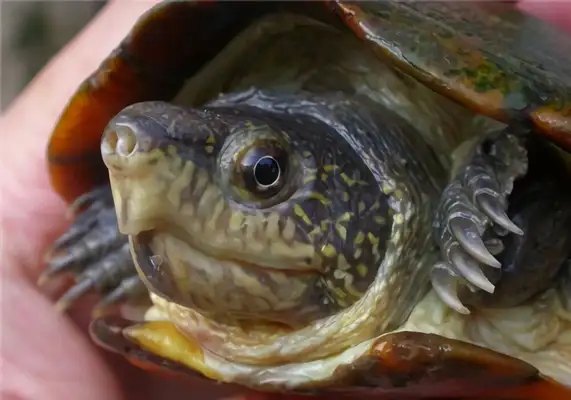
Wahhaka turtles are not particularly strict about food choices, usually prefer meat foods, are also preyed on meat foods in the wild, and are prone to post-hypnotic anorexia in an artificially raised environment.
I. Food choices for the Wahaka turtles
In the wild, Wahhaka turtles hunt for animals smaller than their own, such as fish, shrimp, etc., and even other turtles, where they eat aquatic plants or fall fruit. Although it is not common, hunting for the same species has been observed. He can be fed fresh animal baits, such as fish, shrimp, screws, earthworms, meat, etc. When young, raccoons are the main predators for adults, often preyed on water birds or some predatory fish. Giant crocodile turtles are also predators of larvae and adult bodies, whose lifespan is typically 30 to 40 years.
II. The hibernation anorexia of the Wahhaka turtles
After hibernation, the most vulnerable conditions are “post-hypnotic anorexia”, dehydration, inability to open eyes, weakness of limbs, oral inflammation, respiratory disorders, skin disease, weakness due to lack of vitamins, cold, etc. After hibernation, the temperature and humidity are slowly increased daily, followed by fresh fruit and vegetables, such as tomatoes, bananas, tarts, etc., where the turtles are fed to smaller insects or fish, and even fresh livers. Normally, food should return to normal after one to two weeks.