Designation: PET2221
English name: hognose snake
Vulnerability: oral inflammation
Life: Summary of pig-snake species, 10-15 years
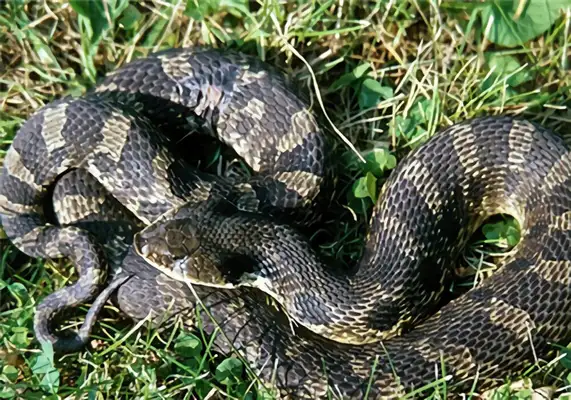
Although toxic saliva is also toxic, the saliva is of a temperate character, generally unattractive, and it is important that their fangs are located at the throat so that they are not gnawed directly. At the same time, their toxicity is mild enough to be paralysed to affect humans, safe and secure, and a small snake.
A total of three branches can be found in the boar snakes, the Heterododons in North America, the Lystophiss in South America and the Leoheterododons in Madagascar, all of which have similar sizes and flipping noses, which can be easily confused.
Chinese literary name:
English name: hognose snake
Area: Animal
Door: vertebrate door.
Amen.
Scramble
I've got eyes.
Section: Snake Section
It's a pig's nose.
Son of a bitch!
Region: Characteristics of the morphology of pigs and snakes in North America, South America, Madagascar
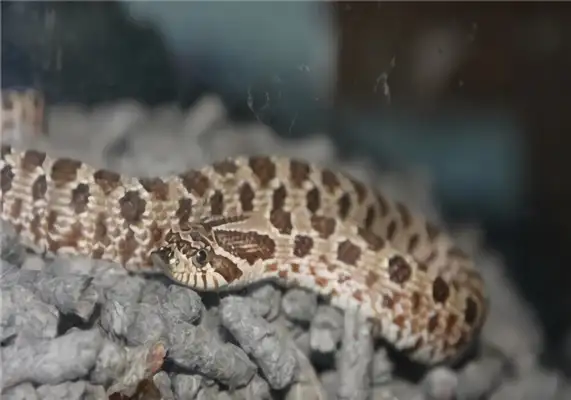
The adult pig's nose is usually about 60 cm in length, with a maximum length of up to 1 m. Its body size is relatively short, its features change with nature changing, and its back is covered in dark stripes. Both the abdomen and the lower tails are white.
This is the type of de facto obese, whose species are much heavier than the others of equal length. They have sharp-up kisses that can be used to excavate, as well as elastic scales. Most of the color of this species is dark yellow or brown with dark spots. Their abdomen and tails have many large black blocks. The base colour of the abdomen of this species is also dark yellow or tan, although there are sometimes varying degrees of orange. By comparison, the abdomen and tails of the southern pig cobra (Heterodon simus) are single colours and lacked clots of color. As for the eastern pigs, their tail color is lighter than their abdomen. The first-born individuals of the West Piggy Viper grow in the same shape as they do in shape, ranging from 13.9 ~ 20 cm. Piggy snake living environment
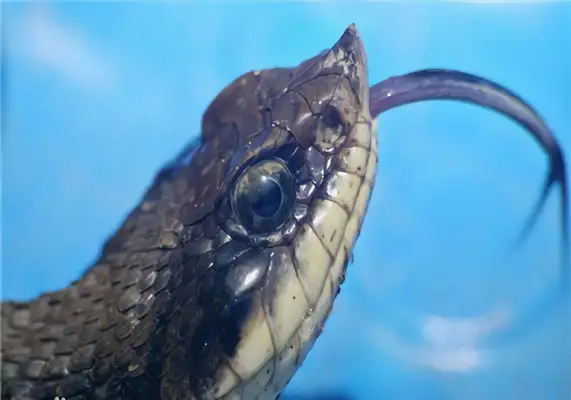
Although pigs and snakes have toxic teeth, they are mild and almost non-aggressive, it is important that their poisonous teeth are behind them and not be eaten directly by them even when they bite, and that they are also mild enough to paralyse and do not affect humans. It is therefore safer to raise a family.
Because of the small size of the pig's nose snake, it is sufficient to use two-foot casks, which can be bred with skin-crumbs, as well as a warmer lamp and a water basin, which are less demanding, except for the fact that the food is sometimes more problematic for individuals who refuse to eat a mouse. Pork and snake breeding knowledge
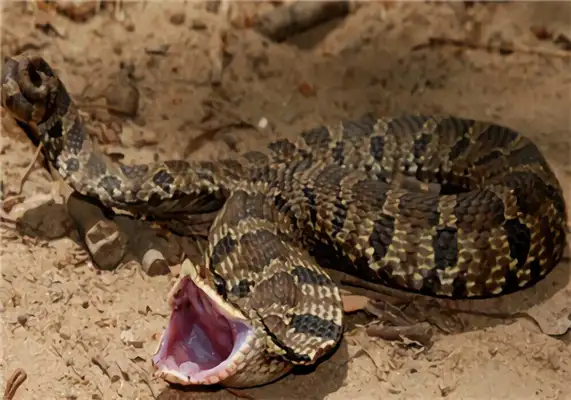
In general, a pig's nose snake is mild, but it reacts when it is threatened, with its abdomen in the air and mouth open to death, a habit that is usually found in the wild and rarely found at home. The other trick is to open the neck ribs and make hisses, which are like cobras, and pretend to attack people, but they don't really bite, but just scare them. The only difference is that they can't stand up like cobras, and this is still a common way of raising them, and it's back to normal. The pig's snake feed.
Piggy snakes do not have too high food requirements, their personality is very tame, their market prices are low, and they are suitable for new breeders. So what's a family pig-snake to feed?
Piggy snakes feed mainly rodents and lizards, and frogs and aphids are also available. The exception, however, is the Eastern Pig Snake, which eats only a plate of antiqualone and is immune to its toxin. Pigs and snakes are common pet snakes, and western ones are more easily ploughed; Eastern pigs and snakes are also common, although their eating habits often cause severe headaches.