Designation: PET4091
English name: Texastortoise
Origin: United States, North West Mexico.
Vulnerability: pneumonia
Life: Overview of turtle species in Texas around 80 years
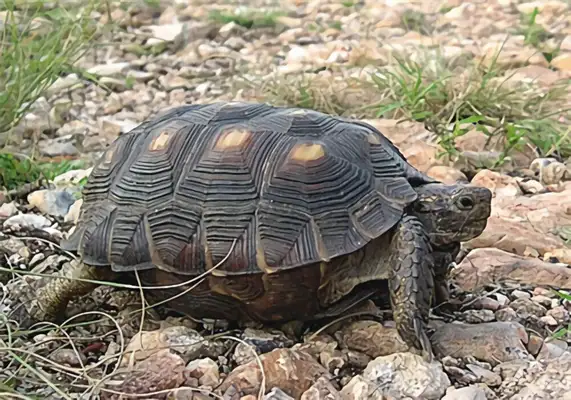
Texas turtles are land turtle species, which are not uncommon in China, and Texas turtles are more difficult to raise, so there are few breeders. Texas tortoises are also known as Texas cave turtles, which are smaller in size and like to eat some high fibres.
Texas rats are one of the turtles. They are located in the United States of America in the states of Coahuila, Nuevo León and Tamaulipas. The phrase berlandieri was added to commemorate the Belgian naturalist Jane Louis Berandier. Texas rats are the smallest of the four. It is usually found in desert areas that are scattered with cactus and drought-resistant plants. It's also one of the more indistinguishable holes in the ground turtles. It's either using the caves of other animals or the shallow pits under the trees.
Chinese name: Texas Mouse Turtle
Famous alias, Texas Cave Turtle.
English name: Texastortoise
Latin name: Gopherusberlandieri
Geographical distribution: United States, north-west Mexico.
Reproduction: 1-4 slightly longer eggs can be produced in June-July.
Practising: Living in a wasteland, digging under trees or roots.
Body characteristics: A maximum length of 22.2 cm. The back armor is shorter, the dark colour shield, the rib shield and the central part of the vertebra are bright, with two amphibians, with the largest width in the vertebra.
Eating: Herbiving, eating from flowers and fruits.
Preciousity: Characteristics of the state of Texas ' s turtle morphology, appendix II to the CITES Convention on International Trade
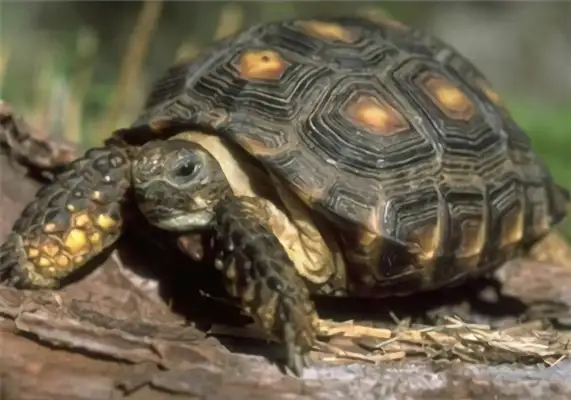
Texas's turtle looks are more characteristic, a slightly flat turtle, but not as flat as a cookie turtle, more like a flat Egyptian turtle, with a lower colour than an Egyptian turtle, but rather a more monolithic, dark yellow color, and the color of the backnail is related to the environment.
Texas rats are the smallest of the four. It is usually found in desert areas that are scattered with cactus and drought-resistant plants. They are also one of the less pro-drilling caves in the ground turtles. It's either using the caves of other animals or the shallow pits under the trees.
They, like other ground turtles, are very relevant to the habitat-specific environment and food, so it is difficult to raise wild individuals. In addition, they are prone to lung diseases caused by fungus and have a high mortality rate. According to station chiefs ' experience, the pathology of such infections is not clear and tends to be a gradual decline in food denial and mobility, a slower development process, difficult diagnosis, and a failure between about two and three months. It is therefore preferable not to contact or mix with other turtle species in order to increase the chances of infection. Texas rat care knowledge.
The ground turtles are very long-lived reptiles, with a life cycle of at least 60 years and a record of survival beyond the first century in an artificial environment. It usually takes 10 to 15 years for a female to reach maturity and is larger than a male to reach maturity in order for the male to become visible by sex, usually with a sharper chest and a visible dent in the abdomen. Texas Mouse Turtle Living Environment
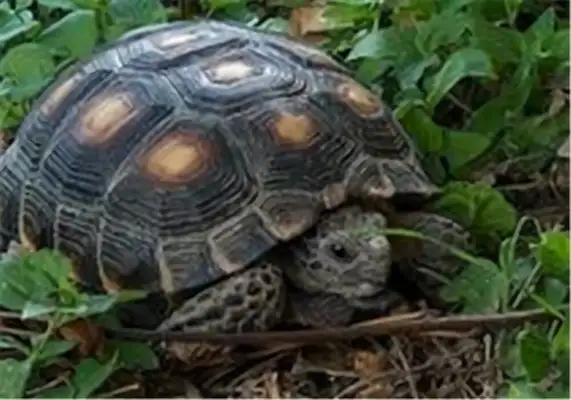
Texas turtles need to be equipped with complex environments because they live in a wild environment, and they live in such a complex environment, as described below.
I. Distribution of Texas rats
The Gopherus belandieri, which is located in the southern part of Texas across three continents of Mexico - Coahuila, Nuevo Leon, Tamaulipas - is also one of the smallest species in the gophers, with the largest size of 22 cm, currently listed as protected turtles in appendix II to CITES, which appear to be hiding in caves for less time than other rats, often under the bushes, although they tend to use abandoned caves to hide.
II. The state of Texas tortoise living environment
The geology of Texas ' s ground turtle habitats, including the dry mountains ' oak forests, swood forests or dry savannahs, which are mostly dry and sandy, makes it easier for them to nest. Texas ' s land turtles usually excavate or search for suitable cave depths to avoid extreme humidity, because underground caves can effectively isolate the unusual climate outside and provide the temperature and humidity they need, although caves are also a good refuge for them, which is the same for all ground turtles, including, of course, various local mammals and birds or other insects in North America. What's the point?
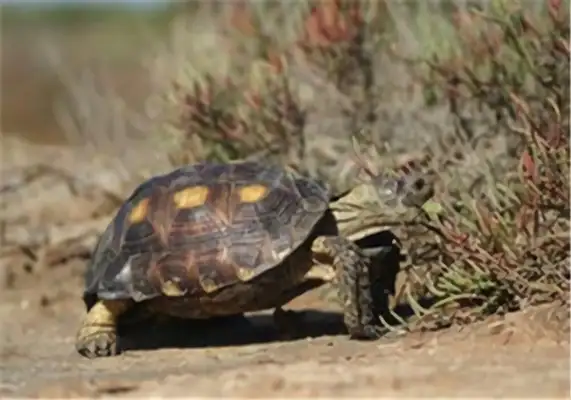
The main sources of food for Texas rats when they survive in the wild are plants, that is, Texas rats like to eat food with high moisture content and a high concentration of coarse fibres, so that the following types of food can be made available for human feeding.
1. Selenium: Plants of this kind are easily grown. They'll keep branching, and each branch can be cut down or cut down as a new individual. And leave them in the earth, and they will grow. They're like cactus, but they're softer and they can play them easy. They're a year-old plant with orange and yellow flowers, and they're beautiful when they're formed. We have eight varieties, with different bouquets. The turtles will eat if they feed the leaves to turtles.
2. Cactus without thorns: medium-sized plants. The cactus is rich, the turtles eat. Cactus leaves can go straight to the ground. A third of the ground is buried, preferably in sandy soil, but at least in good water. The newly grown cactus will be protected by a fence until it is entrenched. Otherwise, turtles don't give him the chance to grow up.
3. Slan: Large leaves can provide shade and are also very beautiful. The best choice is the Slan with soft leaves. The silk fence can start at a seed end, with the best planting times being spring and early summer. A few branches are removed from the parent body, the leaves of the roots are removed and buried in a good water seepage depth of about 8-12 inches.