Designation: PET6501
English name: Grey-headed Lovebird
Nature: Being shy
Origin: Africa
Vulnerability: respiratory, digestive and parasitic diseases
Life: Overview of the species of Malagasy lovebirds for about 12 years
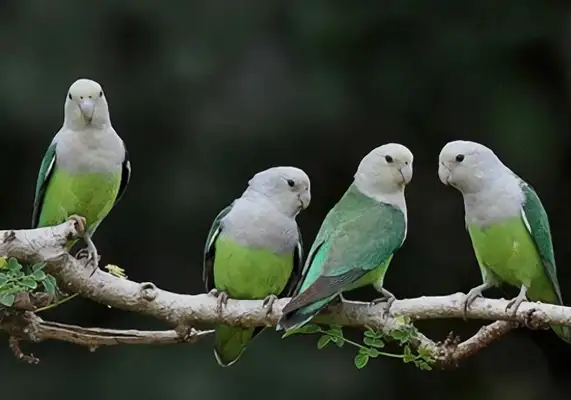
The reasons why people like Malagasy lovebirds are not very few are mainly the following: 1. The Malagasy lovebirds have beautiful feathers, their bodies are large green and seem very comforting; 2. The Malagasy lovebirds are lovebirds, who usually do not leave each other, and their loyalty to each other is good; 3. The Malagasy lovebirds are quiet and do not seem as loud as many birds.
There are many people who raise Malagasy lovebirds, although they are small parrots, but that does not mean that the masters just have to prepare them a small cage, which is very important to them. Because of the shyness of the Malagasy lovebirds, they try to hide as far as they can under conditions of artificial breeding.
Madagascar's lovebirds have a lot of aliases, such as grey-headed parrots, grey-headed lovebirds, concubines, gray-headed parrots. With proper breeding, Malagasy lovebirds can live for about 12 years.
Chinese literary name: Madagascar Lovebird
Two words: Agaponiscanus
Context: Animals
Gate: Pipeline gate
Amen: vertebrate Amen.
Programme: Birds
APA: Today ' s APA
Look: Parakeet.
Section: parrots
African parrots
It's a parrot.
Subspecies: 2 characteristics of Malagasy lovebirds
Compared to many parrots, Madagascar's lovebirds appear to be slightly “clean” in their bodies, mainly green, and less likely to be “big red purple”. Because of gender, male and female Malagasy lovebirds display different morphological characteristics - the female head is green, while the male head is grey, so we can judge the sex of the bird by looking at its head. Madagascar Lovebird Living Environment
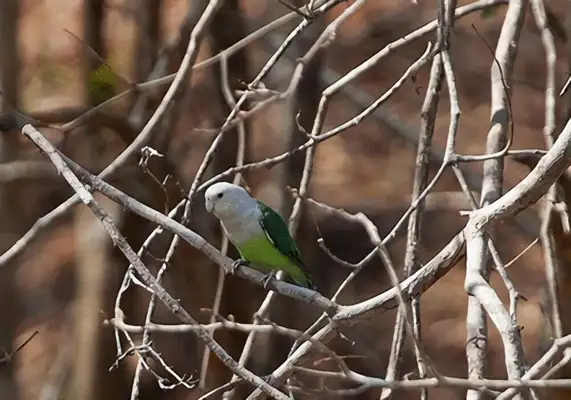
The Malagasy lovebirds come from Africa, where they have a wider habitat, where you may see them in the bush, where you may see them on the edge of the forest, where you may see them on dry grasses, and where you usually see them, they appear as groups. In addition to the above, Madagascar's lovebirds are found in crop areas, where they have the food they like, so local farmers have little interest in them.
In general, Malagasy lovebirds look for their food on the ground, and they do not seem to mind spending a very long time each day. But because of their sensitive nature, even if you see them, they can't get too close, because they can fly away as soon as they find something. You can also hear their screams when they're scared to fly away.
Because Malagasy lovebirds are quiet and shy, they may need some time to adapt to the new environment when they are raised by humans. During adaptation periods, they are generally vigilant, and when the masters approach, they may be disturbed and the masters may try not to disturb them. In addition, if the Malagasy lovebirds are to be raised, the owner must have enough room to do so, otherwise they are not recommended. In the choice of cages, in addition to ensuring the openness of the Malagasy lovebirds, attention should be paid to the contents of the cages, which are good.
After raising the Malagasy lovebirds, the masters regularly clean up the cages, and the clean environment makes the birds healthier. Elements for the conservation of Malagasy lovebirds
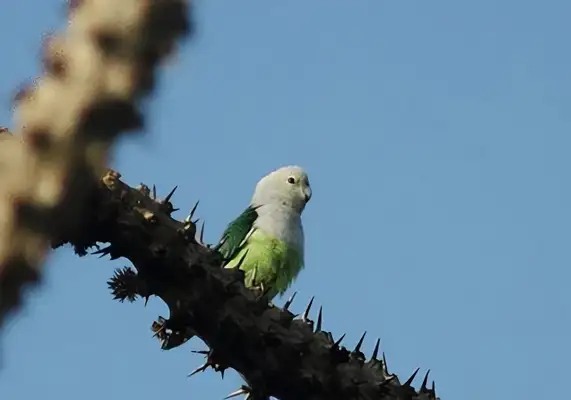
The Madagascar lovebirds that appear on the market usually come from two sources — directly capture and artificial reproduction from the wild. Birds from different sources may exhibit slightly different characteristics, with birds directly caught from the field being more susceptible to disease, with higher mortality rates, and with more time to adapt to the human rearing environment.
Madagascar ' s lovebirds, though quiet, also need to live together, otherwise they are prone to psychological problems and eventually lead to pecking, etc. In order to avoid this situation, the master can prepare toys for the Malagasy lovebirds. In fact, providing them with toys can also satisfy their need for bites. Because Malagasy lovebirds like to bite, if you put them out of the cage, they're likely to bite furniture, etc. When raising Malagasy lovebirds, the master also needs to be aware that the Malagasy lovebirds like to bathe and that the master needs to prepare clean water for the bird to bathe.
Madagascar's lovebirds can breed under conditions of artificial breeding. Although in the wild, they do not reproduce every four seasons of the year, this can be done by the rearing of Malagasy lovebirds, and it is no problem to reproduce several times a year if the owners maintain them for scientific purposes. When female birds lay eggs, some owners may visit nesting boxes frequently for care-giving purposes, although Malagasy lovebirds are concerned with such behaviour, and if they do so more frequently, they may end their children ' s lives with their own hands. Madagascar Lovebird Feeding Points
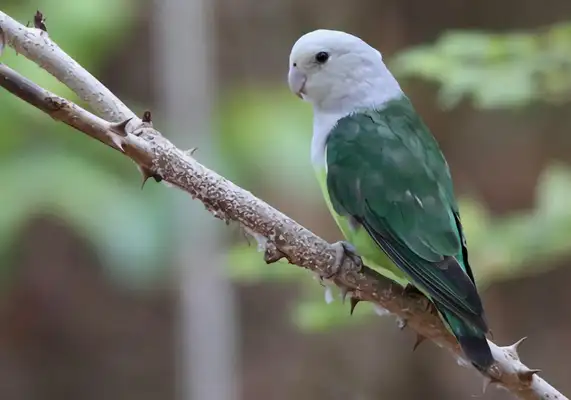
In order to survive better, Malagasy lovebirds will spare no effort to find food on a daily basis, of which seeds of grass plants are absolutely their true love. In addition to seeds of herbs, they also eat fruit, etc. Although Madagascar's lovebirds represent, in the view of many, the loyalty of love, in the places in which they live, farmers do not buy their money, because they feed their hard-earned crops.
Some might wonder how wild Malagasy lovebirds can guarantee a balanced diet. In the natural environment, Malagasy lovebirds seek all kinds of food that they can eat. Plant seeds, fruits, etc. are the targets of their hunting, and as the season changes, the food source changes. As a result, Malagasy lovebirds receive the nutrients they need for their bodies.
So how does the owner guarantee the scientific diet of the bird under conditions of artificial breeding? As birds are increasingly being raised by humans, many of the products developed specifically for birds are alive, and their owners can buy suitable feed for the birds they raise. In addition to feeding the birds, the owners can feed the birds, as appropriate, some fruits or vegetables of interest to them.
In the case of many owners who change their recipes during a particular period of time (e.g. into reproductive life), it is important to note that changes in the recipe must be scientificly prudent to avoid, for example, obesity. In addition, as in the case of many other birds, the owner regularly inspects the water tanks of the Malagasy lovebirds to ensure that there is sufficient drinking water in them, and to see whether the drinking water is contaminated and, if it is contaminated, replace it in a timely manner.