No.: PET1922
English name: Karroo cape Tortoise
Origin: Karu Nature Reserve, South Africa
Vulnerability to disease: decomposition
Life: Overview of turtle species on Cape Karu Sea 50-60
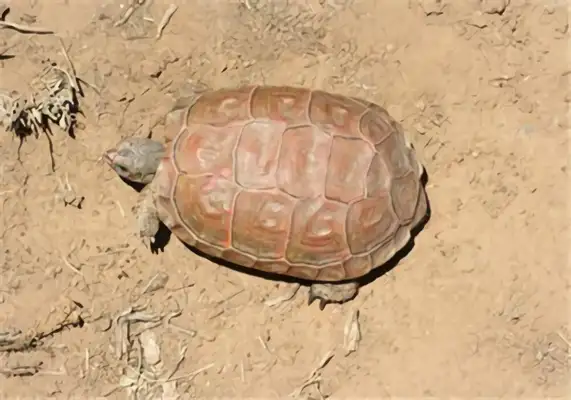
It is rare in the field of turtles, which belong to the Precious Tortoise, where they live in the highlands and are more resistant to the cold, and it is also the only turtle of the Precious Turtles that is likely to be dormant, which is a rather peculiar species.
Chinese literary name: Cape Karu
Latin name: Homopus femoralis
English name: Karroo cape Tortoise, Greater Padloper Tortoise
Don't call it a parrot turtle.
Context: Animals
Gate: Pipeline gate
Programme: climb
Tortoises.
Section: Marine turtles
Yes: Yes, it is.
Crop: Cape Kalu
Distribution: Karu Nature Reserve, South Africa.
Habitat: mountain rocks and highland steppe areas.
Size (back armor): 17 cm.
Eating: Be good at the grassland, where the food is mainly grass and small grass plants.
(c) Reproduction: spawning (summer spawning, three nests per year, several eggs per nest).
Endangered state: CITES. Characteristics of turtles on the Cape of the Karu Sea
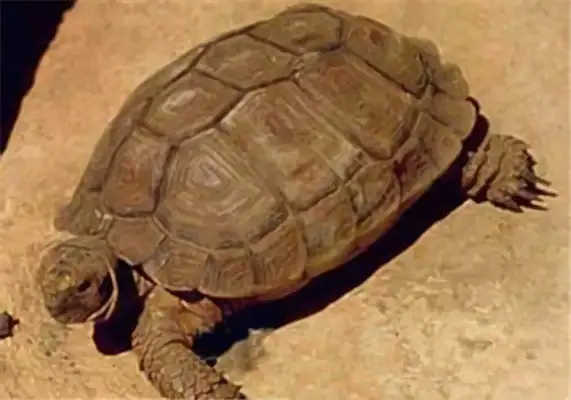
The capricorn of the Karu Sea turtles has no gravitate or oranges and is not visible, but it is visible that the stripes on their backs are relatively clear, their heads are small, they can be constricted into their shells and their limbs are visible.
The wild state of the species of turtles in Cape Karu was found at high altitudes in the inner plateau of the eastern Cape of South Africa, just north to south of Gyeongbali, North Cape Province, South Africa, and east to the border between Laisoto, all of which are within the reach of Karu, and south-west of Cape Province (Murraysburg) to north-west Cape Province (Sutherland Sutland).
Cape Karu is the largest of the rare turtles, which can be up to 17 cm. Shells are brown or orange and the edge of the shield is black. There are individuals, especially the elderly, with identical crust colours and no black sediment. Males do not have dimpled bras, and female and female ass appear “stabbing”. The knowledge of turtle care on Cape Karu
In general, turtles (below 10 centimetres) can take a bath twice a week, because they are prone to dehydration in an artificially fed environment and once a week for turtles. In addition, wet native climates, such as red legs, can reduce the duration of bathing, such as once every two days. In bathing, however, it is important to remember to dry up the Cape Kalu and then put it in a breeding site and to put it directly under a light bulb in order to avoid cold. The living environment of the Cape Karu
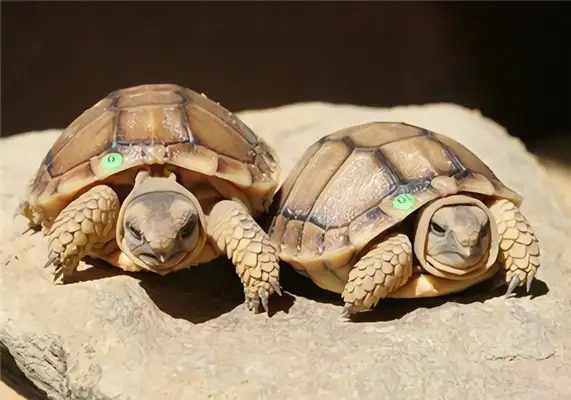
It is not generally possible for turtles to live in cold areas, even if the temperature of the environment is controlled by artificial breeding, which is rare and precious.
Cape Karu sea turtles prefer to live in mountain areas (Karugrassveld and Bushveld bushes), where snowfall in the coldest region of South Africa is certain during the winter, where they do not dig caves, but hide under slabs or vegetation and are completely exposed to cold air.
Cape Karu turtles live at high altitude, mainly in the inland highlands of the Eastern Cape, to the central and Kimberley regions of Northern Darfur and to the eastern border areas of Lesotho, often accompanied by heavy summer rainfall. The species lives in mountain savannahs and bushes, and is practised between several sea turtles of sea-earthed and other preferential mountain environments, although also present in rock cracks, but not in the main range of their summer activity. At the same time, Cape Karu is also the only marine turtle of its kind that is likely to be dormant, and it was observed that in June-September they were dormant in a rock crack or hole. The point of raising a turtle on Cape Karu
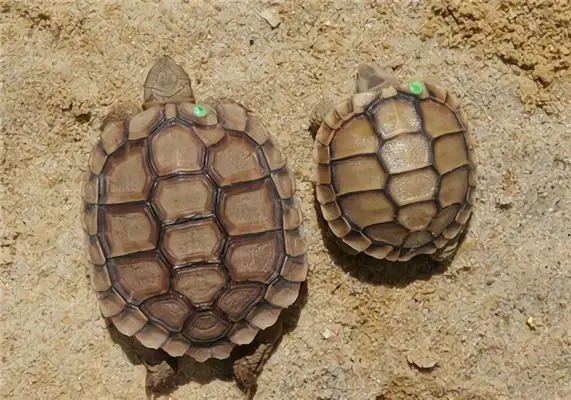
We all know that the most important thing in raising a turtle is a reasonable calcium and tan, but the main purpose of tan is also calcium. Why is calcium so important to a turtle? What are the effects of calcium deficiency on turtles?
I. Cartilage
Pathological condition: Shears soft, unable to move and eat.
Cause of illness: calcium deficiency.
Treatment: The only way to get to the disease in question is to supplement the calcium ion, which is usually injected with calcium glucose, but it does not help. The most important thing is to prevent it, and normal calcium delivery is essential.
II. Muscle convulsions
Diseases: muscle convulsions, mobility difficulties.
Parameters: Actually, the cause of the disease is not as simple as calcium, which is only one side, and the imbalance of electrolytics in the body causing the loss of calcium ions. As you know, calcium ion is an important neurotransmittance, an abnormal loss that causes muscle convulsions, but muscles and nervous calcium ion are not directly ingested, but, like calcium in the bones, they are also derived from calcium ion in the blood, a process balanced by electrolyte.
Treatment: The calcium ion supplementing the nervous and skeletal muscles needs to be balanced by electrolytics, so the cure is to supplement electrolytics. It may be used as a means of giving medicine by filling or bubble.