Designation: PET5428
English name: Chelydra serventina osceola
Origin: Distribution in Florida, South Georgia, United States of America.
Life: around 50 to 80 years
Price: An overview of alligator species in Florida, $800-1200
Osceola, also known as the fungus turtle, the guacamole, the guacamole, the flatback turtle, which is an alligator, the alligator, the alligator species, the alligator species, and the alligator sub-species of Florida, is a very fierce predator, with numerous spikes in the neck, the most developed of the four. In Florida, South Georgia, USA. Croc turtles are edible, carnivores, staple fish, shrimp, frogs, basil, snakes, ducks, waterbirds, inter-eating aquatic plants and falling fruit. Happy evening activities, eating. Alligator character in Florida.
The width of the front edge of the third vertebra is as wide or as wide as the second bulge. The abdominal armour is small, presenting light yellow. Big head, eyes closer to the kiss. There are three sawn teeth in the tail, extending from the root to the back end of the tail. It's a ferocious predator, eating a variety of wild animals. When people were close to each other, Fozhou ' s alligators were quick to give warning of jets in their throats and were ready to attack. It is more lively and violent and far more violent than the North American species. Ben's kind of hot. Florida has knowledge of alligator care.
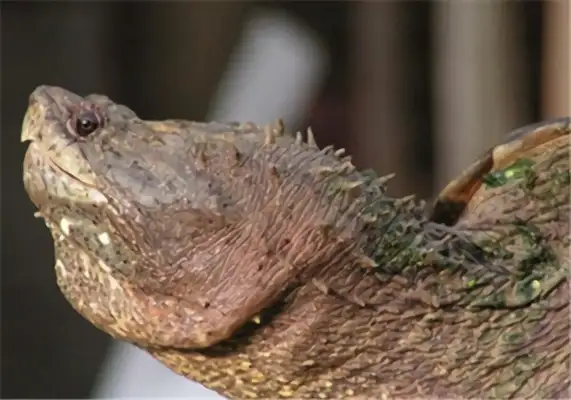
A lot of people like tortoises, most raise them from seedlings, and they grow fast, so they tend to grow big when they're not careful. In this case, we want to have a Florida turtle, and the most important thing is to choose a good seed.
The head pricks that are of greatest concern to the players during the nursery age are still visible. As flat as a sting, it is distributed over the skull. Once out of the water, the head pricks are attached to the skin, forming larger granular forms, with a slight formation in the water. The effects are different from the angle of the photograph. When selecting, care is taken of the size of the particle of the head puncture and the position of the ranking. Also, reference can be made to the sub-body, the position of the adult head puncture and the organization. The selection is sequenced, the particles are large and almost identical in size.
On the colored pattern, it's personal. Market options are currently brown, yellow, near black. Saplings are generally darker and deeper than larger individuals. There are a few black spots in the backs, and black and white spots between the skirts of the nails. Body tattoos, contrastable, that's all. In the selection, the selection is balanced and large.
A and eyelids, different from adult form. During the pre-baby period, the length of the first and the second leg of the A was almost identical, while North America was a front- and back-wide flying saucer. For example, my personal favorites are those that show a better quality, whether it's a nail, a tattoo, a type, etc. The eye position is more concentrated at the front end of the nostril than in North America due to color and the subgeneric characteristics of the sub-species, with more light skin and grey. The head is more blunt and larger than the North American sub-species. Florida's alligator living environment.
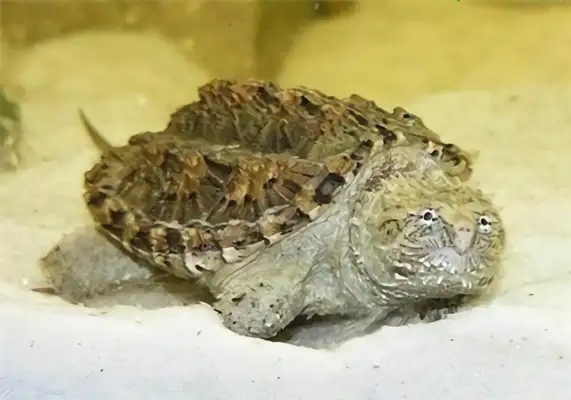
The state of Florida is typical of turtles, who are prone to diseases such as decomposition, pneumonia, etc., mainly due to a decline in water quality, water temperature, etc., so it is necessary to provide a good living environment for the state of Florida.
I. The state of Florida ' s alligator environment
Sea turtles live in water, which is generally deeper than the back of a turtle, not deeper, not more than twice as high as the back of a turtle. It is best to provide a rock above the surface to climb up and tan; turtles need sunlight, often for more than 10 minutes a day if they are fully indoors.
It is recommended that they be raised in the south-east in areas where the sun is about 1 to 2 hours (no longer than a long period of sunlight) and that they be provided with shade conditions (which can be covered by a small piece of wood on top of the tank) in order to avoid heat. In the summer, care must be taken to prevent algae from growing in a tank, to buy aqueous algae, which is sold in the usual aquariums.
II. The requirements of Florida for water quality
For running water (for the removal of chlorine) that has been dry for more than two days, it would be preferable to prepare two plastic buckets for drying to meet the need for water exchange. The change of water is recommended for two to three days, each with a partial change without the need for a full tank, unless the water and its surroundings are dirty. In part, when changing water, a plastic tubing uses the iris principle to suck out dirty water at the bottom and add an equal capacity of new water into the tank. There will be no white eye disease or rotting nails for water exchange turtles. If you're in trouble, you can use filters, like fish.
III. What if Florida makes a crocodile hibernation?
When temperatures fall below 13°C from October to May each year, turtles begin to hibernate until the temperature rises to 18°C. Sleeping turtles don't eat, sleep. The simplest method of hibernation is to move the turtles into the dark and quiet interior, with shallow water (water just passed the back of the mantle) hibernation, which changes water once a month. Try not to disturb the turtle except to change water. Be careful that the temperature is not less than 6 degrees or that it endangers the life of the turtle. Florida's alligator.
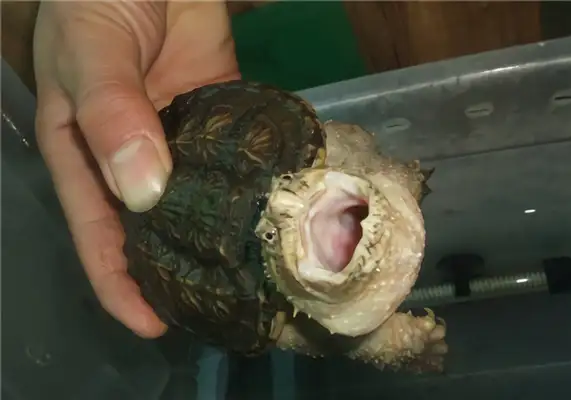
Florida's alligator likes to eat meat, but some of the grains come in, so it's easy to raise turtles, but we also have to pay attention to feeding.
First, Florida's alligator feed.
Tortoises feed in the water and feed directly when fed. Turtles generally feed pork, beef, shrimp, fish, poultry fish livers, which are cut or torn, but these animal feeds are highly susceptible to contamination of water quality.
It is recommended that the turtles be fed. Newbies suggest feed, good feed, like lifelines, gold, good. Feeds are less expensive and specialized tortage is better matched and does not easily pollute water quality.
II. Frequency of gator feeding in Florida
High summer temperatures and high metabolism of turtles can be fed once a day, but it is generally recommended that they be fed once a day, because turtles do not need to feed too often and they are slow animals with metabolism. Of course, if you're busy, you can feed them once in a few days, and if you guarantee enough water, they don't eat for half a month, and turtles tend to feed them with enough head and neck size.