Designation: PET3833
English
Character: Wimble
Vulnerability to disease: decomposition
Life: Overview of the species of pink-cladback turtles aged 30 to 50
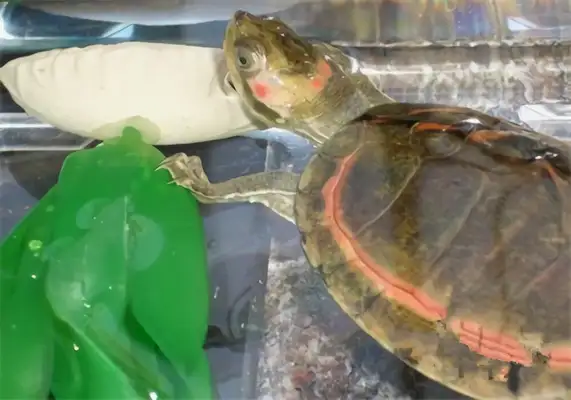
The pink circle sawback is a high-backed species of water turtles that are difficult to conserve, usually with a mortality rate of more than 80 per cent for seedlings, and a large proportion of deaths due to decorated skin, which also leads to small numbers of such turtles being farmed with low frequency.
Chinese name: Pink Circle Sawback Turtle
English
Reproduction: Eggs
Food: More groceries, general vegetables and refrigerated worms are acceptable to bread worms. It would be better to survive the dangerous period immediately following importation.
Care: When purchased, careful selection is required, with particular attention to the presence of signs of infection, and it is best for young turtles to be raised individually and to be protected against infection with antimony drugs in fish, and to wait until the adjustment period has passed before mixing with other turtles. Pink Circle Backback Turtle Characteristics
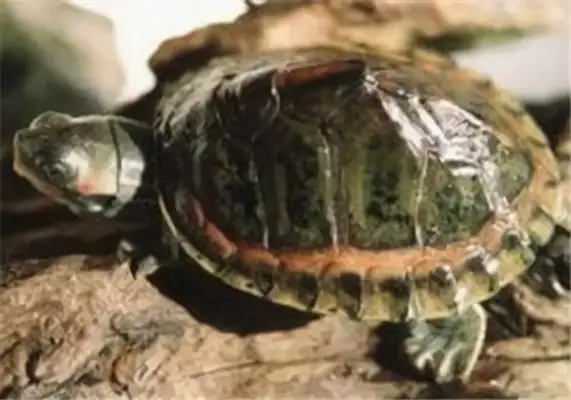
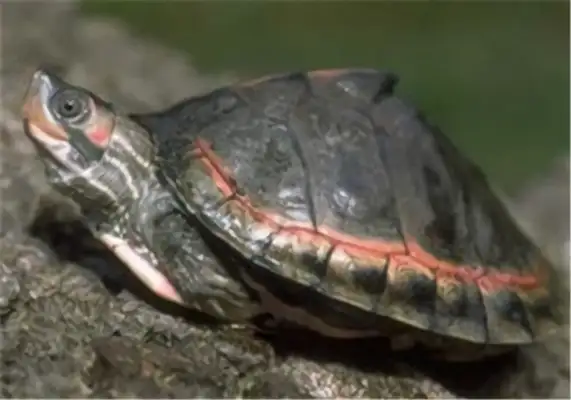
The pink circle sawback turtle looks so good, the cheeks look like a shy child, the three thorns on the backslids are pink, the twilight is green and only the outer circle of the backslids has a pink line, which makes it very special and easily identifiable.
The pink ring saws the turtle's back armor up to 26.5 cm. Red-ringback turtles belong to high-back turtles, characterized by high-tight vests, in particular the third vertebrae, especially highlighted. There are three sub-species. This is the best. The red circle saws the back of the turtle, and the pink round of the back. It's supposed to be the brightest of them.
Taiwan and the mainland are customarily known as Red Circle Sawbacks and Pink Circle Leatherbacks, which is also a low-level mistake for translators. Latin literature specifically refers to a turtle whose backs are like the elastics of dragons, rather than sawn teeth, whose name is: a tent with the leatherbacks divided into two to three sub-species (currently the classification is not uniform). Pink Circle Sawbackback Conservation Knowledge
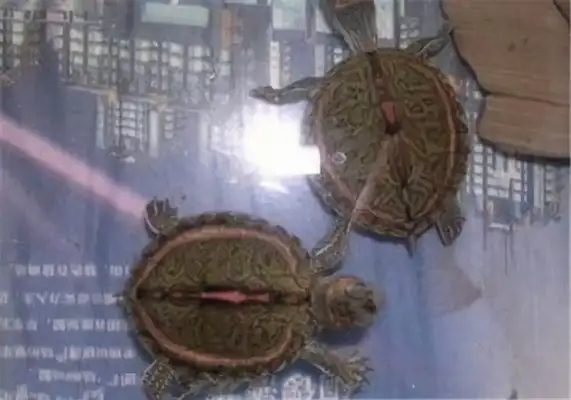
The most important thing about the conservation of pink collar-sawback turtles is the prevention of disease, a turtle that is more sensitive to temperature, so if temperature changes are too large to cause death, what would be the most appropriate temperature?
I. Importance of temperature
The pink circle sawback turtle is a thermogenic animal and is therefore sensitive to changes in environmental temperature. Its diet, activities, etc. are influenced by ambient temperatures. In order to overcome the deficiency of the limited heat produced by pink circleback turtle metabolism and the lack of control mechanisms to retain internal heat generation, the pink ringback turtle relies on finding cool or hot locations to control temperature fluctuations on a daily basis.
II. Temperature range for adaptation
The physical and mental well-being of the pink-ringed backback turtles can be ensured only when the artificial small ambient temperatures of the turtles are consistent with natural habitats. General tropical turtles at 27 ~ 38°C and temperate turtles at 20 ~ 35°C. Some pink ring-sawback turtles die at temperatures around 5°C above the appropriate temperature limit. When temperatures are low, turtles are inactive (matrix voltage).
III. Physiological performance at different temperatures
For the purpose of breeding turtles to be fed artificially, they should be protected against excessive or large fluctuations in ambient temperatures. When temperatures are around 10 degrees Celsius, turtles begin to hibernate. Temperature rises to about 15 degrees Celsius, and turtles start to operate, and some can even start eating. It is common practice to regularize turtle feeding and activity at 25°C. Temperatures around 30 degrees Celsius are the best feeding, activity and growth temperatures for turtles. So, in the country ' s Mid-Range downstream region, the months of April to October each year are the feeding and activity period for turtles; the months of November to March of the second year are the hibernation period for turtles. The pink circle saws the turtle's environment.
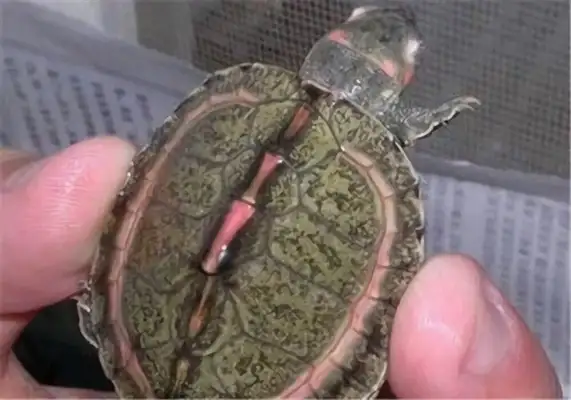
There is a need to give the pink circle sawbacks a place to hide in the environment where they are raised, because it is a timid tortoise and, at the same time, the pink circle sawbacks are quite fond of sunbacks, and on the basis of both, the following points must be noted.
1. There should be suitable places of refuge, such as sunken wood with caves, or the planting of plentiful beams on the surface of the water, so that they feel safe.
2. There must be a tan-backed land, which can be not very large. They do not prefer to climb on land. They simply need a place to put their abdomen on hold and then enjoy the sun. It is highlighted here that the provision of suntanned land is an important prerequisite for the prevention of rotting skins if it does not provide land and is immersed in water for long periods.
3. On the basis of Article II, an environment of higher temperatures than water must be created! Otherwise, low-temperature sunfalls into high-temperature waters or high-temperature waters are the greatest cause of pneumonia! Remember, turtles are always tanned to improve body temperature, and water is introduced to reduce body temperature, so the gradient of water temperature and temperature must not be reversed. The temperature is basically guaranteed at 30°C (which can be fitted with a polyheat above the tan area). Turtles are alive and hungry. The pink circle saw-back tortoise.
Pink circle sawback turtles are more complex to eat, and many foods are available to them. Below are some of the common turtle foods that turtle friends can choose to supply to turtles, depending on their own circumstances, with readily available food to ensure their nutrition.
One, fish, meat.
Meat and fish bought from supermarkets or fresh fish shops can be eaten, but at best only as supplementary food. Fish should be selected in such a way as to avoid those species with large fat volumes. In meat, intestines or liver parts may also be used, but they must be cut to the size that they can swallow, otherwise they will rapidly deteriorate water quality.
II. Artificial feed
In general, turtle-specific feed is used, and those turtles that are predominantly grass-fed can be fed with turtle feed. It is also supported by feed that is used to feed fish. Feeding large predatory fish is also favoured by predatory turtles, and goldfish feed is suitable for early use in raising turtles because of its strong taste and sedimentation. Some feed seawater fish, some with algae as the main ingredient, and some with strong downsea tastes, are suitable for supplementary plant nutrition for predatory turtles. Feeds to feed the walls can also be used to prevent the obesity of some large turtles.
III. Dry feed
Some of the most commonly used sea-based products are dry, but there is also a view that the feed is too salty. It can also be used only as complementary feed rather than as primary feed. Some shrimp can be used frequently, and many turtles like it. Such foods are highly acidized after their opening, preferably in the refrigerator.
IV. Vegetables, fruits
When feeding vegetables or fruit to aquatic turtles, care must be taken to cut the fruit and vegetables to the size that they swallow. Otherwise, it would only contaminate water quality and prevent turtles from eating. In addition, the food should be cleaned up as soon as it is eaten.
The requirement for water quality is high in pink-ringedback turtles, so attention should be paid to changes in water quality after feeding, to clean up impurities in a timely manner and to ensure the health of water bodies.