Title: PET5068
English name: Yakand Hare
Origin: Xinjiang
Vulnerability: ballworms
Life: 5 to 6 years of introduction to the species of Tari wood rabbits
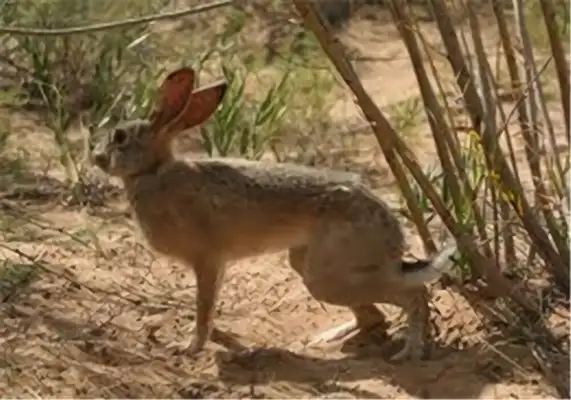
Tari rabbits are rabbits of small size in the area of our Tariwood basin, but their ears are huge, and they have become endangered and protective animals for years as a result of human neglect.
Chinese literary name: Tari Rabbit
Chinese alias: South Korean Rabbit, Sacar Rabbit
English name: Yakand Hare
Two words: Yakandensis (Güther, 1875)
Context: Animals
Gate: Pipeline gate
Amen: vertebrate Amen.
Programme: Lactation Programme
FIND: RABBITS
Section: Rabbit Section
Yes: Rabbit
Distribution: Tari rabbits, without sub-species, are a special species of our country, located in Xinjiang Tari Basin and the Robubpo region, with several circular areas, including Aksu, Jojo, Milan, Aragon, ploughshares, Kulle, Bathu and Mo, Sacar, Kaza and Kash.
Levels of vulnerability: The furs of the tari rabbits can be made of textiles, meat can be eaten, and the number has generally declined in some areas since the 1960s, especially around towns and cities.
State of protection: IUCN at risk: LR/nt; in force: 2003; in China at risk: red paper: at risk; in force: 1996. Tarry Rabbit Form Characteristics
It is also known as the South Frontier Rabbit, the Sharry Rabbit, which is smaller, has a lighter hair, is 29 to 43 cm long, has a tail of 6 to 11 cm long and weighs 1.2 to 1.6 kg. Large ears with no black ears are the most obvious difference between it and the snow rabbit. The body is short and straight, the back is tan in the summer, mixed with grey and black chords, the side is sand yellow and the gill, the throat and the abdomen are white. Tahrir Rabbit Care Knowledge
The year-to-year decline in rabbit production is due mainly to rapid population growth, increasing area and traffic in arable land and frequent hunting activities. As a result, almost all of the cities or areas within 5-10 km of county towns in South China are rarely found. Moreover, with narrow habitat and distribution, human disturbance and habitat destruction can pose a direct threat to the survival of the Tari rabbit. Tarry Rabbit Living Environment
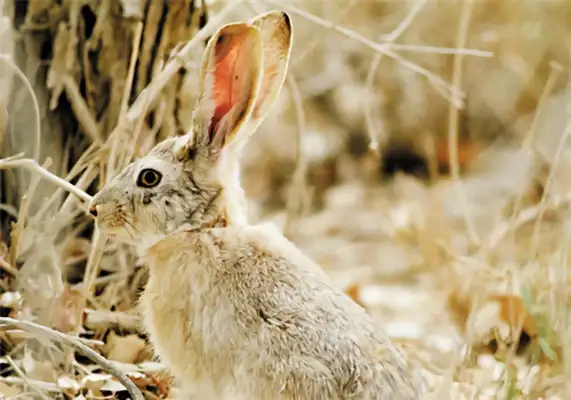
The Tari rabbits live in the Tariwood basin, an ancient species, which we often describe as an ancient species with living fossils, but in fact there are patterns that can be found in the appearance of the Tari.
Tari-rabbits are a unique species of the Tari-wood basin and a remnant of the Tari-Mue. Following the rise of the Himalayas, the mountains of Kunlun, Altai and Kirin, which were strongly broken up and linked to the Euro-Asian continent, the area of the land mass was increased, blocking warm currents in the Indian Ocean and making the climate in the Talliwood basin increasingly dry. From the point of view of Corbot (1979), the morphological adaptation of hearing bubbles to the effects of arid environments is indeed the case of the Talli wood rabbits, which hears large, has relatively long ears, has brown sand yellow, from an ecological point of view, has wide dry and early landscapes, is difficult to avoid, and has a well-developed hearing. The increased bubble of the Tari rabbit is a new phenomenon.
However, it is deep in the gutter, in the V-shaped form, which is filled with white aluminum, analysed from an evolutionary point of view, but not formed in the short term. The country ' s ancient northern border is characterized by the absence of such gutters as snow rabbits, north-east rabbits, north-east black rabbits and grass rabbits, and south Chinese rabbits. The species with these gutters, such as our Hainan and Yunnan rabbits, as well as Indian renting rabbits and black neck rabbits, are typical Eastern Oceanic species. From a historical perspective, it was only after the rise of the Himalayas that the Tari rabbits were cut off from the East Ocean when the Tibetan plateau rose. In the history of evolution, the character of the trachea of the Tari wood rabbit should be seen as its ancestral identity, showing its relation to the Eastern Ocean. As a result, while located on the ancient north border, the Tari rabbit is a species of the eastern ocean border, which is part of the eastern sea boundary.
It is the result of the nature race, the evolution of rabbits and the relationship between change and the environment, which has created nature in all its forms. Perhaps this is the so-called ghost work. What's the point?
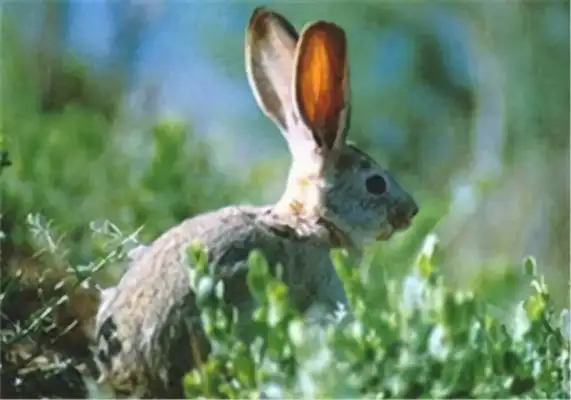
Tarly rabbits are typical edible animals, and we're all wondering, where do they get plants from where they're scarce? Sometimes, in order to be hungry, Tari rabbits eat selectively some barks.
Tari rabbits are unique species that are distributed only in Xinjiang Tari wood basin, weighing 1.9 kg in rabbits, 43 cm in length and only 8 cm in tail, with a distinct pair of big ears of one quarter in length. The front leg is short, the back leg is long and robust and suitable for running and jumping. The back of the head is tan, the side is yellow, the stomach is white. For typical plain desert animals, there are more sand packs in the Hu Yang forest and red willows, which feed on reeds and desert plants and reproduce two thirds per year at three-fifths per child.
Tari-rabbits are typical desert zone species that inhabit rivers at an altitude of 900 to 1,200 metres and near Robber, as well as towers in Hu Yang and Red Willow forests and central basins along both banks of the river. The semi-desert steppes around the Krama dry desert and the waters of the Tarrimu River, etc. It usually operates in the morning and at dusk, but varies with the season.
In winter, to avoid the enemy, food was found only before dawn and after dusk, mostly in the loose sand dunes with red willows, where the roots of plants such as reeds, robusma, licorice and camel thorns were excavated and hidden under the bush during the day. During the summer, there are also frequent activities during the day, often concentrated on drinking water by the river, eating bushes, skins of semi-brushes, young branches and green grass.