The winter break at the Beijing canine breeding base has turned into winter training, hot fires are on the east side of the training grounds where dogs, under the command of trainers, drill fire rings, jump barriers and search for poisons; and the west side of the playground, where an actual battle exercise has begun, where dogs' head only to the target, where the canine canine canopy is firmly pulled and the target is vandalized.
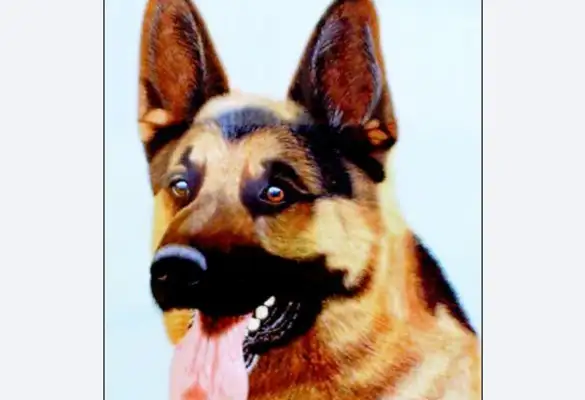
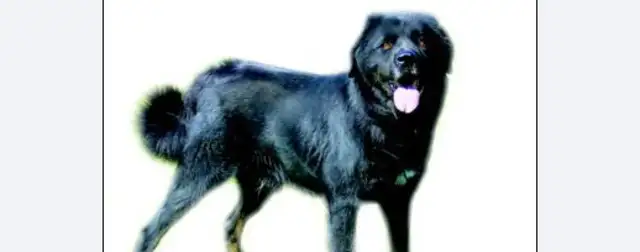
In addition to German sheepdogs, the Russian Caucasian dogs, the Swiss St. Bernard's dogs, the Belgian sheepdogs, the British Labradors, the German Rothwhites and the Tibetans in China, there are dozens of military dogs of all origins that are pure and divine. In 2007, during a test on the outskirts of Beijing, the dog Lauterpacht of the Beijing canine breeding training base suddenly fell in the middle of the lawn, a dangerous signal that the dog had found explosives. The site was immediately surveyed by the security services, which eventually dug up a corrupt cable. After advanced instrument detection and in-depth investigation, it became clear that the original cable had been buried in the soil for long periods of time, and that it had been corrupted and sent out a scent similar to ammonium nitrate, which was felt by trained military dogs. Today, the military dogs trained at the base have become increasingly sophisticated in the identification of various odours and are even more sensitive than instruments in the search for poison and blasts.
Dogs, as special weapons, are described as “living equipment”. They are specially trained and qualified, included in the military force, and are used for patrolling and surveillance, tracking and rescue, mine clearance, auxiliary alley warfare and special reconnaissance operations, and are part of the force ' s combat capability.
There is now a combat search exercise for canine commando units, such as the establishment of a canine company for attack, search and rescue, each of which specializes in different methods of combat. Attacking dogs with explosives on “enemy” command posts, missile positions and tank armoured vehicles, attacks on terrorists and the release of hostages in the fight against terrorism. Search for hidden weapons and explosives and assist in weapons disposal operations. Rescue dogs in battle to find missing persons
Research on topics such as “Application of military dogs in future informatization operations” is being carried out at the base, such as remote command training for dogs wearing bulletproof vests and advanced communication tools; emulation of “3D Barken boots” for British dogs to effectively protect dog claws from high temperatures, severe colds and profites, and to improve their field viability; and the provision of high-technology equipment for dogs, such as a new FIDO surveillance system consisting of microcams, microphones and radio transmitters, which uses infrared spectroscopy working patterns, capable of delivering sound-like signals and operating normally in dark environments. In this way, dogs can be brought to the fore when fighting in a particularly complex battlefield. "Lijo Fong Choi"
Extend Reading
The dogs helped the Olympics.
The Australian Army, by land, sea and air, was involved in security work at the Sydney 2000 Olympic Games, with Black Hawks patrolling over the city, divers checking past ships at sea, bomb disposal specialists on land and dogs assisting in the pursuit of explosives. The Sydney Organizing Committee has designed over a dozen scenarios for key locations, such as customs, airports, and has conducted operational simulation exercises to enhance the capability of dogs in countering counter-terrorism riot control and drug detection and detonation. 2004 Athens Olympic Games
Prior to the opening ceremony, the Athens military and police carried out a large-scale clean-up and screening campaign near the Olympic stadium, involving numerous dogs and dogs.
The dogs are with the war.
Dogs have been used for military purposes for over 2,400 years. Our ancient militarists have classified them as “necessary soldiers”, which have been documented in the military books as “dog-to-gun” and have explored training methods for dogs. The dogs were truly used in war on a large scale in the first World War, mainly for the transmission of information, the transport of ammunition and the search and rescue of the wounded, with 50,000 dogs fighting and over 7,000 on the battlefield.
During the Second World War, Allied and Axis States invested a total of 250,000 dogs directly in the service of war. The anti-fascist “warlords” removed 703 landmines and rescued 690,000 wounded soldiers and soldiers.
On 17 July 1942, 850 tanks of 19 German armoured brigades launched a general attack on Stalingrad. As the “blasting” tank ladder advanced, it was only visible from the SLA position that numerous dogs were stormed out, carrying explosive bags, and heading for the German tank without fear. In a wave of massive explosions, the Russian army dogs, with their flesh and blood, were killed with German tanks and succeeded in thwarting the German offensive. During the Patriotic War, the Soviet Union engaged more than 60,000 dogs in combat against Germany and destroyed more than 500 German tanks.
During the 1990 Gulf War and the 2003 war between the United States and Iraq, United States forces used their dogs to search for mines and to search for remains.
[editor: Zhu Peng Ying]