Designation: PET4823
English name: Texas Maps
Origin: Colorado River System, Texas.
Life: 30 to 40 years
Price: A brief description of the species of a Texas map turtle over $100
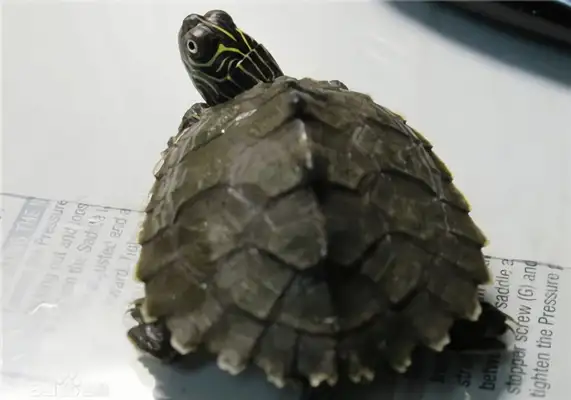
The Texas map turtles live in the Colorado River basin in the Edwards Plateau of Texas, United States, and are a relatively common species of map turtles, but relatively expensive, with a similar appearance to that of Mississippi, and sometimes difficult to distinguish. Texas map turtles are the smallest of all map turtles with no particularly obvious ambiguity.
Texas ' s map turtle macho is about 3.5 inches and the female is about 6.75 inches, and the turtle lives in relatively fast muddled rivers of Edwards Plateau. Like all map turtles, they take a lot of time to tan, and females prefer to be in relatively deep water than larvae and males.
English name: Texas Maps
Latin: Graptemys versa
Chinese: Texas Map Turtle
Reproduction: eggs
Habitat: Colorado River System, Texas.
Range: Colorado River, Texas. In recent years, Texas map turtles have been heavily introduced into the Chinese reptile market, mainly in Guangdong, Guangxi and the South.
Characteristic characteristics: Texas map turtles are gentle, moving, warm, cold, demanding water quality, preferring to live in groups, and the breeder should avoid the death of children in the family who touch the turtle for long periods of time resulting in water contamination.
Appearances: Yellow rings on the back of the vest, and the moon tattoos behind the eyes are clearly different from the first two, which are horizontal. Some of the individuals on the Texas map have orange colours.
Prices: Texas map turtles are relatively expensive and can reach more than $100, but Texas map turtles are very similar to Mississippi map turtles, and some merchants use dozens of dollars or ten dollars of Mississippi map turtles as Texas map turtles. Texas Map Turtle Form Characteristics
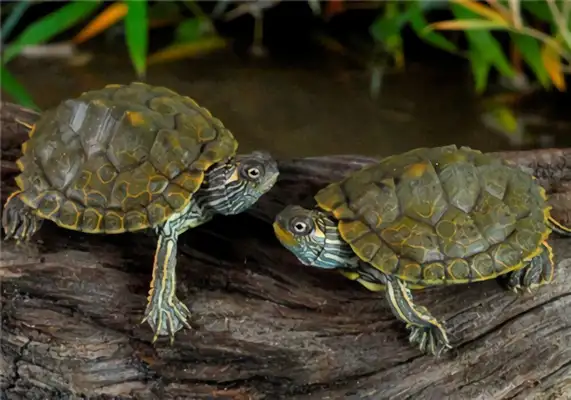
Texas map turtles have a similar look to Mississippi map turtles, but the ambiguity on Texas map turtles is not obvious and is relatively light in colour, and the abdominal nails are also colorful, some of which are yellow, a very good pet turtle variety, and are less common in the domestic market than Mississippi map turtles.
I. Appearance patterns
Leather olives with a net pattern of yellow lines; flashes of shields; low blunt punctures on the perch, often black at the tip. The abdominal yellow, with a black line along the shield. In the rear of the eyes, there are bright yellow to orange stripes, which are usually of the “J” type. The jaws are covered with yellow or orange vertical stains around the black side.
Texas map turtles are small map turtles with female individual casings of only 12.5 cm (4.9 inches) and males of only 9 cm (3.5 inches).
II. Proposals for purchase
Some traders often use Mississippi map turtles as Texas map turtles, which need to be distinguished when buying them, because the difference between the two turtles is still large; others sell them to say that their turtles are Mississippi map turtles, but label them “like Texas”, which suggests that this would only be like, if it was expensive to like Texas. Texas Map Turtle Care Knowledge
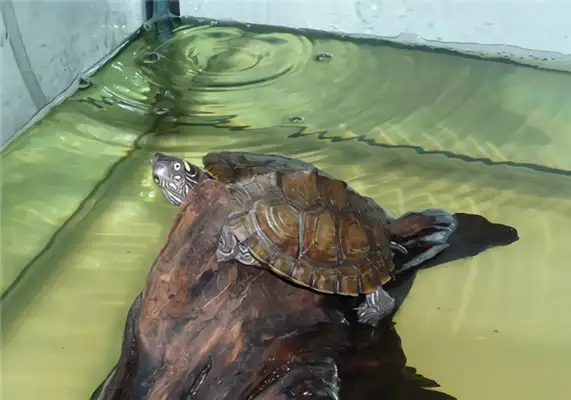
Texas map turtles are highly human-activated turtles, who are gentle and fearless, but they are relatively demanding in terms of water quality, so conservation should focus on maintaining water quality when raising Texas map turtles.
I. Texan map turtle breeding methods
The survey found that the breeding of map turtles was still as common as that of turtles and turtles. In general, map turtles are able to live well under conditions of artificial rearing, but this presupposes proper care and requires appropriate farming rules for different map turtles.
More often, the methods of care for map turtles are similar to the requirements for raising turtles and turtles. Map turtles are less resistant to poor water quality than other water turtles. So to ensure the health of map turtles, it is important to keep water quality clean.
II. Conservation focus for Texas Map Turtles
It would be preferable to emulation of the natural system, which has high water quality requirements for Texas map turtles, but does not recommend frequent water changes and filters. Outside, land or lawn is provided as far as possible for calcium in their sunshells, which are usually taken from 9 a.m. to 10 a.m. or from 15:00 to 16:00 p.m. and are not easily tanned.
The distribution of map turtles is almost entirely within the borders of the United States continent, and different species of map fish are characterized by different patterns of living and different needs for food and habitat. Texas Map Turtle Living Environment
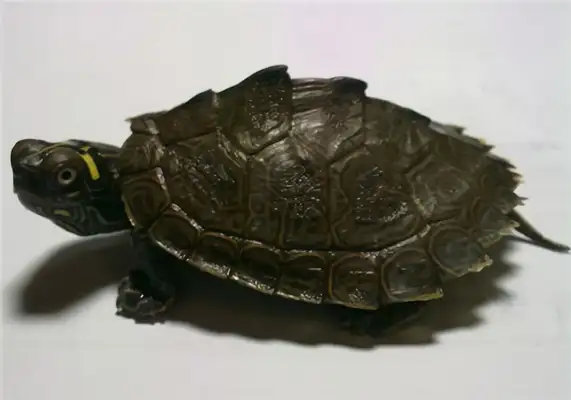
Map turtles are in a certain range of habitats, and Texas map turtles live only in a small part of Texas in the United States, where, unlike other map turtles, rivers are moving fast and water quality is good.
Map turtles are distributed almost entirely within the borders of the United States mainland, from Florida to Texas, to the north and to various habitats in Dakotas and Quebec. Although it is roughly similar to a slider (slider, translated: red ear turtle is the most common slider) and turtles, map turtles have many unique characteristics that distinguish them from other water turtles that have been found in the same area. They are a diverse group of turtles with many beautiful species, each with different habits, recipes and habitat.
The habitat of map turtles varies according to type. Many map turtles seem to prefer to live in rivers than ponds and lakes. In fact, some types of distribution are confined to the water system of a particular river. Among these turtles, areas with abundant aquatic vegetation appear to be more popular. Other species, Texas map turtles, live in streams at moderate or even faster currents, with sand and clay at the bottom, although they also have traces of limestone, sludge and gravel at the bottom. Irrespective of that type of habitat, adequate sunscreen is an essential element. Texas Map Turtle Feeding Point
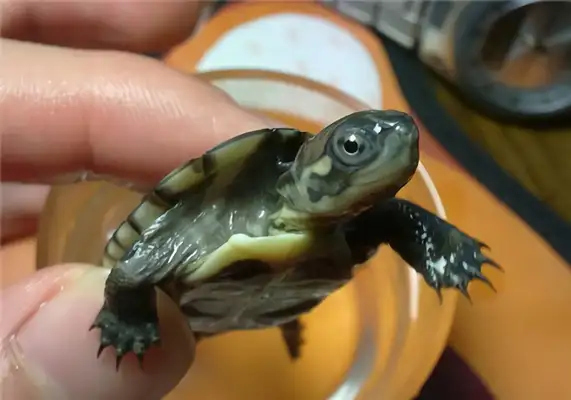
Texas map turtles like to eat some animal food, but do not reject fruit, which is a more edible turtle, but Texas map turtles have fragile stomachs, so there are many problems in feeding frequency and quantity.
I. What do Texas Map Turtles eat?
Texas map turtles are one of the impregnable turtles that feed grasshoppers, blood insects, dragonfly larvae, ripe egg whites, thorium, small frogs, small fish, shrimps, and a few fruit supplements and turtle feed. It is not recommended to feed shellfish like snails.
II. Texan map turtle feeding methods
Open baits are combined with egg yolk, red worms (twig horns), pig livers, complementary feed, etc. The rate of baiting for fresh live bait is 10 ~ 12 %, the rate of baiting for feed is 4 % ~ 6 %, and at the rate of 2 ~ 3 %, it is necessary to clear the food table and the water in a timely manner, and to be careful to clear the bottom of the pond once a day, fill new water and maintain water quality stability. Multivitamins, micro-ecological agents (e.g. EM microorganisms) are added to feed for health protection, and antibiotics are generally not used in order to prevent resistance and to disrupt the micro-ecological balance within the intestinal tract of the childish turtle.
Environmental regulation is an important technical measure that runs through the whole turtle breeding process. Starting with the cultivation of a baby turtle, attention should be paid to environmental regulation in order to improve the ecological environment and the survival and length of a child turtle. The water level of the suspense pool is controlled at 3-10 cm and no more than 20 cm.