Designation: PET6263
English name: Florida Box Turkle
Character: Silence, timidity
Origin: Florida, USA
Vulnerability: calcium deficiency
Life: 80-120 years
Value: Description of Florida turtle species in extremities around $18,000
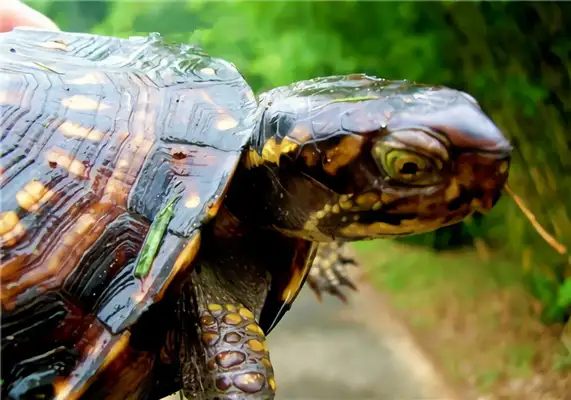
Florida turtles, like our own closed-hull turtles, are one of the six subgenerous species that can convect itself into the shell. Florida turtles are one of the six species of Carolina turtles. They are relatively widely distributed in the United States, but the number of wild animals is decreasing, so they are also a protective animal.
Florida tank turtles, born in Florida, small size, high back nails, are the smallest sub-species in the Carolina tank turtles, with a pattern similar to that of a trunk turtle. Liked to live under dead wood, greasy animals, insecticidal.
Chinese: Florida Turtle
English name: Florida Box Turkle
Latin name: Terrapine carolinabouri
Geographical distribution: Florida, USA
Reproduction: Eggs
Practising: North American turtles usually drill into the ground to avoid abnormal temperatures when they are too cold or too hot. I like to live under dead wood.
Body characteristics: Back armor 10-15 cm. The identification of males is similar to that of Carolina turtles, with red or orange eyes, yellow female turtles, and a tendency to flip the edges of the turtle's nails.
Food: meat
Care: If it is necessary to raise Florida turtles indoors, large reptiles or plastic basins would be more appropriate. Their health will be greatly helped by the fact that they can move out of the house in the summer to receive natural light. Although Florida turtles are groceries, they are more likely to be insecticidal than other turtles, and occasionally eat a little fruit and vegetables. Sixty per cent of animal food and 40 per cent of vegetable food can be fed. The food content is the same as other sub-species.
Price: Florida turtles are not common in China, but in Florida, the law provides that each family can legally own a Florida turtle. The price of a Florida tortoise is around 2000 and the size is about $18,000. Florida turtle form.
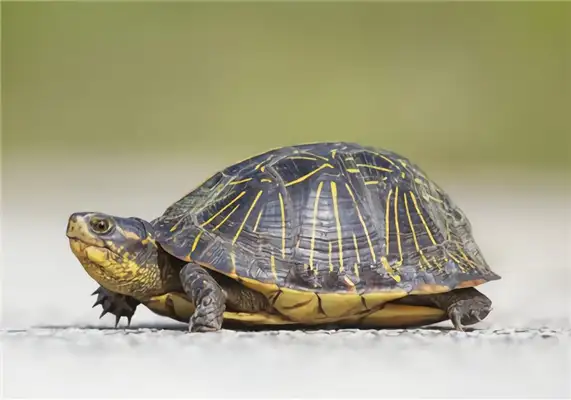
Florida turtles are the sub-species of the Carolina turtles, which are somewhat similar to other sub-species. The greatest feature of Florida turtles is that he is the smallest of the sub-species, so it is easier to identify.
The most widely distributed box turtles in the United States are the eastern ones, with light yellow heads, black eyeballs and orange iris. Mouth tops. The backslids are high, the centre is elastic, the backslid colours consist mainly of black-coloured stripes and threads, and the edges of the backslids are reversed. There are large variations in the colours of individuals, i.e., the yellow abdominal, and black spots on each shield. The fragrance is connected to the chest shield, which is completely closed, with four limbs of yellow and brown, five fingers of the front limb, four toes of the back limb, yellow plaster and a short tail.
At first glance, Florida turtles are very similar to trunk turtles, but their backs are much smaller and can be considered the smallest species in North America. They are mainly located in Florida, with a small extension to the southern part of Georgia. Since nearly 20 per cent of Florida ' s area is wetland and swamp, which is 85 per cent of Taiwan ' s size, the demand for Florida turtles is high. Florida Turtle Conservation Knowledge
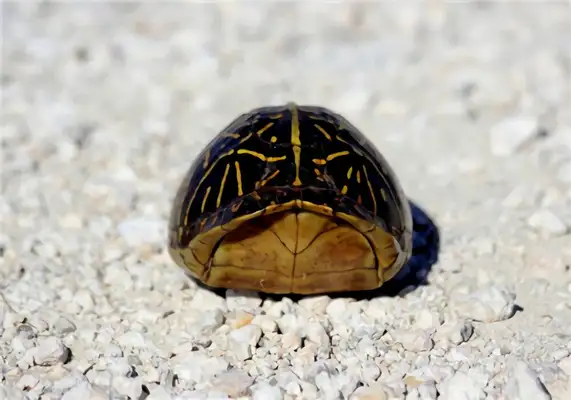
Florida turtle breeding is not particularly difficult, but if you want to see or feel the hatching process, it will make it more difficult, and Florida turtle breeding has some demand and characteristics, as briefly described below.
I. Environmental set-up
Because North American turtles usually drill into the ground too cold or too hot to escape abnormal temperatures and prefer to live under dead wood. The provision of their natural environment is best able to give them a sense of security. It is relatively inappropriate to feed North American turtles indoors with glass cylinders. Not only is there poor ventilation, but it also does not provide sufficient security, making it easier for the more timid Florida turtles to exert urgent pressure and, in the long run, to prevent food and spawning.
Food choices
It would be more appropriate to have large reptiles or plastic basins if they had to be raised indoors. It is based on the outdoor environment, which can be moved outside in the summer to receive natural light, which will greatly help their health. Although Florida turtles are groceries, they are more likely to be insecticidal than other turtles, and occasionally eat a little fruit and vegetables. Sixty per cent of animal food and 40 per cent of vegetable food can be fed. The food content is the same as other sub-species.
III. Reproduction characteristics
The identification of males is similar to that of Carolina turtles, with red or orange eyes, yellow female turtles, and a tendency to flip the edges of the turtle's nails. Female turtles can produce 1-2 nests of eggs per year, 2-4 eggs per nest, with an incubation period of approximately 60 days between 28-29 degrees. In general, the conditions and patterns in which the calorina turtles are raised are similar to those of the various sub-species, and their reproduction is alarming as long as they are sustained. Florida Turtle Living Environment
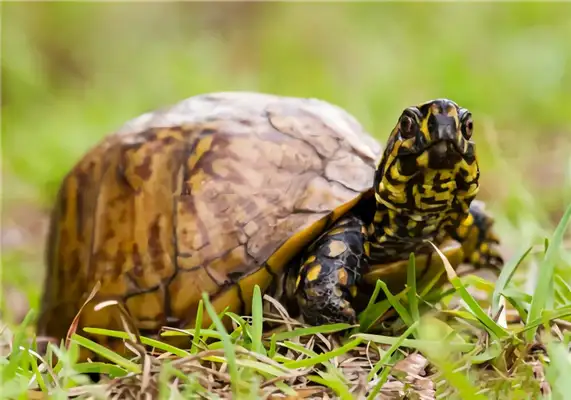
Florida turtles are more environmentally demanding, prefer relatively quiet living environments and require high humidity indices, so that when raising Florida turtles, the environment is as close as possible to the natural environment.
Florida Turtle T.c.bouri: Born only in Florida, is the most difficult to get in the United States. They are very similar to the tortoises, but can be distinguished by their natural distribution, shape and face stripes. Florida turtles also love wet environments, which are found in all the wet places within his distribution. It is usually 6 inches (15 cm) in size. Usually there are only three toes per foot.
Essentially, North American box turtles are similar to yellow box turtles (e.g. snake-eating turtles), with large areas of day-to-day activity, so it is best to keep them outdoors. A mixture of sand and sterile soil, with leaves and dead wood, together with a large basin, would be the best box turtle breeding environment. Because North American turtles usually get in the ground too cold or too hot to avoid abnormal temperatures. I like to live under dead wood. The provision of their natural environment is best able to give them a sense of security. The Florida turtle feed.
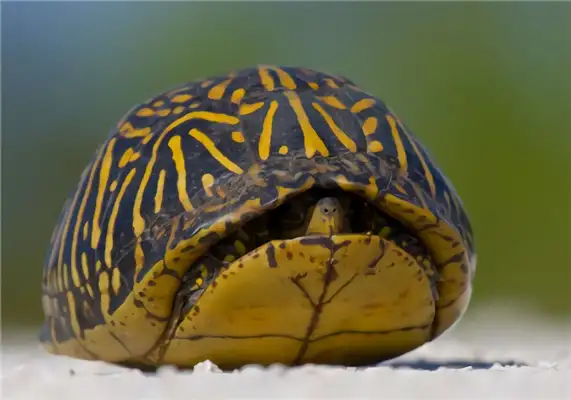
Florida turtles are typical greasy turtles that eat fruits, vegetables and insects and fish shrimp, so food choices can be very rich. Here's what food can be fed to Florida turtles.
I. Vegetable feed
The reptile feed should be made of various raw materials and its calcium phosphorus ratio should be maintained at around 1:1. Too much phosphorus in food can cause metabolism problems. Garbage is a suitable vegetable feed, and carrots and beets can be cooked to make it soft, evenly mixed and cooled as feed. The green leaves, the green beans, the green beans, the peas, the soybeans, the wet purple leaves, the platinum leaves and the flowers, the trifles, and the raisins are all good food. Please note that when feeds contain high protein vegetables like soybeans and peas, they cannot be fed only.
II. Animal feed
Cricket, grasshopper, pink lice, wax bug, red worm, earthworm, larvae, etc. Other animal feeds include fresh fish, cow hearts, chicken and internal organs, and high-quality, low-fat dog food.
III. Calcium supplementation
If your turtles can tan for more than 20 hours a week, there will be no vitamin D3 supplement, and there will be problems with too much. Vitamin D3 helps to absorb calcium, and if your tortoise is indoor, it needs regular replenishment.