No.: PET3321
English name: Overview of Golden Frog Varieties
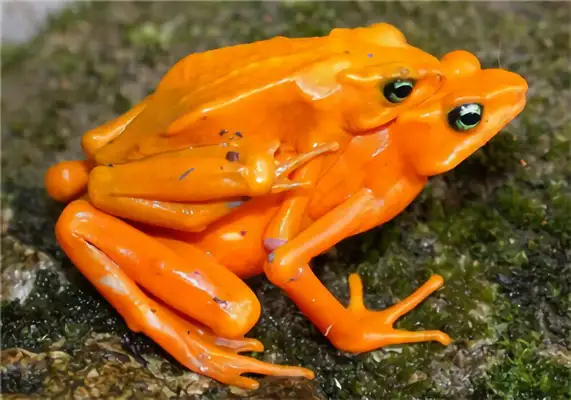
The african clawed toad is by definition the colour of the frog ' s body in gold, and the female is larger than the male. The Golden Frog is an experimental animal of wide use and easy to raise. The main distribution is currently in south-eastern Africa.
The main characteristic of the golden frog is that both the larvae and the deviant adult live aquatic life. Although it has strong and muscular hind legs, because of its whole toes and its limited capacity to support the body, it is good at swimming and not jumping off the land. It is fully transparent to its young, it sees clearly the internal structure, it is pink and very cute. Moreover, the morphological characteristics of the claws make them extremely useful in the scientific domain and are important pets in the aquariums, at considerable market prices. More and more people now call their claws “gold frogs” and are well received by their breeders.
Chinese literary name: Golden Frog
English
Area: Animal
Gate: Phylum Chordata
Amen: Vertebrata
Platform: Amphibia
The only existing platform for amphibians is Lissamphibia.
Purpose: No tails (Salientia)
Section: Pipidae
Xenopus
"The Golden Frog" is a white African claw.
Distribution: Distribution in south-east Africa. Golden Frog Form Characteristics
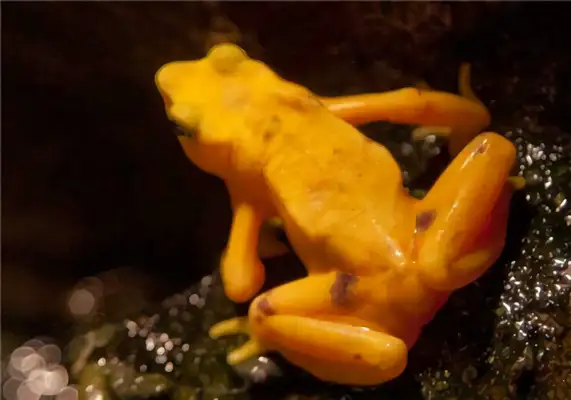
The main characteristic of the golden frog is that both its larvae and its perverted adult form can live in water, and the frog is easy to breed and is now used very widely. Although it has strong and muscular hind legs, it is good at swimming rather than jumping off land because of its whole toes and limited capacity to support the body.
The larvae of the Golden Frog is fully transparent, with a clear view of the internal structure, pink and very cute. The female part of the adult population is about 12.5 cm longer, while the male part is only half the female. Fatty, flowline type. Small eyes, on the back of the head, no eyebrow. No tongue, a single tube. The back limbs are thick, the toes are very well developed, and the three-toe end ends of the inner side have claws, so they are named claws. Golden Frog Living Environment
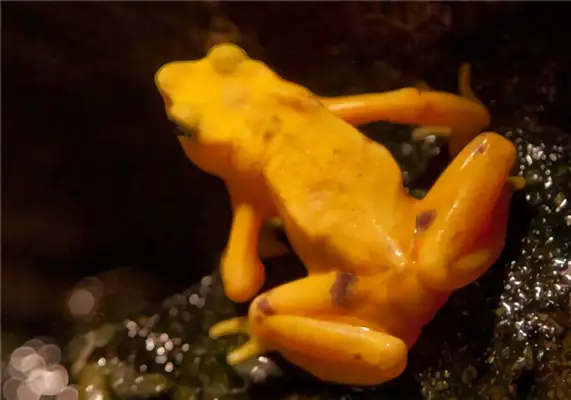
The golden frog is a aquatic animal that lives in water four seasons from birth to old age. In the wild, the frogs hibernate each year for climatic reasons, but usually not in an artificially raised environment, although it depends on temperature control.
Indoor breeding is done with large and medium-sized Bourre aquariums or round glass cylinders, which are put in well water or running water beyond one night of exposure, with a depth of 20 centimetres and water temperature of 12-25°C, at which the golden frog does not hibernate. In the water, some pebbles and large stones are placed into caves, with 3 20-watt sunlights on the roof of the box, with submersible pumps and heaters. Blondie Frog.
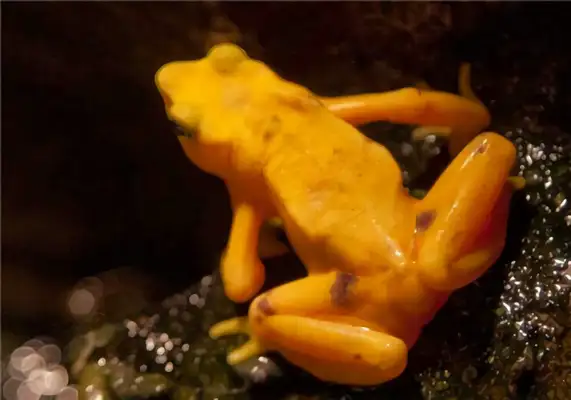
When it comes to golden frogs, it gives people a feeling of frustration and is used as an experiment from birth. There are, of course, those who raise it as pets, and the golden back attracts a lot of lovers. How do you feed a family golden frog?
The adult golden frog is fed 2 1 or 3 times a week with filaments or pork livers, and is generally not required to provide vitamins. Golden frogs are able to search for food on their own initiative and use their front limbs to pump food into their mouths. Golden frogs are afraid of panic and usually eat at night. It is very greedy and takes a positive proportion of the weight of the month, and the growing weight curve changes with the amount of food delivered. The water in the sink should be periodically replaced, usually after each feeding to ensure the health of the golden frog and prevent disease. With proper management, the mortality rate is low, at around 2 per cent per year, and the survival rate for young children is around 75 per cent.