Title: PET3339
English name: Doule-eyes Fig Parrot
Vulnerability: respiratory, digestive and parasitic diseases
Life: 5-6 years of eyeless parrot species
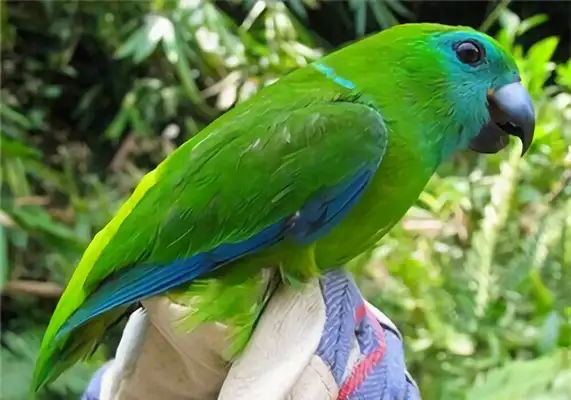
The number of eyeless parrots, mainly in Indonesia, New Guinea and Papua New Guinea, is small because of wild birds imported exclusively for South-East Asia, and for that reason the prices of sales are relatively high. Reproduction is also relatively difficult.
Chinese literary name: A macaw with no eyes
English name: Doule-eyes Fig Parrot
Two words: Opopsitta diophthalma
Context: Animals
Gate: Pipeline gate
Programme: Birds
Look: Parakeet.
Section: parrots
Subspecies: 7 eye-free parrot morphological characteristics
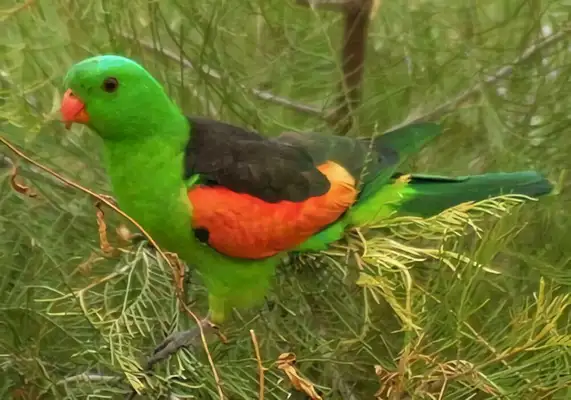
The ideal length of an eyeless parrot should be around 15 cm and the ideal weight should be between 42 and 55 g. It's very cute and charming, and it's a small parrot. It's popular with many young women.
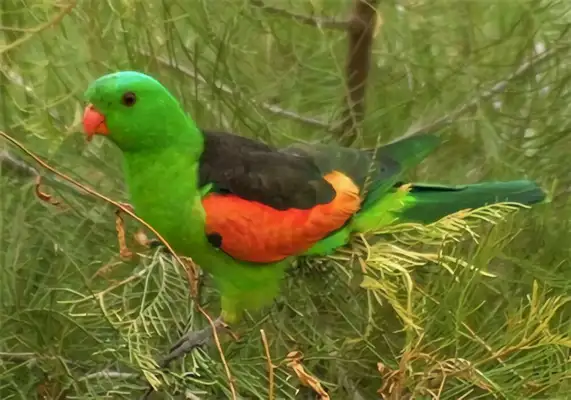
The face of a parrot with two eyeless figs is made up of complex colours, with the first half covered with a mask, a red cheek and an ear feather, a bright blue on the top to the side of the eye, a green line through the eyes of the top and the back, and blue and purple under the red cheek, which runs up to the throat. The wings are bright green and the primary is blue. The secondary plume is a dreary green pinestone blue, with a black outer and inner screw. All the feathers are yellow and white, and the bottom is green and yellow. The lower lower body shows a yellow and green colour, slightly lighter than the back, with long yellow strips flashing along the feathers of the wings, with grey tails. The beaks are strong, lead grey and have dark gray wax, the iris are dark brown and the legs are green. A parrot with no eyes.
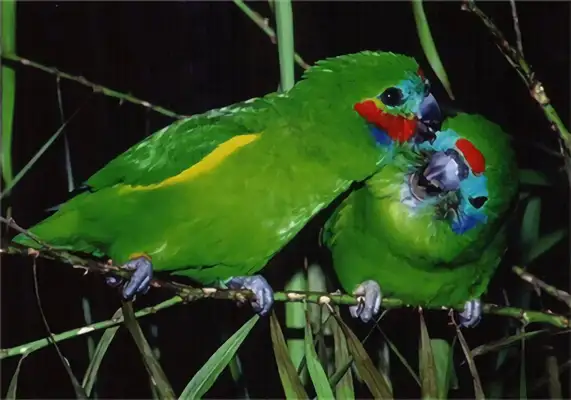
Not only are the number of flowerless parrots growing small in our country, but the number in South-East Asia is not ideal. It takes a lot of research to raise the bird, and if you're just a common flying bird, the mortality rate is over 80 percent.
In the wild, macaws are mainly found in low- and medium-lying rainforests, marginal areas of forests, dry forests, forests along streams, the open Ugari woodlands, etc., and in Australians as well.
The scarcity of eyeless parrots in international parrot farming, the difficulty of raising care and the survival of young birds are the main causes, the sensitivity at the time of their introduction, and the frequent loss of life due to stress, urgency and unease, in particular wild birds, and the proliferation of fig parrots. The birds are quiet and, although not strong, are best provided with branches to protect the upper beaks from excessive growth. They are also sensitive to low temperatures, which are best not less than 15 degrees in general, and not less than 20 degrees in the nest when there are young birds. In cold winters, it is therefore inappropriate for the bird to be raised outdoors in hot summers. A macaw with no eyes.
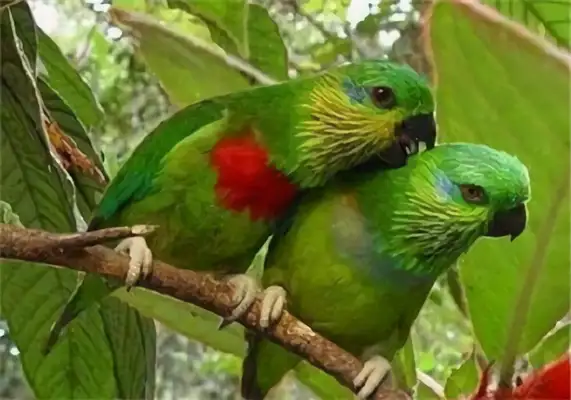
The survival of artificially bred eye-free parrots is much higher than that of wild eye-free parrots, and it is therefore necessary to know the origin of the bird before buying it, lest it be deceived. The bird's character is not like a parrot to play and tame.
The Asian species from Australia, the Coxen's Double-eyed Fig Parrot, has been listed in appendix I to the Washington Convention as a first-class conservation parrot due to severe damage to their habitat.
The breeding of parrots with two eyes is not easy and the mortality rate of young birds is very high, often for days, and this is often repeated. If this problem is encountered, changing the daily supply of foods (e.g. mangoes, papayas, etc.) to soft foods may be improved when the juvenile hatches, in pairs, with nest boxes being installed in the dark, with two eggs being produced for about 21 days, and pro-birds being sensitive to the master's examination nests, with feathers growing for about 35 days, young birds generally leaving their nests for about 40 days, and male birds are sometimes offensive to young birds and it is not appropriate to move them too late. The eyeless parrots feed the food.
In addition to the high environmental and food requirements of the macaws, it is critical to eat if he is to be successfully raised. Such parrots often die from a lack of vitamin K, so vitamin supplements should be supplied in appropriate quantities when fed.
In addition to figs, the main natural foods of parrots with figs, they eat fruit, nectar, insect larvae, or a few mosses and fungi plants scratched from the bark of trees, and feed with other fig parrots, rose parrots, honey parrots. Quiet, fast and fast, and do not move to the ground or feed.