Designation: PET6468
English name: Malagasy Flat-tailed Tortoise
Origin: Overview of the species of flat-tailed land turtles in western Madagascar, Africa
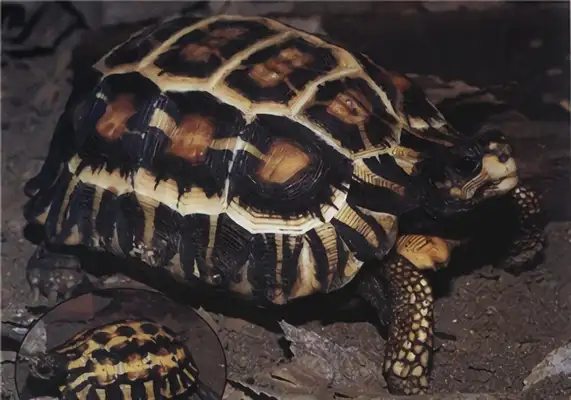
The flat-tailed land turtles are located in the West Bank of Madagascar, which is similar in appearance or custom to those in the southern part of the island. Some call them sub-species, but they are very different in distribution. In fact, the flat-tailed land turtles are a single land turtle species.
The average temperature in the natural habitat of flat-tailed land turtles is about 14 to 32°C, with an average humidity of about 70%, and even below 10°C at night during cold seasons, although flat-tailed turtles do not sleep, prefer low-temperature seasons, and flat-tailed turtles generally prefer to move in the morning to feed, but instead prefer a cool belt of damp gas in the morning, with the dark forests dominated.
Chinese name: flatback turtle
Common alias: flatback turtles
English name: Malagasy Flat-tailed Tortoise
Latin name: Pyxis planicauda
Geographical distribution: Western Madagascar, Africa
Reproduction: Eggs.
Feeding: The nature of the turtle is not very lively and it is generally difficult for the breeder to appreciate the pleasure of seeing its activities. The flat-tailed turtle form.
The fact that flat-tailed turtles look like spider-nettle turtles and that, for some time, flat-tailed turtles were once thought to be a subgenerous species of spider-nettle turtles does not change the fact that flat-tailed turtles look like spider-net turtles.
The flat-tailed ground turtle can grow to 13.7 cm, the crust is rather flat, the edge behind the crust is sharp sawn teeth, the deck is black, it grows slowly into light brown, and the edge between the nails has light brown or yellow spots. There are no chains between the back and the abdomen, the colour of the abdomen is yellow, there are brown spots and the colour of the abdomen is dim.
The head is yellow and there are black spots, but there are significant differences between individuals. The upper and lower cheekbones of the beak are yellow and the limbs are light brown. And the tail is flat, so the name of the flatback turtle.
The flat-tailed ground turtles were previously classified as sub-species of a mid-trace turtle, before they became independent as another of the inter-trace turtles. During the rainy season, flat-tailed land turtles are active immediately after the rains and may sleep under dead trees and leaves during the dry season. It is mainly vegan and eats the leaves, tubers and fruit of the corrosive plants. Knowledge of flatback turtle care
The seasonal activity of flat-tailed land turtles is affected by the rainy season. The rainy season usually lasts for four months. The flat-tailed turtle is quiet and hardly active outside the rainy season. It is a very boring turtle. From April to early September, flat-tailed land turtles will enter a state of hibernation, and turtles will remain in the same location for weeks. During this period, flat-tailed land turtles were also almost insufficiently fed. Such behaviour must be adapted to every feeder of a tropical land turtle. A flat-tailed turtle living environment.
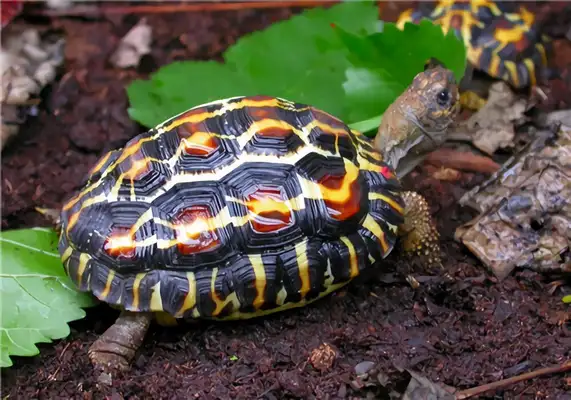
A flat turtle.
Adults of flat-tailed land turtles do not have high requirements for humidity, and can adapt quickly in dry or wet environments. The base used in the rearing box is dry and wet. It needs to be noted, however, that if the base is too wet, it may lead to fungal species growing on the base and therefore should be replaced periodically.
I. Artificial practices
Some land turtle individuals of this type prefer sprayed or sprayed, which can be carried out once or twice a day. During the rearing process, the dry and wet environment can be woken up in one year and changes in the environment will be more beneficial to the species.
In addition, in any case, a sink should be placed in the rearing box to allow turtles to immerse their bodies. If the rearing environment is too dry during the larvae period, their appetite will be reduced, so that a portion of the larvae can be set up in a wet environment so that they can choose their preferred space of activity.
There are also individuals of this kind who are sensitive and can lay down leaves or thick ground for them, creating an environment where they can hide, which helps them to relax their tensions. Forage is mainly green-leaf vegetables, which can mix a small amount of fruit.
II. Simulation of the field environment
1. Dry season: May-September. Supersonic fog machine activated: five times a day, one quarter each, and one half hour a day. Power: 2/3 less spray than maximum power. Average temperature: 24-26 degrees. Air humidity: 50-70 per cent. Metal halogen lamps: are activated daily on the basis of daytime temperature and climate change.
Rain season: October-April. Supersonic fog machine activated: five times a day, one quarter each, and one half hour a day. Maximum power: 5 litres of pure water spray per week. Average temperature: 26-32 degrees. Air moisture: to 80%. Metal halogen lamps: 8.5-9 hours during the day. The point of flat-tail turtle breeding.
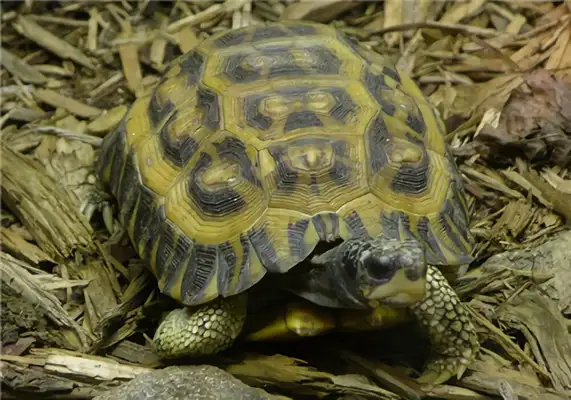
There is limited knowledge of the feeding habits of flat-tailed turtles. But in the wild of the turtles, flat-tailed land turtles eat green leaves and green grass. The fruits and seeds of diversity in forests can easily lead us to misunderstanding. These fruits are not as sweet as the fruits we eat, and the wild fruits contain important and rich parts of thick fibre.
There is certainly a need to provide diversity of food products when raising them so that flat-tailed turtles can choose and change. The foods of flat-tailed land turtles that are raised by humans include grass such as dancin, trifle, cargrass, wild peas, cucumbers, carrots, pumpkins and all bitter raw vegetables, as well as mushrooms and fruit. Mango and blackberries are rarely fed.
All raw vegetables, vegetables and fruits are also mixed with coarse fibres (frequent pastures or flowers and seeds). It is not clear what proportion of the food of flat-tailed land turtles is in the wild, in the thousands of feet, caterpillars and snails. However, it is clear that newly hatched bread worms do not attract interest in the hunting of flat-tailed turtles.
If you raise turtles to receive enough solar light, you do not need oral vitamin D3, of course calcium and other trace elements. Northern breeders often need oral vitamin D3 supplements because they cannot provide sufficient natural light. Artificial UVB light sources can be used, but the UVB optical tubes should be periodically replaced, usually once in 6-9 months. Mixed light sources are necessary for most varieties, the new UV-Heat lamps are very effective, provide a sufficient amount of UVB and UVA mix, and a high-quality visual spectrum that provides sufficient heat radiation and promotes the synthesis of vitamin D3.