Designation: PET4264
English name: Trachemys scripta elegans
Character: tenacity, dynamism
Origin: On the Mississippi River in the south-central United States
Vulnerability to diseases: white eyes, decorated skin, pneumonia
Life: Around 25 years old
Price: Cheap, just a few dollar Brazilian red ear turtle profiles.
Brazilian red ear turtles are what we call Brazilian turtles, also known as Mississippi red ear turtles, which, although not our native species, are very common. Brazilian turtles are cheap and therefore often selected for release, which is also why they were once identified as invasive alien species. Brazilian turtles born to the wild have no natural enemies, no food, and are growing at an alarming rate, affecting native turtle species and even their natural ecology. Thus, in many countries, this release is prohibited, and even the sale of Brazilian turtles is considered illegal. Brazilian red ear turtle morphological characteristics
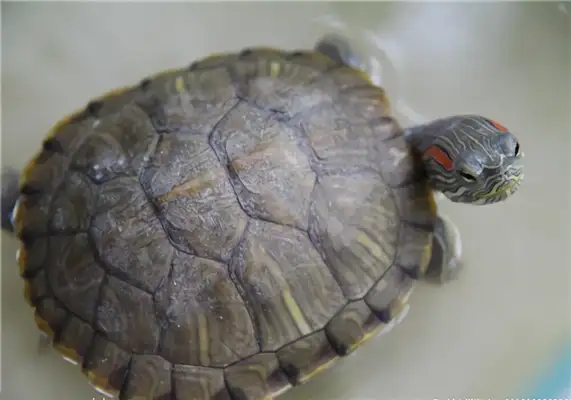
Brazilian red ear turtles, known as red ear turtles on both sides of the back of their heads, are much different from turtles, their colours are beautiful, their backs are faded, and their backs are not visible.
The head of the Brazilian red ear turtle is wide, with flat backs, green or apple colours, with a significant lid in the center of the back. The shield has yellow, green stripes. The abdomen are yellow and have irregular black circles, ellipses and rods of around symmetry. The limbs are thin green, with brown stripes and fingers and toes.
All Brazilian turtles are about 15-25 cm long, all with thick, thin stripes on their heads, necks, limbs and tails, and two red stripes on both sides of their heads. The corneas of the eye are green, and there is a black spot in the center of the kiss. There are yellow, green and irregular spots in the centre of each shield, with different patterns for each turtle.
The largest feature of Brazilian turtle skin (except at the front end of the head) is rough, with skins of fine particles or small slabs, protected skins, reduced friction with the outside world and reduced water evaporation in the body. The simplest way to identify Brazilian turtles is to have two red spots on their heads and green bodies, and Brazilian turtles are usually smaller in the market, so they are lighter in colour and the color of Brazilian turtles' backslids is getting deeper and deeper with the size of the individual. Brazilian red ear turtle conservation knowledge
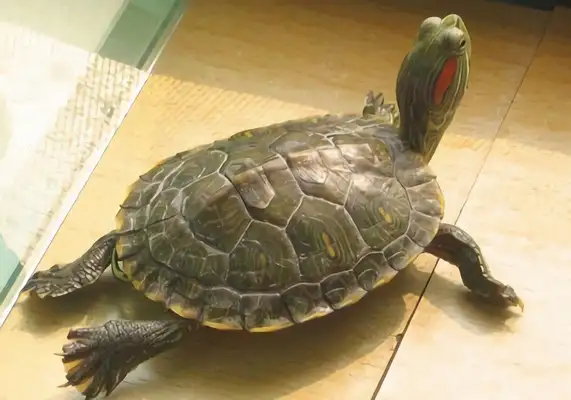
Brazilian turtles are now considered to have the lowest survival rate, not because of how hard Brazilian turtles are to feed, but because many Brazilian turtles are not seriously fed. In fact, Brazilian turtles are easy to feed, preparing for a good environment, eating, drinking and eating.
I. Setting up the breeding environment
An ideal care setting requires certain minimum elements. Each tortoise should have five litres of water, and the depth should not exceed the length of the tortoise so that the tortoise can reach the ground as it breathes. It is also necessary to make an island for them with bricks and stones, which are not suitable for floating islands, and which are in vain because the turtles are often unable to climb. On the other hand, care must be taken that islands and ornaments do not become dangerous barriers and that little turtles are stuck and drowned.
II. Temperature range for turtle adaptation
The water temperature that a turtle can adapt to is about 25 degrees Celsius; when cold, the air above the container should also be warmed, and a lamp on the incubator can be perfect. If the water temperature is still too low, the heat tube may be added to the water and the temperature can be adjusted as low as possible.
Brazilian turtles
Brazilian turtles must have direct exposure to sunlight and should be able to place farm boxes on balconyes or windowsills, and if that is not possible, they must be exposed to UVs once or twice a week for about three to five minutes each. Ultraviolet lamps should not be too close to Brazilian turtles to cause damage from excessive light. It is also best to irradiate with sunlight, but care should be taken not to filter the required ultraviolet light from the glass of the container.
Water quality clean-up
If algae (colour moss) were to grow on the incubator, that would be fine, but the water in the box should not stink. It is important that water be exchanged periodically, otherwise, because of high temperatures, excreta and leftover feed in the water, the juvenile turtles live in a well-heated stench of stench of water, an environment that promotes the growth of the fungus and should therefore be replaced at least once a week. Brazilian red ear turtle living environment
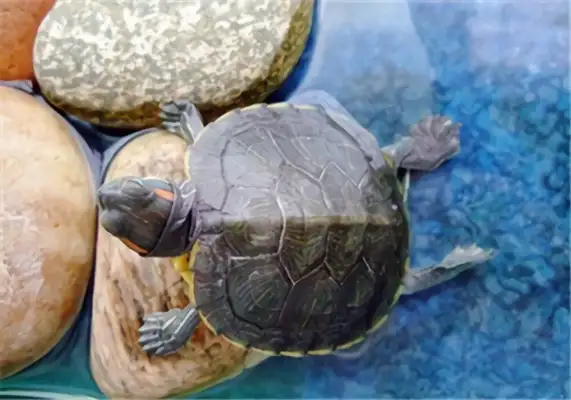
Domesticly purchased Brazilian turtles are usually very small, because the color of the little Brazilian turtles is so bright that the bigger the Brazilian turtles, the more difficult they are to see, the easier it is to set a reasonable environment for the little Brazilian turtles, the less space that is needed, and with the growth of the turtles, we can slowly change the size of the larvae.
I. Environmental set-up
The bigger the tank, the bigger it is, the better it is a rectangular glass fish tank, a big box. Sea turtles live in water, usually at a slightly higher depth than the back of the turtle, not more than twice the height of the back of the turtle. It is desirable to provide a land high above the surface of the water, such as stones, to allow turtles to climb up and tan their backs; turtles need sunlight and are advised to put it on the southward balcony or room. But if there are babies and young children or pregnant women in the home, it is preferable not to have turtles, who are easy to carry some bacteria. In summer, you have to cover it properly, not too bright. Care should be taken to prevent algae from growing in a tank by buying aqueous algae, which is sold in common aquariums. The bottom of the tank can be laid with small stones or large pebbles. But if it's paved, it's difficult to change water, and the new guy suggests naked, nothing. No grass in the water.
Water for turtles
For running water (for the removal of chlorine) that has been dry for more than two days, it would be preferable to prepare two plastic buckets for drying to meet the need for water exchange. The change of water is recommended for two to three days, each with a partial change without the need for a full tank, unless the water and its surroundings are dirty. Partly changing water by using a plastic tube to suck out the bottom dirty water and adding a new volume of water (i.e. running water for two days) to the tank using the iris principle. There will be no white eye disease or rotting nails for water exchange turtles. It can be used as a filter, the kind used to feed fish, which can stabilize water quality and create a good environment for the use of nitrified bacteria. It's more frequent in the summer. Brazilian red ear turtle feeding point
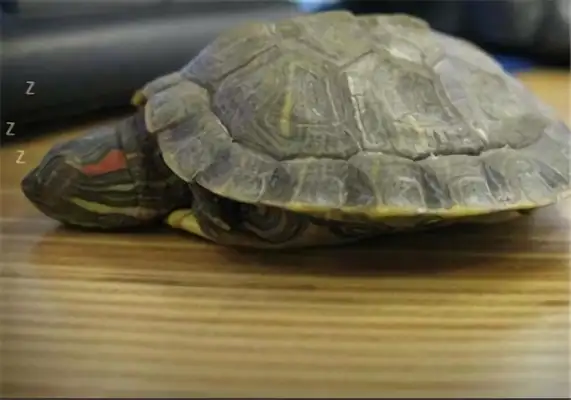
Brazilian turtle
Healthy Brazilian turtles grow fast, so when Brazilian turtles are young, the owner can feed them once a day, depending on the circumstances, and when Brazilian turtles grow up, the growth slows down, choosing to feed them once a day.
Brazilian turtles are groceries, and natural wild turtles are mostly meat-based. Under the conditions of artificial breeding, animal baits such as fish, pork, animal internals, thorium, snails and blood insects (e.g. larvae), red filaria (worms of water), yellow powder (breadworms), fly mackerel etc. They also eat vegetables, rice, guacamole, etc. Red ear turtles eat without selectivity, day and night. There are predators in situations of hunger and there is a tendency to eat. Feeders are to be dropped in water, but no pebbles are to be placed in the water so that the feed does not rot in the cracks and affects water quality.
Brazilian turtles live in water for most of their time and like it in clear water bodies. The quality of water is therefore very important. Pond breeding should be transparent with light green and 20-30 cm transparent. Spring and fall water levels are moderate and summer and winter water levels deepen to cool or keep warm. Part of the water is exchanged monthly in spring and autumn, and is sprayed periodically with furan aqualone, lime, etc., and fresh water is added. Water change every 10-15 days in summer: once. If the water colour is brown or blue, it indicates that the water quality has been “fertilized” and that it should be fully replaced in a timely manner. When a cement tank is raised, its water quality is subject to change, and water should be changed periodically, usually 1-2 times a week from April to May, with particular attention to the disinfection of the table. In June-September, owing to higher temperatures, the change of water took place three to four hours after feeding. The winter hibernation period may be less or less water-replaced.