Longer tortoise nails affect walking postures and increase the risk of injury and infection. In particular, too long nails can be stuck on pot mouths, husks or benthic material, and can even cause leech infection, as the land turtle/half-water turtle walks in a wet environment. The following is a safe, implementable cutting course and a complete response to help the pets manage their home well, taking into account long-lasting prevention.
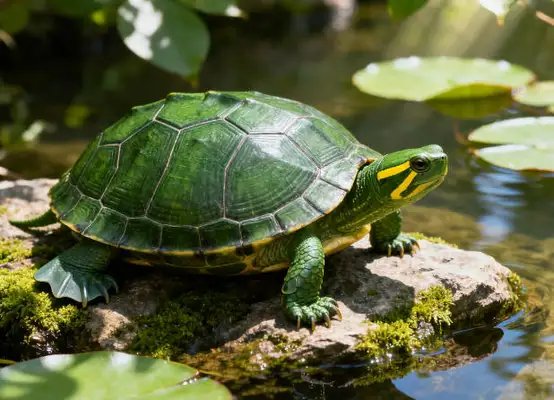
The content focuses on identification and assessment: observation of whether the fingernail length exceeds the tip of the claw, whether it is frequent when touching the ground, if the barrier is stuck, and if there is scratching on the edge of the shell. Note the differences in fingernail morphology among different species of turtles (land turtles, water turtles, semi-water turtles) and avoid blind “one-size-fits-all”. The principle of safe cutting: each cut only removes a very small amount, giving priority to retaining sufficient nail length to avoid touching speed (the arteric vessels) and avoiding haemorrhaging and pain. Tools and the environment: Use of specially designed small claw clippings or nail clippings, together with fine sandpapers or grinding stones; preparation of saliva powder (or corn starch), towels/brushes for fixation and protection, ensuring sufficient light and a quiet environment. Periphery and long-term management: natural grinding is promoted by providing rough surfaces, suitable basking areas and hard floors; periodic checks, fixed cut frequencies are established to reduce the risk of sudden onset.
It is suggested that short-term cut points should be selected in a safe and quiet environment to stabilize turtles. Packing the body with towels light and light, exposing only one foot, avoiding a retrograde or struggle of turtles. To observe whether the blood line (fast) below the fingernails is visible, and if it is not visible, care must be taken. Cutting in an oblique manner, gradually reducing the cut, and the cut should be flat and avoid collapse. Only 1-2 mm of the tip of the fingernails is trimed each time, for the next time. If the location of the blood line is not known, it would be preferable to make less repairs and to do it in parts to avoid a single “shaving” of the whole nail. Natural grinding and environmental interventions provide rough ground materials, such as natural slabs, rough tiles, small stones, etc., and promote friction between claws and ground. Give turtles a stable Basking area and area of activity, encouraging activity and avoiding long-term crawling on soft mud or smooth surfaces. Avoid strangulation of turtles in long-term wet-sliding environments and increase the risk of adhesive capture. Congenital management inspects the length of nails every 4-6 weeks, with minor repairs if necessary, and gradually establishes a fixed rhythm. Record the number of trims and the reaction of turtles, and assess the need for additional grinding equipment or adaptation of habitat. If the nails grow abnormally, the toe of the turtle reacts to the skin, and there is an osmosis or seepage, medical treatment is requested as soon as possible to avoid delays in self-treatment.
Phase 1 of the complete response programme (phased operation): Preparation and assessment tools: small nail clippings, sandpaper or grinding stones, blood powder, gauze, towels, gloves. Fixed turtles: wrapping the body with towels in a quiet environment, fixing the head and body, exposing the front feet that need to be treated, ensuring that it does not easily break free. Examination of fingernails: observation of length, exposure to the ground, bending, cracking or prominent parts; determination of the latest cut. Phase 2: Safety fixation and moderate treatment places the turtle on a secure surface, toes up, and protects the finger joints from being touched by scissors. Stage 3: trim and execute calibration of fine nail clippings to the point, gently tilting and avoiding vertical straight cuts to avoid rupture. Check the length of the nails after each cut to ensure that there is still some nail shape remaining to protect the bloodline. If the bloodline or nail bed is found to be indisposed, the cut is stopped, blood-stained powder is used for several minutes, and if necessary, a veterinarian is called upon. Phase 4: In the event of small bleeding in the context of the cessation of bleeding and primary care, stopper powder or corn starch shall immediately be applied to the tip of the finger and shall be kept under pressure for two to five minutes. 30 minutes of observation to confirm that hemorrhage has stopped and that turtle comforts are normally released back to enclosure. Phase 5: After the operation, clean cuttings with daily care and surrounding areas to avoid exposure to the source of the infection. The provision of rough surfaces and hard floors, which contribute to daily natural grinding. The time of execution, the amount of shearing and changes in turtle activity and appetite are recorded as the basis for subsequent assessment. Phase 6: Prevention and long-term plans to adapt the habitat to ensure adequate friction coefficients for base and ground materials. If nails continue to grow too fast, or turtles show obvious pressure to trim them, consider shorter cut-off intervals, increase environmental wear, or consult professional veterinarians for more in-depth assessment (e.g. photographing, X-ray to remove structural anomalies). Stage 7: Medical treatment should be done as soon as possible, when it is difficult to stop the haemorrhage, deep infection in the nails bed, persistent haematoma, manifest pain and anguish to turtles, continued food denial after cutting or a decline in activity. Rapid nail growth is accompanied by malformation, pain or repeated loss, requiring a professional assessment of whether genetic or nutritional factors lead to abnormal growth.
Care is taken not to cut the entire nails once and for all, especially for inexperienced pets, and to avoid touching rapid bleeding. The tools used are kept clean and sharp, avoiding torn cuts that break the fingernails. Any drugs, external antibacterials, follow the doctor ' s advice to avoid self-use of those that are not suitable for turtles. If turtles are extremely nervous about the treatment, they are considered to be pacified, divided or treated on site by a professional veterinary.
Longer turtle nails can be effectively controlled through systematic assessments, moderate operations and long-term environmental management, while reducing the risk of complications. Individual differences in each turtle are of concern, and step-by-step, patience and detail are key to effectiveness. If you like, I can give you more specific operational points and oral exercises based on the variety, age and current status of your turtle.