Designation: PET4559
English name: Papaya fish
Origin: Indian Ocean, western Pacific reef areas
Vulnerability to diseases: albino disease, rotting tail disease
Life: Overview of papaya fish species 5-6 years
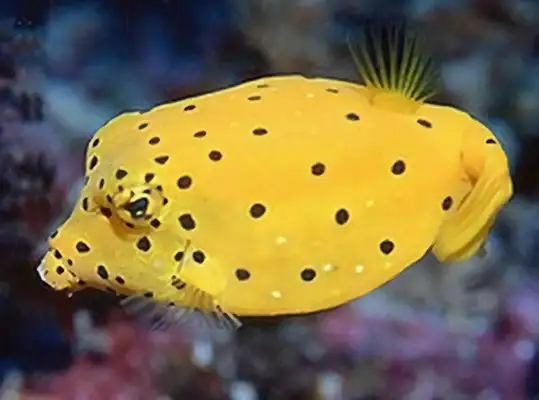
The names of papaya fish are very special and their appearance is very special. The whole body of the papaya fish is wrapped up in the skin of a hard bone plate, unable to move, and only the mouth and tails are exposed to the shell, so their activity is very slow.
English name: Papaya fish
Origin: Coral reef areas in the Indian Ocean, western Pacific Ocean
Reproduction: Eggs
Water quality: 7-9 degrees dh; pH: 8.0-8.5; weight: 1.022-1.023.
Fits to water temperature: 26°C-27°C papaya fish
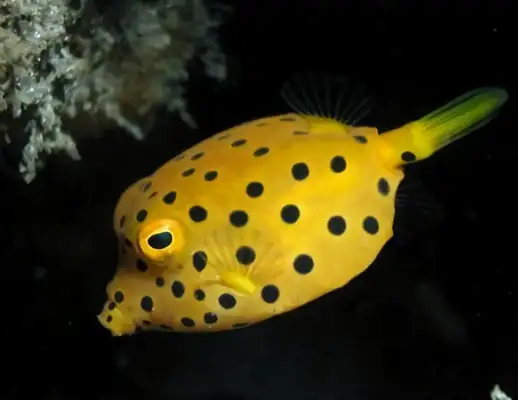
When a papaya fish is frightened, it releases a toxin, so that it cannot be fed artificially. And papaya fish attack other little fish.
The papaya fish are 10-15 cm long, have a golden body and a black dot with a thick surface. The back fin is moved back to the tail handle and symmetry with the hip fin. Eyes on top of your head. The body was wrapped up in the skin of a hard bone plate and was not able to move. Only mouths and tails are exposed and free to move. Fish move slowly. The special oesophagus structure allows submarine fish to breathe air and water in the face of an enemy or in a state of shock, so that the abdomen may swell as a ball, a small prick on the skin, float to the surface of the water, in self-defence, until safety is achieved and air and water in the chest are released quickly and quickly. In addition, it has a taste for teeth and, upon arrest, sounds of “golls”. Cumberfish breeding environment
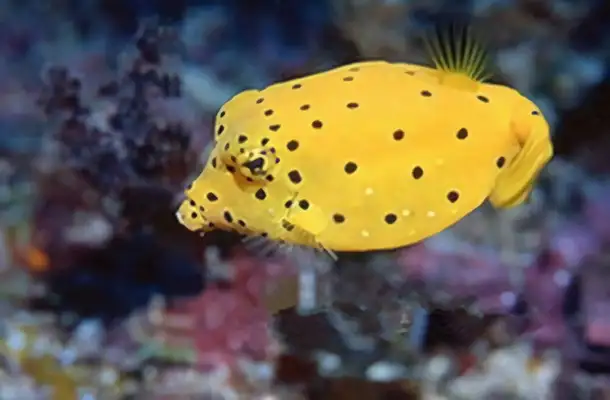
Pumpkin fish must be fed with attention to the problems of mixing and the water quality environment. Because of their special nature, when they are scared, they are released with toxins, so they cannot mix with other fish viewers.
1. No fresh water can be bred, but sea water. Water is properly salted and measured by weight. The fish's teeth are sharp, they attack other small fish, and its body releases toxins to poison the enemy when it encounters more fish or danger.
2. Despite being small, the fins of others are gnawed, especially for bites of other fish and even of fellow tails.
3. Cucumber fish often kill each other when they live in a harsh environment (e.g., short baits and high farm density), especially during the planting phase. Its skin is filled with toxins, which are released in case of injury or shock, poisoning the enemy and then swimming quickly. In addition, it has a taste for teeth and, upon arrest, sounds of “golls”.
Four. Water temperature: 24-27, PH: 8.1-8.4, share of seawater: 1.020-1.025. Pumpkin fish.
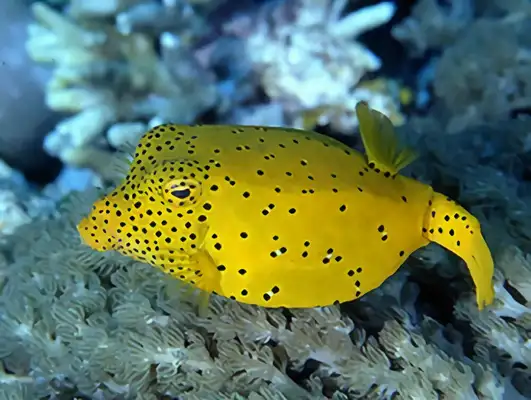
In feeding papaya fish, attention should be paid to the nutritional balance of the papaya fish and to the lack of a single diet, which can lead not only to anorexia but also to ill health. The raising of papaya fish also requires the maintenance of stable water temperature and PH.
Tropical seawater fish can feed with frozen shrimp meat, earthworms, and seawater granule feed, and fish can be fed with no excess, which could lead to constipation, with one or two times a day. It is recommended that its health be regularly checked. Every day, a careful examination of its entire body is conducted to see if there is a risk of external disease, parasitics, bacteria, fungi infections, bite marks, etc. By the way, look at its activities and see if it's unusual.