No.: PET5109
English name: Yellow-spotted Amazonriver turtle
Character: timid, shy
National origin: Venezuela, Colombia, Ecuador
Illness: death
Life: Around 40 years old
Value: A brief description of the type of yellow-headed neck turtle over $100
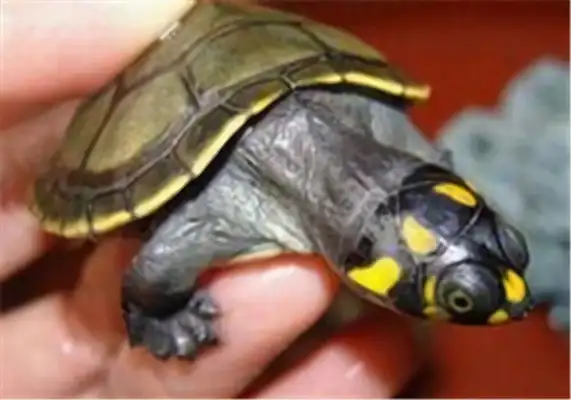
Yellow-headed neck turtles are basically hydrogenic. Although they can be raised in very small spaces, the size of the turtle makes indoor breeding difficult. Such turtles are best fed by turtle lovers living in the southernmost part of the country, where outdoor facilities can be provided for perennial feeding.
Chinese: Yellow-headed neck turtle
Alias: Yellow-side neck turtle, yellow-side neck turtle, ninja turtle
English name: Yellow-spotted Amazonriver turtle
Latin name: Podocnemisunifilis
Classification: Tortoises; Pancreatics; Pancreatics; Pancreatics; Pancreatics; Pancreatics; Pancreas of South America; Yellow Cretaculars
Distribution: Venezuela, Colombia, Ecuador, Peru, Guyana, Brazil, Bolivia.
Acetylene length: 40-60 cm for turtles of smaller relative size (mother tortoises above 60 CM and half for turtles)
Life expectancy: over 60 years
Practice: sexual habitat in river or lake areas
Fit for temperature: 24-30° C.
Reproduction: Eggs. Female turtles produce 15-25 eggs per nest, which is very productive. Pregnant female turtles are known to look for suitable spawning sites far from water. The turtle hatched for about 75 days, and when it hatched, it made a difference. With luck, they can live for over 70 years. The yellow spots on the head are most visible in the calves. As the males grow, the yellow spots will be diluted and the females will disappear completely.
Eating: Yellow-side neck turtles are mainly food-growing species. They feed on many aquatic plants, fruit and many deep green vegetables. The long leaves, the daisies, the kale, the sapphires, the apples, the grapes, they're all very happy.
Price: The price is cheap, and the lower price is around $100. Characteristics of yellow-headed neck turtles
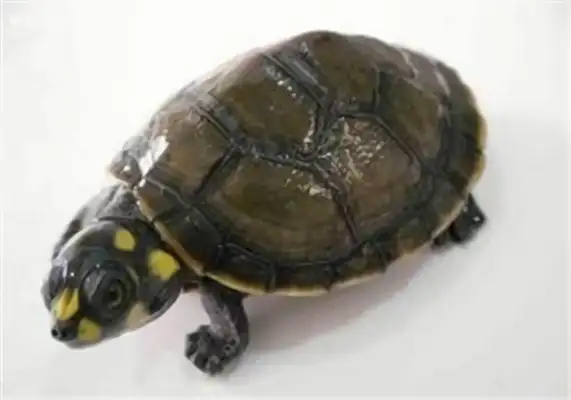
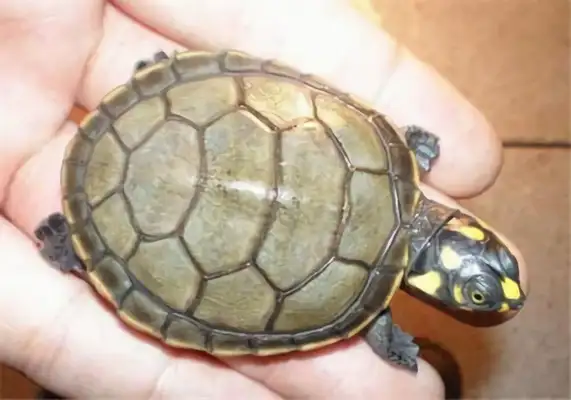
This turtle is basically gray. The front side of the limbs and the back of the head are slightly deeper than the colour on the back of the vest. There's some yellow spots on the head, and that's what it's called. There are nine of them — one on the top of the nose; one on both sides of the head, one under the nostrils; one directly below; one a little behind; one above; and one behind each eye. The whole impression is like an oiled clown turtle. Knowledge of yellow-headed neck turtle conservation
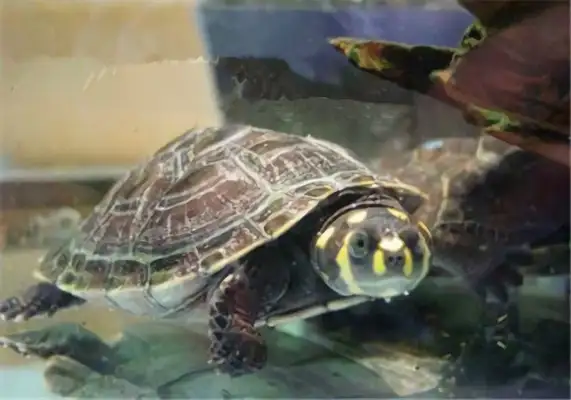
Change your head.
It needs to be made clear that the yellow necks that are sold on the market are almost all artificially larvae, more than 5-10 cm, but they can grow big enough to reach 30 cm for males and 40 cm for females, and that providing a good breeding environment for such a big guy is a primary consideration for the feeder.
The yellow-headed neck turtles are native to the Orinoco River basin in South America, so the temperature of the breeding environment is the first to be guaranteed for artificial breeding. Water temperature is best guaranteed at 24-28°C. There is no hibernation in their life history, so water temperatures below 20 degrees C are fatal to them. Yellow-headed neck turtles are also very fond of tanned turtle species, especially in the early morning hours, where they raise their body temperature, awaken the vitality of the body and start a day of feeding.
In view of this, their fragile skin is also vulnerable to infection by aquatic bacteria if the terrestrial environment is not provided for their backs. Therefore, raising yellow-headed necks in low-temperature areas must be balanced against temperature on the basis of water temperature, which is above the temperature of 2°C, otherwise young children can easily cause respiratory diseases when entering low-temperature terrestrial environments from high-temperature water environments.
The yellow neck is more vegan, and at the larvae stage (under 10 cm) they may eat animal foods such as fish shrimp insects. But their ability to catch live bait is of little value, so it is believed that, in their raw habits, they will eat a certain body of animals or other slow-moving aquatic molluscs. Because I've found that they're looking for food in the bottom sand under conditions of artificial breeding.
After the submerge (more than 15 cm), the diet of the yellow neck turns to pure feeding, and the feeders can provide them mainly with a variety of herbs, vegetables and vegetarian foods. The maintenance of the quality of water from artificial rearing is a difficult task, given the alarming amount of adult food and the high volume of excretion. I prefer the big flow filter as a water quality safeguard for the yellow neck. Yellow-headed neck turtle living environment
The most difficult thing for yellow-headed neck turtles to breed is water temperature maintenance, a tropical turtle, which requires a higher temperature environment and, in winter, yellow-headed neck turtles do not hibernate and are still warming up for winter.
I. Temperature of yellow-headed neck turtles
Yellow-headed neck turtles are concentrated in tropical water systems from northern to central South America and are typical tropical species. So if you raise it, you have to set up a heating bar. The temperature is best above 30 degrees, with turtles growing at 30 degrees, recovering at the rate, and resistance to disease being the strongest. In case of power outages, it is too cold to use blankets or heat water, with generators available.
II. Quality of yellow-headed neck turtles
Water quality is also critical. Keep good water quality, such as regular water exchange, one fifth or one quarter for three or four days in the summer, and six or seven days in the winter, turtles are basically not sick. For filtration of cotton, it would be preferable to clean the first layer, with the next floors being cleaned once a month. If we do this together, there will be a lot of digestive bacteria dying.
III. Yellow-headed neck turtles
Yellow-headed neck turtles are not full water turtles and must be equipped with tans that can be purchased online or DIY. The tan light should also be set up to maintain a minimum of 2 hours a day and above, and it would be preferable to ensure 12 hours a day, if available.
To sum up is to control water temperature, water quality, sunback time, and yellow-headed neck turtles will grow great. Yellow-headed neck turtles are growing fast, and if 5.5CM is bought, 15 CMs in a normal year would be fine. So it's best to have a bigger tank and a bigger tan. The yellow-headed neck turtle feed.
What's going on? In fact, two of the main reasons for the death of yellow-headed neck turtles are low ambient temperatures and inadequate nutrition of food.
Yellow-headed neck turtles are mainly food-fed species. They feed many aquatic plants, fruits and many deep green vegetables (do not feed spinach and cabbage). Leaf sprouts, kale, cauliflowers, apples, grapes, etc., are quite acceptable. For trout and catfish feed is also appropriately fed. The bait for high animal proteins will harm the long-term health of this turtle, just as proven excess animal proteins can harm the health of other herbicide reptiles.
Green green vegetables, small fish, fed with feed, but most interested in artificial feed, only when hungry, not for all kinds of fruits, not for insects, fish vary from one individual to another, and there is a certain diet of aquatic plants in the form of stubble roots, and tungstens. In addition, there is a high appetite for cat food, which is higher than any other food, but is controlled for nutritional balance.
Forage is short-lived and digestive, and they eat and have a natural laxity. Without filters, water is dirty for hours, it stinks in one day's work and can't keep up with any frequent change of water. The configuration of efficient filters is necessary.