Designation: PET3181
English name: Platycercus eximius
Country of origin: Overview of species of parrots in south-east Australia, Tasmania and neighbouring islands
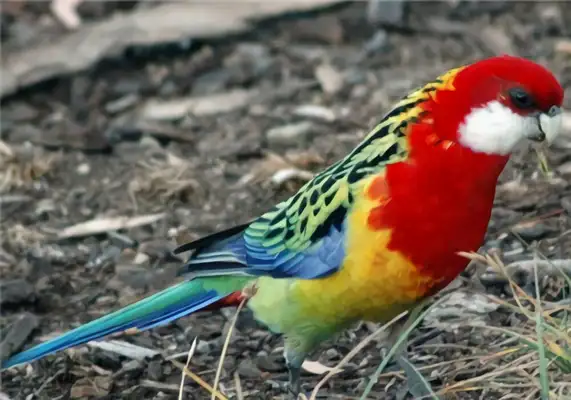
The Eastern Rose parrot, one of the more common Australian parrots, is currently not very expensive on the market and is well suited to start raising the new hands of Australian parrots. There are three subgeneric species of parrots in the east, the most variable of them.
Chinese literary name: Roast parrot
Latin name: Platycercus eximius
Don't call it a seven-grass parrot.
Context: Animals
Programme: Birds
Look: Parakeet.
Section: parrots
Distribution: Eastern rose parrots are located in south-eastern Australia, Tasmania and a number of adjacent small islands.
Eating: the appearance of seeds, grains, fruit, flowers, insects, and parrots
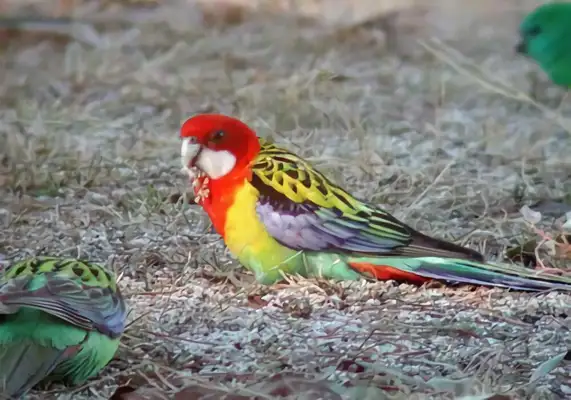
The number of eastern rose parrots in the wild is relatively stable, so there is also a greater incidence of artificial farming. According to incomplete statistics, the total number of parrots in the East roses is about half a million worldwide. East rose parrots, who live in the wild, prefer to live in open woodlands, rivers, and so on.
An eastern rose parrot is 30CM-33CM. The feathers are very bright, the head of the female bird is darker than the red feather in the chest, the white part of the cheeks is light gray, and there is a little green on the top of the head, while the red feathers of the male are fresh red, the cheeks are pure white and the head is not green. Eastern parrot breeding environment
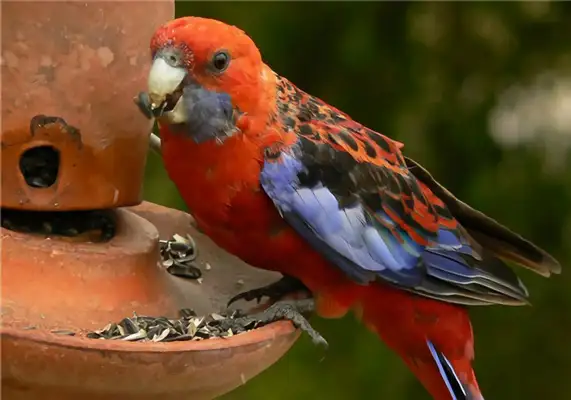
Eastern rose parrots are not very difficult to raise and are an option for newers who have just begun raising Australian parrots. Artificial parrots of the Eastern Rose need to be kept regularly clean, preferably regularly dewormed and provided with small branches or toys.
Artificial raising of an eastern rose parrot is not suitable for raising in small cages. In wild environments, the eastern rose parrots love to dwell on open forest lands, various forest lands, forests by rivers, forest margins, grasslands, Yugali trees, bushes, agricultural lands, etc., mostly with an annual rainfall of over 400 mm or more, in areas below 1250 m above sea level, usually in pairs or in small groups of about 8 to 20 groups, with occasional concentrations of large groups of parrots (Redgrass, Crimson Rosella), rose parrots (grasssing, Pale-headed Rosella) and parrots (sounding, Red-rumped Parakeet); sometimes at the end of the reproductive period and in the early spring, with severe losses to farmers. The eastern rose parrot feeds the order.
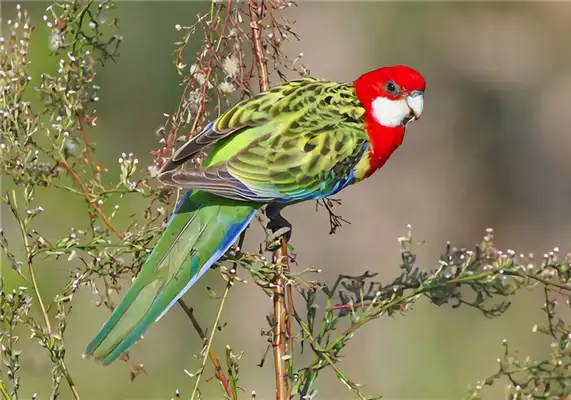
An east rose parrot is grown up and water is essential, and in the wild, the east parrot eats seeds, grains, fruits, nectar, insects, etc. So what's better to feed an East Rose parrot?
Main foods: millet; nutrition: oil feed (nuts, melons, assortments, etc.) is occasionally supplemented and cannot be eaten much. Vitamins: Fruits such as green leaves (oil, cabbage, lettuce, spinach, etc.). Other: Sand (necessary, like staple food, must be required daily. It helps digest) calcium (in oyster shell fragments, etc.).