Designation: PET2592
English name: Blue-crowned lory
Vulnerability: respiratory, digestive and parasitic diseases
Life: A profile of the species of blue-coloured parrots 10-15
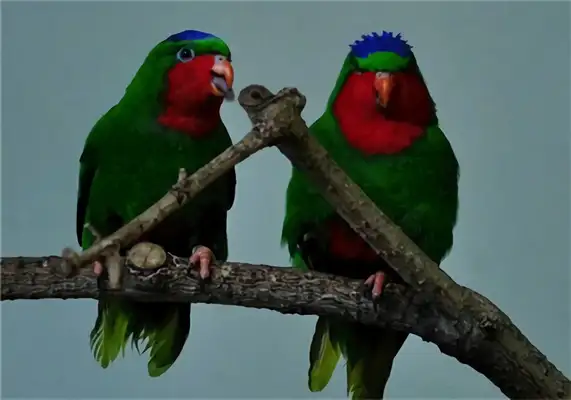
The feathers on the head of Blue-crowned parrots are very bright and beautiful, and blue crown parrots have more in common with their chests, and more in common with brushed hairs on their tongues, mainly to facilitate their access to food in flowers.
The structure within the bodies of the blue cape-sorting parrots is also special, and there is a special digestive enzyme in them to break down the food. However, because the mercantilating parrots do not have the need to digest grain feed, their sandbags are much less capable of treating hard foods than other parrots.
Chinese literary name: Blue crown parrot.
Chinese aliases:
English name: Blue-crowned lory
Two words: Vini australis
Boundaries: Animal communities Gate: Phylum Chordata
Amen: Vertebrata
Aves
♪ The world's most beautiful world ♪
Objective: Psittaciformes
Psittacidae is the only parrot, but it is very diverse.
Aco:
From: Vini
Blue crowns sucking a parrot.
Distribution: The Pacific islands, including Taiwan Province of China, the East Sha Islands, the Xisha Islands, the Central Sha Islands, the South Sha Islands and the Philippines, Brunei, Malaysia, Singapore, Sumatra, Java and Papua New Guinea. The islands of Fiji are mainly in the South Pacific. Blue crowns sucking on parrots.
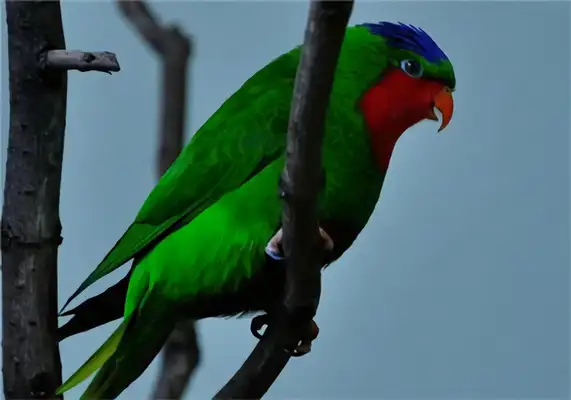
Blue crowns sucking a parrot is a relatively small form of parrot, with an adult body of about 19 cm and an ideal body weight of between 47 and 52 g. The whole body is very colorful, and the whole looks good.
The beaks of a blue cape sucking a macaw are longer than, and more particularly, the hair of a parrot's fine tongue, which is called a brush, to facilitate its access to food in flowers.
The number of male and female cages in blue-coloured parrots is very low internationally, with no visible appearance or similar sub-species. Blue-coloured parrots have green cheeks with blue crowns, large red labels on their throats and abdomen, deep yellow beaks, yellow eyes, blue or purple thighs. Blue crowns sucking on parrots.
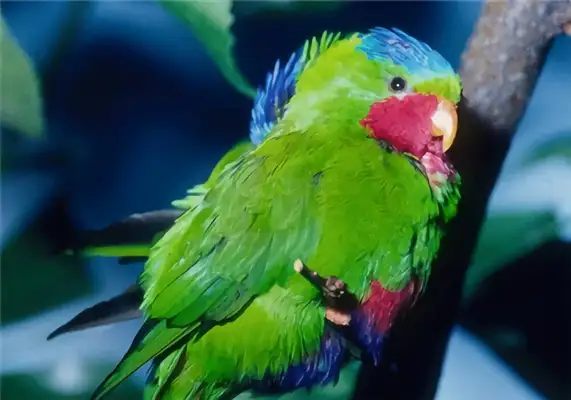
Blue-caned parrots are common birds in their native lands, but their numbers are declining because of predators in rats; they are mainly settled in areas with flowers, such as woodlands, palm coconuts, coastal areas, mountains, farming areas, etc., and are migratory.
The number of artificial animals is small, caged birds are less noisy, bathing is preferred not to be introduced in winter. For high environmental health requirements, feeders should pay more attention to hygiene to avoid disease infection, be more sensitive at first breeding, and be more stable with regard to temperature, the environment and food. Blue crowns sucking on parrots to feed knowledge.
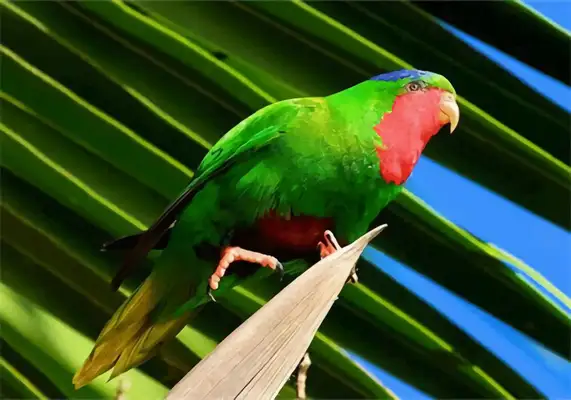
Blue canopy parrots usually start breeding around July of each year, with no significant appearance differences between females and males, or similar sub-species, surviving on small islands, and with an annual decline in wild numbers.
The information on artificial reproduction is rather limited and can be produced in groups, but is more effective in reproduction, which can be supplemented with some animal proteins during reproduction, excessive anthropogenic disruption during reproduction may lead to the killing of young birds by their own birds, not to open nesting boxes often, and success in reproduction is best achieved without all unnecessary disturbance, with about two eggs being produced at a time, which hatched about 23 days or so, and young bird feathers growing up to about 7-8 weeks.