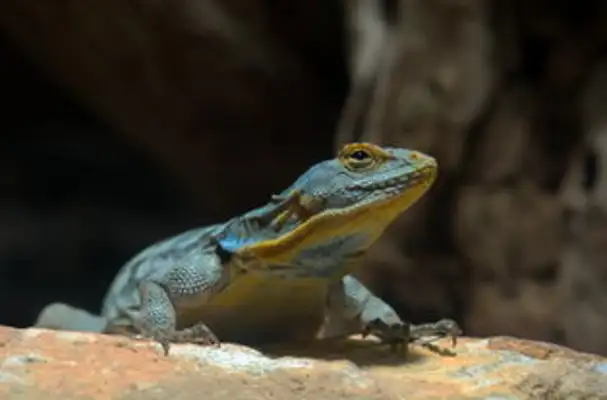
Blue Rock Lizard is a medium-sized, colour-specific reptile originating from tropical and subtropical rock mountain areas. They are known for their tenacity and adaptability and are mainly found in the field in sews, rock walls and dry bushes. The adult blue rock iguana can be as long as 35-45 cm, its colour is predominantly blue gray, and some individuals are famous for their bright blue glow in sunlight. They have long, flexible tails, well-developed limbs and strong grips, and are well suited for rock climbing.
Blue rock iguanas are day animals with high demand for environmental temperature and light. They are not only valuable pets, but are also favoured by reptiles because of their intellectual and somewhat interactive characteristics. Character characteristics
Blue rock iguanas are relatively moderate, but also have some independence. They do not normally attack humans voluntarily, but they do so by raising their bodies, opening their mouths or throwing tails to warn when they feel threatened. The blue iguana is more lively than other reptiles, preferring to climb and explore the environment, and therefore needs to be provided with abundant space and structures for breeding.
They have a territorial awareness, especially of male individuals, and need to be gender-sensitive and spatially distributed when raising multiple individuals in order to prevent conflicts. Overall, blue rock iguanas are suitable for a pet owner who is patient, willing to observe and provide environmental enrichment. (b) Technological setting: The blue iguana prefers to climb and hide, so the rearing box should be designed for multiple layers of rocks, branches and caves. Substrates can select sand or coconut soil to keep them dry and clean. The size of the box is recommended to be at least 60 x 40 x 50 cm to meet its operational needs. Temperature and light: As a daily reptile, blue rock iguanas require sufficient light and temperature differential irritation. The temperature should be maintained at 28-32°C during the day and can be reduced to 22-24°C at night. 10-12 hours of ultraviolet B (UVB) lamps per day should be provided to assist in synthetic vitamin D3, promote calcium absorption and prevent bone problems. Dietary management: Blue rock iguanas are groceries, but mainly insects and small invertebrates. Cricket, grasshoppers, bread worms and appropriate quantities of vegetables, fruit, vitamins and fibres can be fed. The diet should be regularly supplemented with calcium powder and multiple vitamins to ensure bone health and immunity. Humidity and humidity: Blue rock iguanas are dry, but still require drinking water and moderate humidity. A small amount of water can be sprayed daily, local humidity maintained and water dishes provided for drinking. Humidity control is more appropriate at 40-60 per cent. Periodic inspection: periodic observation of iguana appetite, activity and physical condition. Healthy blue rock iguanas have bright eyes, smooth skin, no obvious skin removal difficulties or parasites. If anomalies are detected, the vet should be consulted in a timely manner. Skin and hair care
Although blue rock iguanas have no hair, the health of their skin is equally important. Their skins are cyclically decorated, especially during growth. The recommendations for care are as follows: moderate humidity: during de-skinning periods, the rearing box ' s humidity can be increased appropriately, and shallow water basins can be provided to help the iguana de-skin. Cleaning of the environment: keeping the rearing boxes clean and periodically changing base materials to prevent skin infections in bacteria and fungi. Dietary regulation: ensure that diets contain sufficient vitamin A, calcium and moisture to maintain skin elasticity and overall health. Observe skin anomalies: The dry skin cracks, skin stripping or dim colours may be signs of health problems and the environment should be adjusted or treated in a timely manner.
The blue iguana is a creeping pet that requires patience and careful care, but its unique colours, lively character and good interaction make conservation a fun process. The blue iguana will become a healthy, lively and flattering “partner in the home” as long as the master takes care of the environment, a rational diet and scientific care.
This article contains approximately 1,000 words covering both species information and advice on scientific breeding and skin care.
If you want, I can then get the article a detailed display of the breeding environment so that the new guy can see how to plant the boxes. You want me to do it for you?