Title: PET1639
English name: Elapheandarinus
Vulnerability: anorexia
Life: Overview of the 10-12 years of Jade Viper species
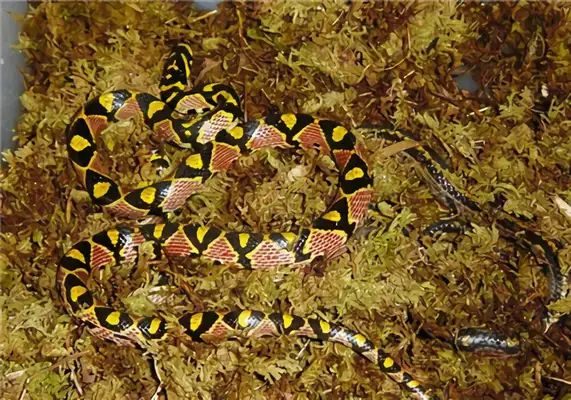
Elaphe mandarinus, alias Sanctuary Snake with purple grey backs and three distinct black spots on the head, live mainly in hilly forested areas, common in the north, east and south of the country.
The jade snake is a rare species in the Beijing region, with only a small number of discoveries in the mountains of the clouds and Huairou, and in parts of the cherries of the sea-dry mountains. It is also more common in the river basin on the three slopes of Hebeno, near Kyoto.
Chinese literary name:
Chinese aliases: Gao Sand Snake (Taiwan), Viper Viper (Zhejiang), Jade Ribbon Snake (Fukuyan)
Area: Animal
Door: vertebrate door.
Amen.
Scramble
APA: Diapsida, APA
I've got eyes.
ANA: Snake
Section: Snake Section
Aco:
It's a snake.
Specimen: The shape of a jade snake
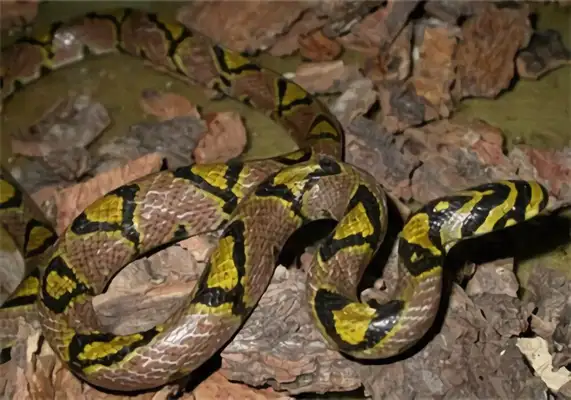
The main reason why a jade snake is called a beautiful snake is that it is very beautiful in shape, is not very large, is about a metre long, and its back is mainly purple gray and brown. There are three bands of black spots on the head; there is a row of dozens of black diamond spots in the center of the back, and the middle and the yellow edge of the diamond band; and the diarrhea is white, with black spots staggered around the right.
The abdomen of the jade snakes are white and white, scattered for varying lengths and in rows. Yellow on the back, with a typical black-down "V" font folded. Ahead scale 1, 2; 颞鳞 2(1) + 3 (2); upper lip scale 7, 2-2-3 or 8, 3-2-3 or 2-2-4; lower lip scale 9, first four pre-cutting tablets. Line 23-23-19, smooth; abdomen 181-238; anal diaphragms 2; tailings 53-75. It's a beautiful place.
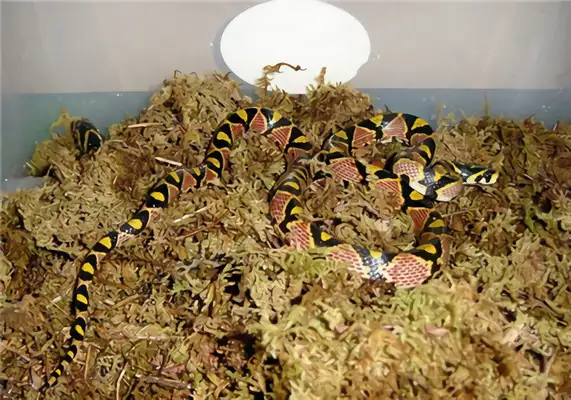
It is not necessary to look for too complex boxes, it is sufficient for any snake box, and it is important to focus on temperature and moisture control in the breeding environment, because snakes are cold-blooded animals, commonly known as thermogenics, which cannot regulate their temperature themselves. Here's what we're looking at.
The larvae are very sensitive to dehydration and are best kept in incubators or plastic boxes. The snake box is wet enough to avoid excessive dry ventilation. There are many types of bottoms, which can be considered. The jade snake likes to get into the bottom. Do not use newspapers or paper towels as a base, because they are nervous if they are not sufficiently thick to hide. Keep the bottom clean and dry. For all reptiles, pine is poison, so don't use pine as a base.
A small container with water in it. Despite the need for a more humid environment, it cannot be over-humid. Put fresh moss in the rearing box. This would provide sufficient humidity and could simulate a shelter where it could hide. They are usually hidden in the mosses in the afternoon and at night, and at dawn and in the morning they catch and sunbath.
Heating devices are placed on one end of the rearing box to form the temperature gradient. This allows for free choice of the right temperature between high temperature (26°C ~29°C) and low temperature (18°C ~ 21°C). There is a safe place between the cold and the heat so that it feels safe at any temperature point. Extreme maximum temperature does not exceed 32°C. With regard to light, no special lighting is required for such animals living in the dark. I've been raising knowledge.
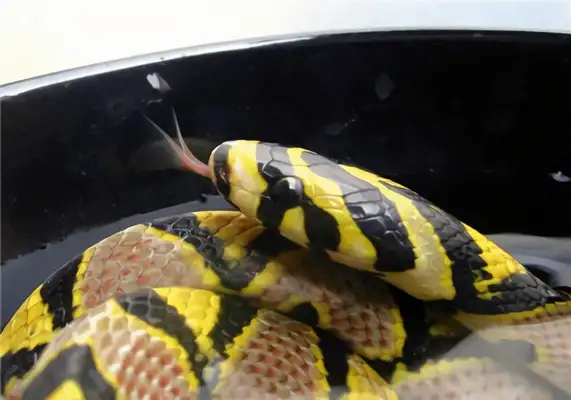
As much as other snakes have a habit of hibernation, the advantage of hibernation is that it can be prolonged, so that it can be kept up as much as possible while raising it. The jade snake usually produces three to eight eggs at a time, but there are more records. The incubation period is 45 to 60 days, with an average temperature of 25°C.
The jade snake is a neurotic animal that may bite if it is intimidated or treated harshly. When disturbed, it excretes adhesively adhesive secretions. Play with it as softly as possible, not too tight, so that it can slide in your hand, and not leave its body in the air without supporting it. Try not to hold it long enough, and if you want to move it far away, you should put it in a dark box before moving it together.
Although it is sometimes possible to identify males and females of the jade snakes by the shape of their tails, the most accurate method is to see whether there are switches. When using the extruder method to identify males and females, the technique is soft, and the incorrect method can cause injury or even death. I don't know.
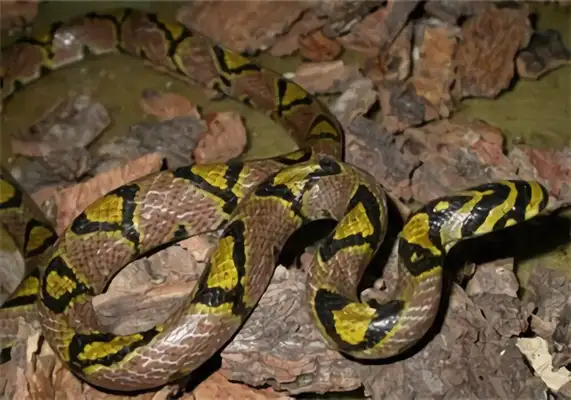
A jade snake is relatively mild in character and normally can play with pleasure, but do not deliberately provoke it, otherwise it will bite. Most of the jade snakes eat only rats, and many of the artificially tamed jade snakes like to eat mice. Five to seven days.
Many mature individuals clearly prefer mice. It is common to feed a mouse instead of an adult rat of equal weight. Some stubborn individuals only eat geckos. After being fed several times with gecko fluids, it usually accepts common mice and gradually accepts mice. Be patient enough to domesticate. Usually, the jade snakes are disturbed in large containers, and we can put the small saucer with the mouse on the bottom and put a paper towel on it. At night, the jade snakes will find themselves under the paper towels and feed them. Some stubborn individuals do not eat anything but geckos, and others do not eat even geckos. They are refused food until the following spring, when they are confronted with such individuals, who are expected to put them to hibernation as soon as possible.