Designation: PET4246
English name: Tent Tortoise
Country of origin: South Africa, Namibia, Bogusna
Vulnerability: gastroenteritis, flu
Life: 30 to 50 years
Price: Overview of the land turtle species in tents 50-2000
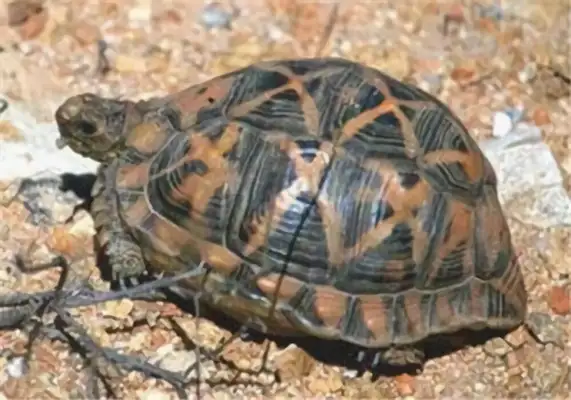
The tented turtle is also known as the tented star turtle, a relatively warmer and dry species of turtles, with smaller sizes, a preference for some plant food, more complex breeding, and the country's presence of isolated individuals who can be bought in some pet markets.
Chinese literary name: Tortoise
Chinese alias: Tortoises
English name: Tent Tortoise
Two: Psammobatestentorius
Context: Animals
Gate: Pipeline gate
Amen: vertebrate Amen.
Programme: climb
Tortoises.
Subtitles: Curvature turtle
Section: Marine turtles
Crop: Tortoises
Distribution: South Africa, Namibia, Bogner.
Appearance feature: 13cm-15cm.
Lifestyle: Tortoises are tropical and subtropical terrestrial turtles. Living in a dry environment, they live in areas of ceremonial ceremonial plants, platinum plants, scabs and a large number of adjoining plants.
Reproduction habits: Female turtles usually lay eggs in the months of March to October, with two to five times each, if the female is agitated, has a bad appetite, has an increased weight and is excavated like a frog, which means that she is about to lay eggs.
Eating: Likes to eat juicy plants, the plants that are often eaten in the wild are high-fibrous plants such as cactus, saloon leaves, pyre leaves, rose leaves and weeds. Land turtle morphology of tents
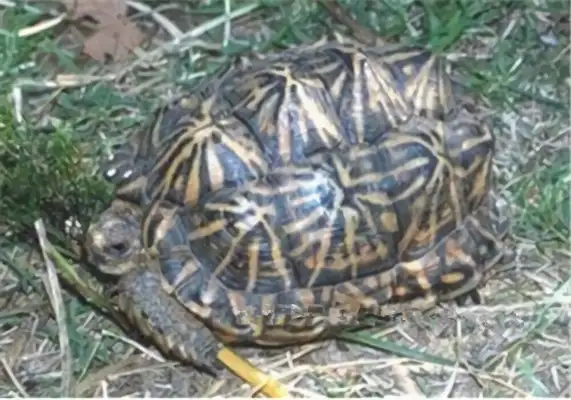
The tented turtle is a relatively common type of starfish and a more suitable species for human breeding, but in general it is not as easily adapted as other turtles, and its appearance is similar to that of Indian star turtles, so that the number of tented turtles is small.
There are currently three sub-species (P.t.tentorius); (P.t.trimeni); (P.t.verroxii) that are the most widely distributed of all the starfish species, with the sub-regions covering Namibia, Bozana and the entire territory of South Africa, although the most concentrated area is the Etosha wildlife conservation area between South-West Africa and the West Bank of Namibia, where the rainy season occurs in March-April each year, and where the tortoises are also one of the species that is more adapted to the environment for artificial breeding.
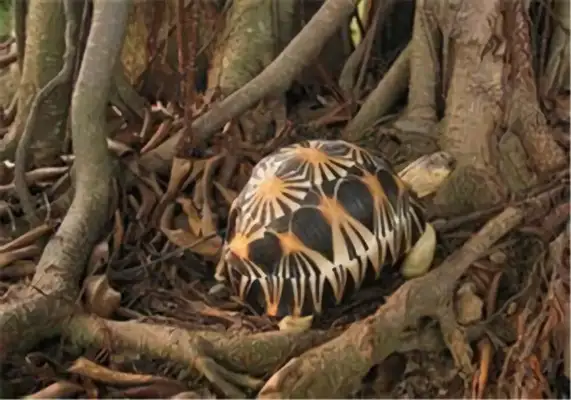
The shape of the tented tortoise is similar to that of the Indian star turtle, although the head is brown with black spots, the edges of the acetone are big saws, the back-nailed road is more like the turtle's rules, the tented tortoises are of a larger male size than the female, with roughly the same tail characteristics, the male tail is thick and the female is short. All species of starfish are strictly controlled by the Government in national parks, with low visibility and difficulty in raising them, making it difficult for them to survive. Tent turtle care knowledge
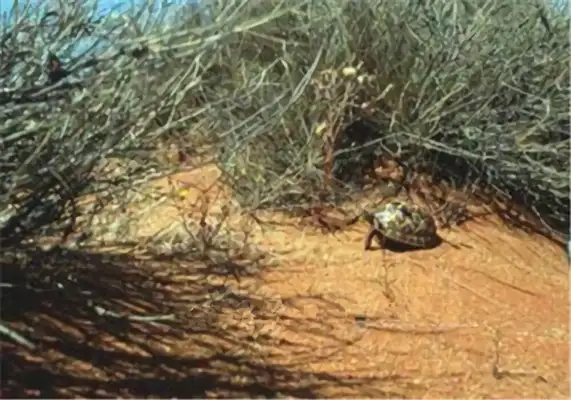
The operational state of the turtles is usually associated with the temperature of the environment, but it is not obvious that the tent turtles are present. Interestingly, they are found to normally fall during the rainy season, and once the rainy season has passed, the turtles begin to operate, suggesting that this is a kind of turtle-like dry environment.
Tortoises are tropical and subtropical terrestrial turtles. Living in a dry environment, they live in areas of ceremonial ceremonial plants, platinum plants, scabs and a large number of adjoining plants. Tortoises are available only on fairly high hills, slopes and far from water. During the rainy season, numerous turtles crawl out of drinking water. When he was afraid and frightened, his head shrunk inside the shell, immediately stretched out the shell, repeated it several times, and his mouth continued to sound “smelling, smelling” when he was calm, shaking under his head and slowly stretching out the shell. If they are picked up, they stretch out their limbs and open their mouths to bite. After normal feeding in the new environment, the habitat is fixed.
Under conditions of artificial rearing, the habitat of the tented land turtles is fixed, often crawling out of the shadows during the day and remaining in place for a long time, with tears coming out of the eyes. When ambient temperatures are around 25°C, turtles are active and often climb out of their nests and move around. The ambient temperature is 32°C, with turtles often crawling to potable water and sometimes resting in the basin for 5-10 minutes. The temperature is below 18°C, the turtle is kept in the sand, the whole body is buried in the sand and the turtle is exposed to hibernation. Tent turtle living environment
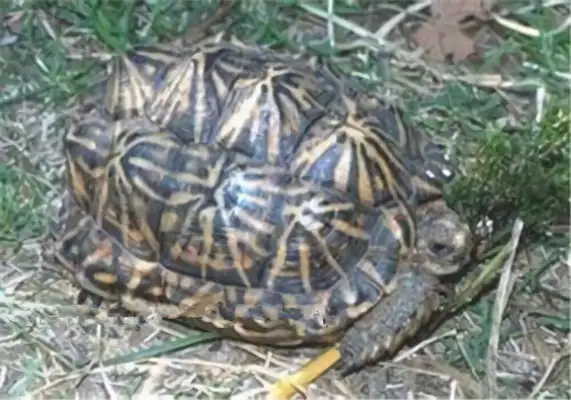
Land turtles in tents prefer high temperature and low humidity ambient temperatures, and generally low humidity or inadequate intake of water can cause rocky land turtles, but such problems do not usually occur in tents, nor do they need to have specially abundant water boxes in the environment to ensure that the environment is dry.
I. Control of the humidity of the land turtle environment in tents
The first is ventilation, which must be maintained in the rearing boxes, otherwise they are prone to disease. It is therefore not appropriate to use this hot, closed container to feed the tented turtles, such as fish cisterns. Owing to its status as a desert turtle, the rearing moisture of the tented turtle is not excessive, and it is generally best within 40 to 50 per cent, not more than 70 per cent.
II. TRANSFER OF THOSE TORTURE TORTURE
For heating equipment, rather than placing them in the centre of the rearing box, they should be placed at the end of the rearing box, which would help to create temperature gradients for the turtles to choose the suitable temperature zone, while at the same time placing a thermometer in each of the high and low temperature areas, which would provide a comprehensive picture of the temperature conditions in the box. If bottom heating equipment (heating pads) is used, the thermometers in the high temperature zone must be placed at the bottom of the box above the heating pad, because the temperature at the bottom of the box is higher than the temperature in the air inside the box, so the temperature at the bottom of the box is the actual rearing temperature and if it is too high it causes burns. What do you want?
Land turtles, like most land turtles, are food-planted animals and require a large and rich variety of plants to feed them to meet their nutritional needs, while some vegetables and fruits can be provided, but not in too many quantities, which can cause diarrhoea.
In the wild, the staple foods of ground turtles are a variety of weeds, pastures and weeds, which require large amounts of high-fibrous food as they grow. In other words, they can be raised like cattle because their diet is very similar. Seventy-five per cent of the diet of tented land turtles should be grass, pasture and grass. All you have to do is cut the upper part of the weed, and don't hurt the roots, so that the tortoises will enjoy the restless fresh pasture.
The remaining 25 per cent of the diet of the tented turtle consists of leaves of various vegetables or plants. This is the case of mustard, green kale, soybean, oatmeal, grass, grapes and dandelion. At the same time, care is taken not to feed beet, spinach, coconut, cabbage, corn, bean teeth, tomatoes, beans and any high protein plants. Fruits are not fed, they are replaced by cactus. It is also important to ensure that any food is not contaminated with chemicals such as pesticides. They also dry the leaves when they are fed, so that they do not have too much moisture on them, otherwise they are easily diluted.