Designation: PET2461
English name: Boleophthalmus pictinirosris
National origin: China
Vulnerability to diseases: albino disease, rotting tail disease
Life: 3 to 5 years ' profile of fish coated
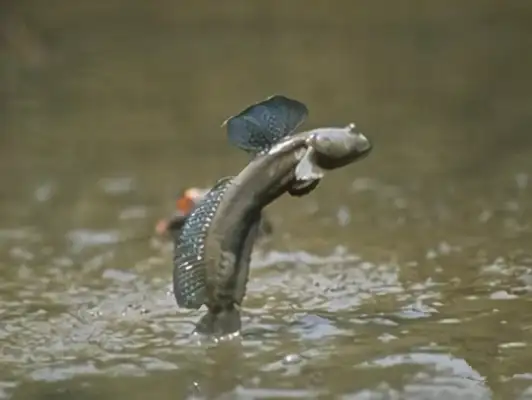
Large-springed fish, which are warm-water intertidal fish, likes to jump and jump through the abdominal fins to feed themselves from our coastal areas. Small fish from Lake West, who like to live in caves and live alone, are not easy to raise and can be fed.
Chinese literary name: Big fish.
Latin name: Boleophthalmus pictinirosris (Linnaeus)
Don't call it "jumping fish."
Context: Animals
Door: Spinal door - Osteichthyes
Syndicate: Sculpture - Perciformes
- Gobioidei
Subheadings: Tigers - Periophthalmidae
Section: Scraping Fish Section - Boleophthalmus Magnificence
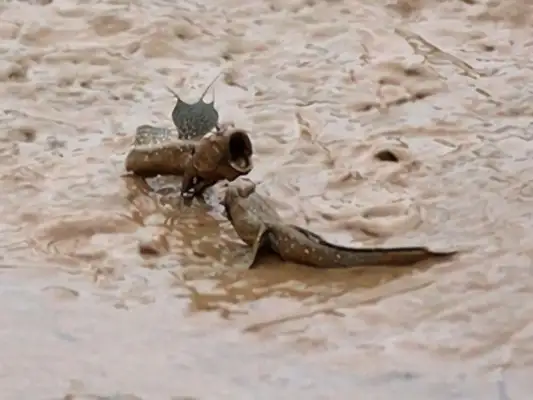
Large-capture fish, which are small, warm, coastal fish, use their abdominal fins to jump on the beach or on the dirt, but then jump back into the water or drill into the caves after a little noise. Large-shot fish prefer to live alone and can breathe with skin and tail, so they can stay on shore for longer periods.
Large-shot fish extended, flat-sided, large, near-cylinder shape. The average size is 10-20mcm and weighs 20-20g. Keep your eyes high, come close to each other, stand above your head, look at your eyes. The mouth is slightly oscillated, with two lengths of length, each having one line of teeth, each with a cone of upper teeth, three in front of each side with a canine tooth, and the lower tooth is tilted to the outside, with a rectal. The body is small, side-lined. The base of the chest fin is wide, the muscles are well developed and the abdominal fin is increasingly synthesized. Dark brown, with a small blue dot on the back and tail fins. Back black and brown. Abdominal gray. There are six black bars on the back, covered by irregular tan spots, two fins and a very small one. The end of the thorn is lengthened in a silk form only by five fins, of which the third is the longest; the second back fin and the hip fin are both long and of approximately equal length. The tail wedge is broad, the second back fin has three usual grey-white lines, and the chest fin has yellow green insect tattoos, which are very beautiful. Big fish breeding environment
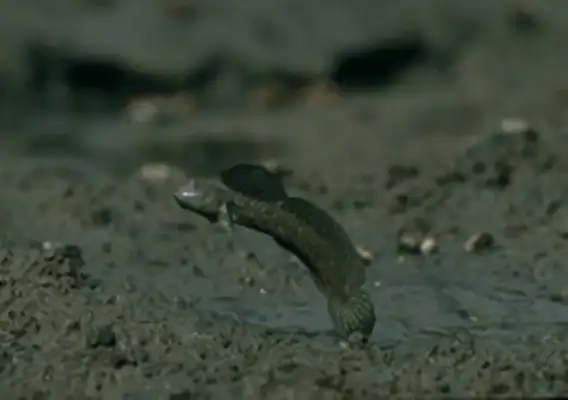
Artificial fish are generally kept in ponds, and because of the practice of jumping, artificial ponds must be large enough to ensure that they are operational. Since big-shot fish prefers to live alone, it is important to keep in mind the density of their breeding, which is generally the best for 6 tails/m2.
The ponds that produce large-shot coated fish are rectangular in size of 1 hectare, with an embankment of 50 cm high, a flat bottom of the pond, a draining tan pool, the cultivation of benthic silican algae, a soft clay of the base, a ringless ditch around it and a central ditch, to increase the efficiency of the suntops to develop silican benthic algae and to facilitate fishing. They are easily transported around them, free of pollution sources and have some fresh water sources. A drainage gate was constructed each, with a purse sequester around the pond in order to prevent the escape of large-bulleted fish and the immersion of enemy organisms, with a nylon net of 100 m at a height of about 2 m from the bottom of the pool, to prevent birds from eating large-bombed fish.
It must be preceded by tans, fertilizing, exorcising the enemy, fish, etc., and then watering for silican algae. In May 2004, the ponds were disinfected with raw lime at concentrations of 400 x 10E-6 and bleaching powder at concentrations of 50 x 10E-6 (32 per cent effective chlorine) to remove virulent organisms and pathogens. I'll feed the fish.
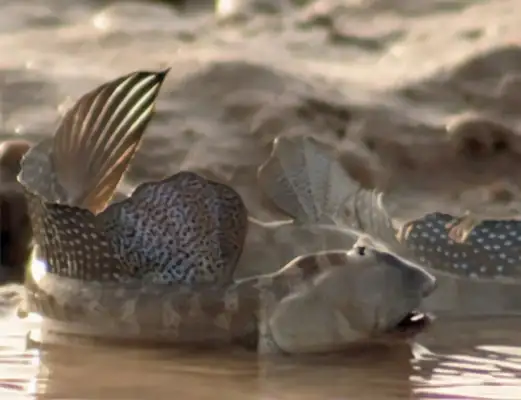
Large-capture fish are impregnable fish, fed mainly by benthic silicate algae, and occasionally eat the organic matter of the soil, as well as the pedals and roundworms, and generally come out for food at a retreat. It is therefore necessary to take care of the practice of masturbating fish in order to produce strong and healthy fish.
Fish-infested fish can be used as natural or artificially grown fish for the period May-September and the period May-June. Female parent fish choose to weigh around 25 grams, with a high number of eggs for fish of the second age. The more developed glands of females are characterized by larger abdomen, larger and more blunt excretions; males should choose around 20 grams, and excretions are longer. Prosthetics with good gland development can be used directly for catalyzing or placed in the spawning pool to naturally lay eggs (in the spawning tube). The gland maturation range of 3 to 4-year-old beverages, which are placed in suspense ponds and fed to collect silican algae from natural beaches. The pool is 20-30 cm deep and 50 per cent of the daily water is replaced with a bait table.