Designation: PET6246
English name: Acanthosculria juruenicola
Country of origin: Brazil, Peru
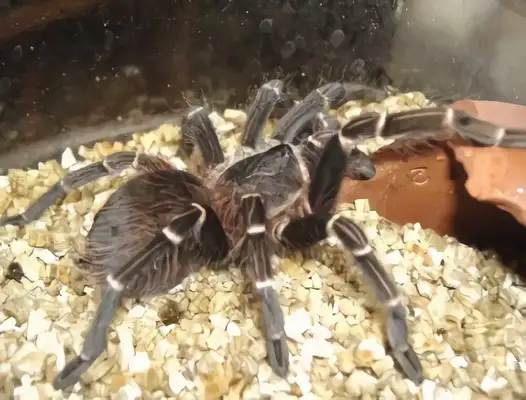
The Brazilian orange edible spider (the Latin term: Acanthosculria Juruenicola) was born in Brazil, Peru, and another big guy from Brazil. The whole is brown, the joints are marked with orange markings, dark black backs, red hair on the abdomen, and, in general, this color mix is still visible. The larvae, like Brazil's white knee, are almost gray and can dig holes. It's hard to see them on the one hand if you give them a thick base. Brazilian orange-eating bird spider shape
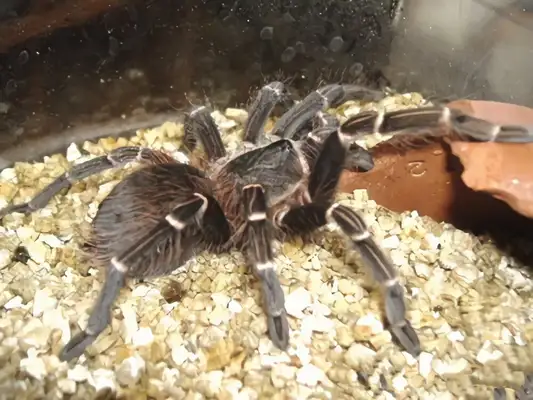
Brazilian orange-eating spiders, also born in Brazil, are brown as a whole, but because of the orange markings at the joints, they are more visible.
Brazilian orange-eating spiders have deep black backs and red hair on their abdomen, and in general, this color mix is still bright. The larvae, like Brazil's white knee, are almost gray and can dig holes. Elements of an orange-eating bird in Brazil
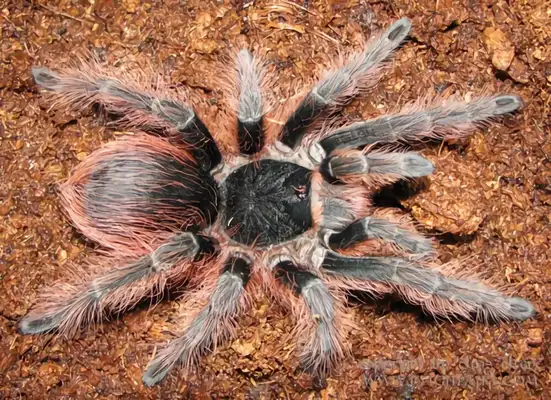
Because Brazil's orange-eating spider species are not very popular among bird-eaters, they are less visible in our daily lives, and the corresponding price for Brazilian orange-eating spiders is expensive.
In raising Brazilian orange-eating spiders, care needs to be taken that the natural environment is reasonably fit for them, and that when raising them, saps need to be prepared to help feed spiders and clean up the garbage; that the humidity requirements for Brazilian orange-eating spiders are also very important, so it is best to place a water basin in the rearing box; and that day-to-day observation and careful care by players will enable Brazilian orange-eating spiders to grow healthy. Environmental Requirements for Orange Bird Feeding in Brazil
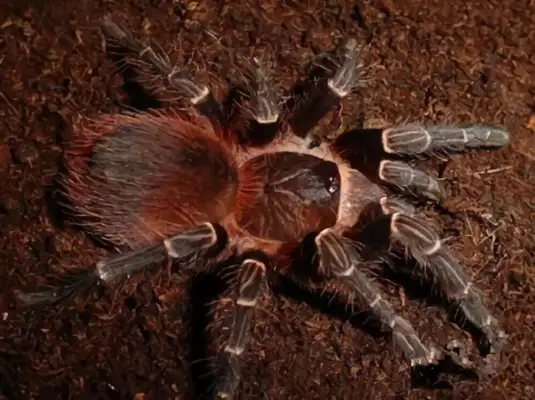
Although the Brazilian orange-eating spiders are less visible, there are players who love the species, so it is more important how the Brazilian orange-eating spider environment is designed.
Like many Brazilian spiders, the environmental requirements for raising Brazilian orange-eating spiders from Brazil are best met in their wild environment. Brazilian orange-eating spiders are suitable for temperatures of 25 ~ 27 °C and 75 % humidity, and slightly humid peat, coconut brick and clay are recommended as base materials for breeding. A Brazilian orange-eating bird. Points
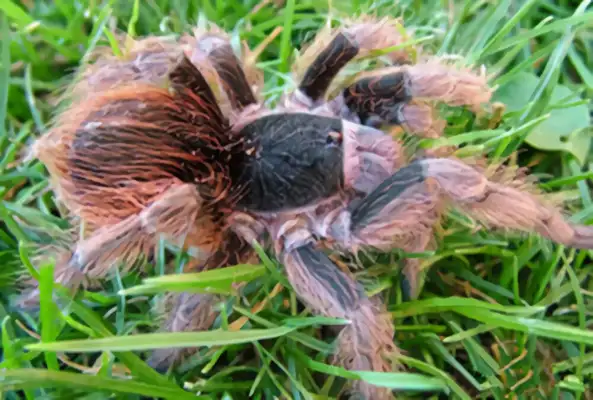
Brazilian orange-eating spiders are well fed and eat a lot, and some players say they feel much bigger every time they skin.
Brazilian orange-eating spiders, like other spiders, eat little insects and other living things that can be caught, and larger spiders, such as Brazilian orange-eating spiders, feed like birds. Brazilian orange-eating spiders can feed insects such as cricket.