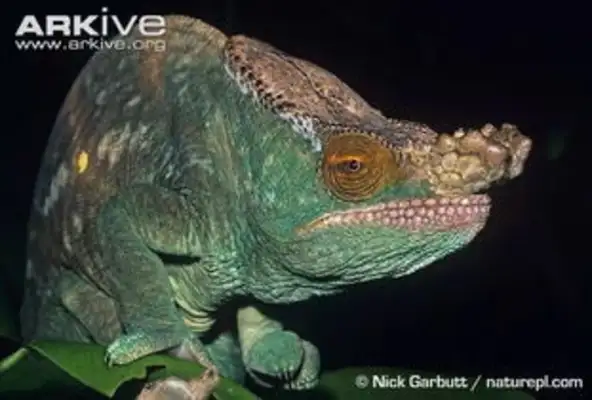
The King Chamaeleo calyptratus, also known as the Coronary Chameleo, is a chameleon from the Middle East region that has become the heart of many reptiles because of its unique appearance and charming colour modification. The beauty of this reptile lies not only in its ability to change colour according to changes in the environment, emotions and even temperature, but also in its unique quality and high adaptability to the environment. This paper will provide a comprehensive introduction to the King ' s Chameleon, ranging from an overview of varieties, character characteristics to breeding techniques, hair care, and valuable information for those who wish to raise this variety. I. Overview of varieties
The king's chameleon is a larger chameleon with adult males of up to 40 cm to 60 cm, while the female is slightly smaller, usually 30 to 40 cm. Their colour changes are very rich, and common colours include green, yellow, blue, orange and red. The male king, the Chameleon, is particularly visible, with a remarkable "crowd" surge, which is an important sign of them.
The chameleons are mainly found in desert and mountain shrubs and trees, and they have a strong ability to climb and climb and to operate in complex environments. The King ' s chameleon has a lifetime of about five to eight years and is more demanding in its habitat, particularly in terms of temperature, humidity and light. II. Characteristic characteristics
The king's chameleon character is relatively independent and somewhat conservative. As opposed to many other reptiles, Chameleons do not like too much contact with humans, and they are generally more inclined to stay away, especially at a stage of new adaptation. The male king chameleons show a stronger sense of territoriality during the courtship season, and they may be violent against other males, while the female is milder.
Nevertheless, the king's chameleon is not completely incapable of interacting with humanity. They sometimes show curiosity, especially in a quiet environment, slowly approaching their owners. Through patient training and adaptation, Chameleons are sometimes able to display more intimate behaviour in front of their masters, such as reaching out to receive food.
The changing power of the king's chameleon is one of its most distinctive features. This change is not just for camouflage, but it also reflects their emotional and physical state. For example, when they feel threatened, angry or nervous, the color becomes darker or more colorful; when they relax, it becomes milder. iii. The culture skills environment needs to be equipped with a suitable environment. First, to provide a sufficiently big reptile cage. For the adult king chameleons, the size of the cage is recommended to be at least 60 x 60 x 120 cm, or even larger, in order to provide sufficient space for climbing and activities. Temperature control: The King's Chameleon prefers a warm environment, which should be kept between 24°C and 30°C during the day, with a local hot spot temperature of 35°C in the sunlight. The night temperature can be reduced to 18°C to 22°C. To ensure temperature change, adjustments may be made using equipment such as heating pads and heating lamps. Humidity management: The King ' s chameleon demand for moisture is more stringent. Humidity should be maintained between 50 and 70 per cent, especially in a context of high temperature differentials between day and night, and the regulation of humidity is essential for their health. Stabilization of humidity can be achieved through water spray, wetting or humidity control. Lights: Ultraviolet (UVB) lamps are essential to assist in the synthesis of Vitamin D3 by chameletons, promote calcium absorption and prevent bone diseases. Ultraviolet lamps require 12 hours per day to simulate natural day and night variations. The Eating King Chameleons are insect-eating animals, mainly fed by insects. Common foods include cricket, fruit flies, larvae, etc. In order to ensure a nutritional balance, care should be taken to provide a diverse range of insects and to avoid feeding only one insect in the long term. Nutritional supplements should also be provided on a regular basis to insects, usually with specialized calcium and vitamin powder before they are fed.
Watch out, don't feed too big a bug to choke. The frequency of feeding the chameleons is usually once every two days, but can be slightly more frequent in early childhood. While the King Chameleons take part of the water from food, they still need to provide sufficient water. Ideally, it would be sprayed regularly through the mist system, or it would use a special dish for its drinking. Sometimes the king's chameleons lick the drops. It is necessary to provide proper climbing structures and shades in decorating and hiding places, using ornaments such as branches and vines to simulate the environment of their natural habitat. In order to keep the chameleons comfortable, some hidden areas could be set up to allow them to avoid outside interference. IV. Hair care
Although chameleons have no hair, their skin requires special care. The king's chameleons' skin is sensitive and often undergoes skin-skinning processes. In the process of skinning, they may become irritated and display uneasy behaviour, and therefore require more attention from the master. Skinning: Ensuring environmental moisture is appropriate to help them successfully complete the skinning process. Low wetness can lead to incomplete skin loss or even skin residue, which requires the help of the owner to carefully remove the remaining skin. Skin examination: periodic examination of the skin of the chameleon for injury, parasite or disease. If anomalies are detected, they should be addressed in a timely manner. In particular, attention is paid to their eyes and tongues, and any abnormal signs may be signs of health problems. Avoid over-capture: while sometimes chameleons approach their owners proactively, excessive capture or forced contact may put unnecessary pressure on them. Maintain moderate interaction with them and respect their territoriality and personality. Concluding remarks
The King Chameleons, as pets, are loved by many reptiles because of their unique appearance and charming character. The raising of such reptiles requires an understanding of their habits and needs and the provision of a suitable living environment. Through proper diet, humidity and temperature control, as well as appropriate care, the king ' s chameleon can be ensured healthy growth and become your faithful partner.