Designation: PET3988
English name: Heosemys spinosa
National origin: Part of the peninsula through Thailand and the Malay Peninsula, south of Myanmar
Price: Brief description of turtle species around $500-800
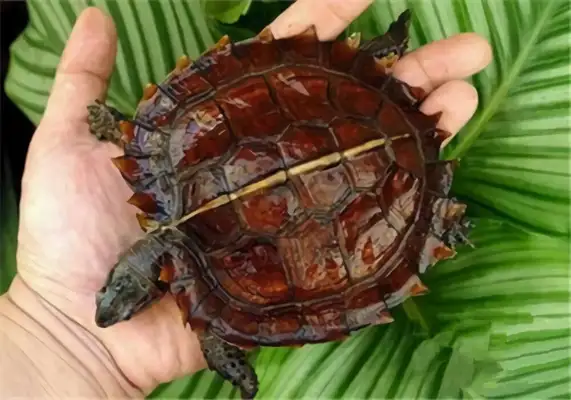
It's called the sun turtle, and it's a strange look, in color and shape, like a round of suns, and it's very popular with a wide range of turtle friends. But one of the more fatal disadvantages of the sun turtle is that his appearance will change over time to the point where an attractive round of thorns will disappear, that is, he will only be so cute when he is a child.
The stinging turtles are semi-water reptiles. Flows in forests growing at an altitude of 170-100 m hide below the leaves and grasses and tend to be land-oriented at an early age. The habitat is the clear stream area of the mountain forest, but the toes are empty and do not swim well and are often found roaming the bottom of the cold, wet forest by the stream.
Chinese official name: Tortoise
School name: Heosemys spinosa
Latin name: Heosemys spinosa
British name: Spinny turtle
Section name: Zhetoru
Alias: Southeast Asia stinger, sun turtle, gear turtle
Latin
Classification status: animal community, vertebrate door, vertebrate subgate, reptiles, turtles, navigable turtles, turtles, fresh water turtles, Eastern turtles, sting mountains Turtle
Chinese common names: Eastern Cognac Turtles, Southeast Asian Stingback Turtles, Rogue Turtles, Stingled Mountain Turtles, Solar Turtles, Spider-Big Turtles, etc.
Geographical distribution: from southern Myanmar through parts of the Thai peninsula and the Malay peninsula to Sumatra, Borneo and some small islands in Indonesia.
Habitat: The shallow stream of rainforests from 170m to 100m above sea level, where stingling turtles often roam on cool, wet and hidden land. It hides under the leaves and grass. Young tortoises may be more land-based.
Gender difference: Large turtles are impervious. The male tortoise has a thicker tail and dents in her abdomen.
(a) Childcare status: The stinging turtle was listed in 2002 as an endangered conservation animal in appendix II/IUCN to the Washington Convention. Characteristics of mountain turtle morphology
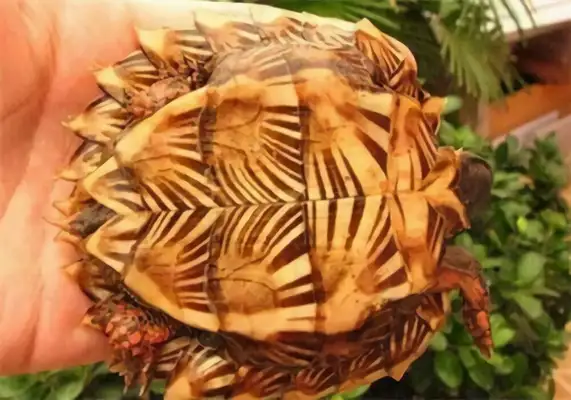
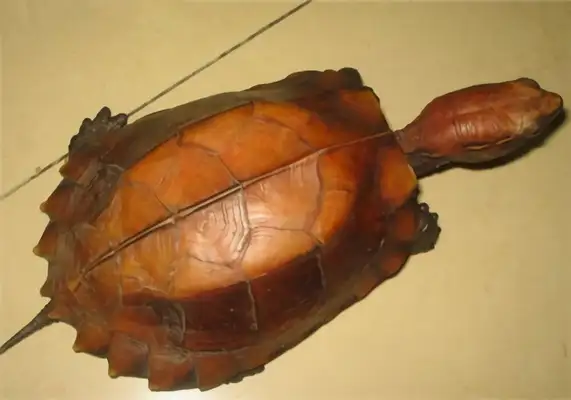
It is easy to identify through the looks of a mountain turtle, and when it is small, it has a clear ring of thorns on its back, which is lighter in colour and looks like a comic-edged sun, and as it grows up, the thorns disappear significantly.
The back is tea brown, the size of the nail is approximately the width of the crust flat and there is a light brown spine in the centre. The most visible features of the back armour range from 175 mm to 220 mm, weighing 1.5 kg to 2.0kg, are also referred to as sun turtles, given that the circle around the back nails is slightly steep. The abdominal aperture is yellow and has a light-brown plaque at its centre. Turtles can reach about 22 centimeters, and the thorns around the shell can become more blunt with age. With regard to the distinction between sex, in addition to the roughness of the tail, there is a special feature of this turtle, whose abdomen, in order to accommodate larger eggs, will have developed abdomen.
Because most of the stinging turtles are located in Malaysia, Indonesia is smuggled in, travels far, and borders are high, often by smugglers to hide and to build up a backlog of turtles, leading to a serious decline in the turtle regime, and most of the stinging turtles that come to China have been swallowed up, resulting in extremely low survival rates.
Criteria for buying healthy mountain turtles:
1. Responsive, bright and strong limbs that cannot easily be pulled out;
2. When climbing, the limbs are capable of supporting the body, and those who drag their bodies to the ground are sick and weak, and are unfit to choose;
3. Active feeding, excrement or long stripes. When the market selects turtle species, it is inappropriate to place them in the water and to select turtles that have been floating on the surface of the water for long periods or whose bodies are tilted and cannot sink.
To measure the weight of turtles by hand, it is not appropriate to choose to buy them if they feel lighter.
The selection of turtles would take place between May and September of each year, at a time when they were growing and very well adapted to temperature and climate. Healthy turtles are active and active. In January-April and October-December, the turtles were in a state of early hibernation or hibernation, and their health and food status were not easy to grasp and the turtles died in winter.
It's even more difficult to find decent ones, especially in the north. Buy this turtle, state first, taste second. knowledge of care for stinging turtles
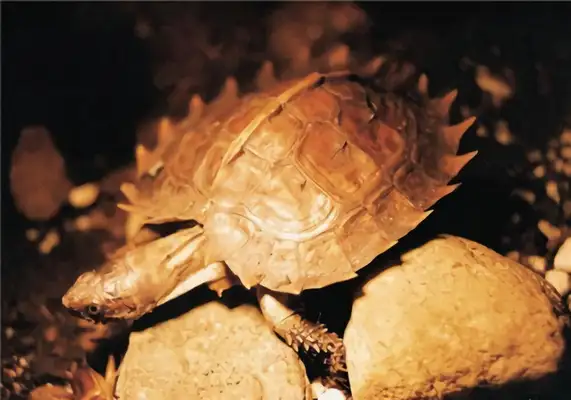
It's very cute and charming to look like a turtle, but it's not easy to feed this cute little guy, and it's very demanding for the environment, and it's a little difficult for a turtle to grow, so it's recommended that the turtle friends buy the turtles, and they can buy half a body.
I. Principles of infant feeding and care
1. Cleaning up in order to prevent the disease in the mountain turtles.
Controls the appropriate temperature and thickness to facilitate normal growth.
3. Development of a child turtle to adapt to the external environment and self-eating.
Specific approaches
Placing fresh shells in a small glass box for three to five hours, after drying out of its umbilical cords, with 0.6 per cent of its physico-saline water, so that they can be sterilized and then fed in indoor glass boxes or wooden basins. It is forbidden to use artificial force to break the cord of the turtle, which can cause death and injury to the turtle.
Utility tanks are changed 1 to 2 times a day, water temperature is strictly controlled at 25 to 30 degrees Celsius, and in case of heat it is necessary to spray water in them many times to regulate the temperature and increase oxygen in the water, so that the natility can grow normally under suitable conditions. For those who have just hatched for one to two days, a small amount of cereal feed is not required until two days before they are fed, followed by a small amount of cooked eggs and a mixture of broken fish shrimp, frog meat and pumpkin potatoes. After seven days of rearing, the baby turtle is now strong enough to feed the pool outside the house. The life of a mountain turtle.
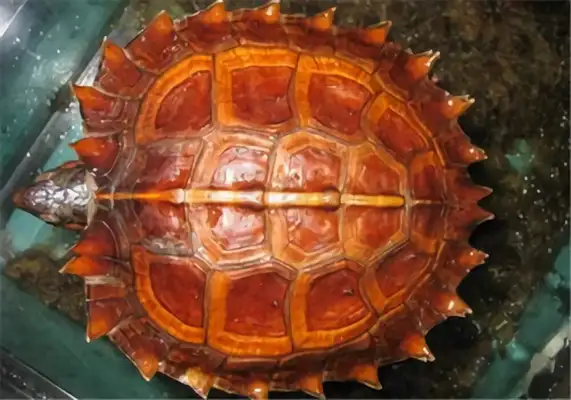
The stinging turtle belongs to a semi-water turtle, so the environmental requirements are special. It is a watery tortoise, which, if necessary, should be placed in two parts of the surface, and if there is not much space, a much larger tan, because you will find him on the tan table longer than in the water.
I. Indoor breeding environment
Tortoises should be raised in large reservoirs and divided into surfaces. At least half of the area with water and 6-10 cm deep. The substrate of the land section is 5 cm thick gravel (6-8 mm size) with 15-25 cm thick peat and long fibre peat to facilitate hiding and nesting. The turtles and the turtles should be raised in a smaller environment close to the turtles. Sprayers are carried out on Mondays and twice a week with sprinklers to maintain the necessary humidity of the turtles.
II. Outdoor breeding environment
These turtles live well in the breeding grounds where bushes are planted and with light and cool large pools. In colder months, indoor heating equipment is required.
Temperature and light: 150 W spotlights should be used to provide sunback sites. It is desirable that ambient temperatures remain between 27 and 30°C. and shall provide a period of 12 hours of daylight and 12 hours of night.
III. Management of hibernation
Pumping turtles are warmer animals whose lives are more affected by ambient temperatures. Between November and March of the following year, when the temperature was 10. Under C, the turtle is lying silently in the silt under the bottom of the pool or in the pine covered with straw, without eating or sleeping, when its metabolism is very slow and weak. Until early April, when temperatures rose to more than 150 C, the turtles began to resume their activities and to eat in large quantities, so that they did not need to feed or change water during hibernation. The main tasks during this period were to keep them warm, such as covering straw around the pool and the open ground between the pool and the wall; and to prevent the attack by the predators. What do you want?
Many people do not know what to eat in the conservation of the stinging turtles, but the food is complex, plants can, and meat can, and some of them feel that meat can help the stinging turtles to replenish their nutrients, and it does not seem to be too much of a problem.
Stingling turtles are usually food-fed under natural conditions, although they sometimes eat meat in artificial cortage. They are best fed two to three times a week with a variety of fruits (especially tomatoes), vegetables and kale leaves. Tortoises can be fed every fortnight to skin-skinned mice or to fleshed mice, but not to meat. Most turtles and turtles like tomatoes more than any other food, and tomatoes are the best option for those who choose them to eat regularly. Vitamin supplementation is usually not required when groceries and vegetables are fed. For child turtles and juvenile turtles, calcium and phosphate need to be replenished, and a good diet should include Tritle Britttlea to provide vitamin D3.
Health problems: Diseases prevalent in other turtles are also easily felt for turtles. Ultraviolet lamps should be provided for rearing care in order to prevent the growth of fungi and bacteria that may cause tortosis. The uninterrupted provision of clean water is necessary. filtration systems with ultraviolet disinfectors are recommended.