No. PET1176
National origin: China
Vulnerability: hunger strike, oral inflammation
Life: 5-12 years
Price: Overview of species of 300-500 white head
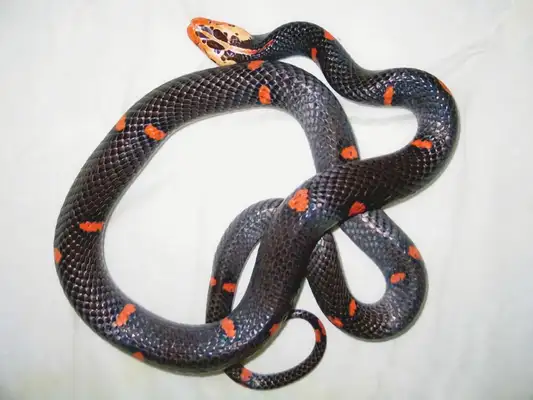
White-headed, also known as Himalayas, currently has no domestic breeding and belongs to the white-headed herb. Whiteheads do not belong to the giant snake species and are among the 27 poisonous snakes in our country.
Gate: Phylum Chordata
Synopsis: Reptilia
Objective: Squamata
Section: Viperidae
Azemiops
Another platform: Lepidosaria
Context: Animals
Amen: Vertebrata
Platform: Diapsida
Asia: Snakes
AACK: The appearance of white-headed AACKOR
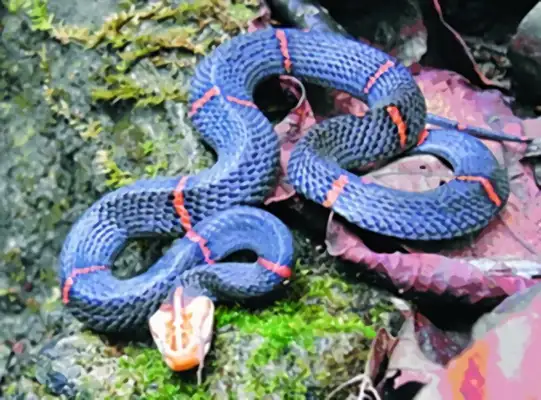
Whitehead is the more toxic of the 27 types of snakes in China, also known as Himalayan whiteheads, who once appeared along the Tibetan plateau. The white head is not a giant and generally not longer than one metre.
The first to discover Himalayas was a European explorer, Leonardo Faya, until 1888, when the biologist George Albert Boulinger officially named Whiteheads (Azemiops). The Himalayan whitehead is an older snake species. They are mainly found in some mountain ranges in South-East Asia. In addition, Himalayas were found in south-east Tibet in China and in Viet Nam. Toxicity is neurotoxic and causes pain, swelling, hypertension, abdominal abdominal ache, fatigue, paralysis, unconsciousness and eventual death in humans. And the biters who don't immediately use drugs must die.
All 600 ~ 800 mm. Viper with tube teeth, short, cheekless. Black and brown on the back, with 10 ~ 15 + 3 ~ 4 pairs of Zhu red, staggered on the right and the right, or met each other in the middle of the back line; abdominal olive gray, scattered with small white dots. The head and neck are yellow and white with dark brown stripes. A typical nine large scales for the back of the head; 3 (2) for the head, 2 for the wake; 2 + 3 for the head; 6, 2-1-3 for the upper lip; 8 (7-9) for the lower lip, 3 (4) for the precut. Slips smooth, row 17-17-15; abdomen 168-205 complete, bottom 39-53. White-headed breeding.
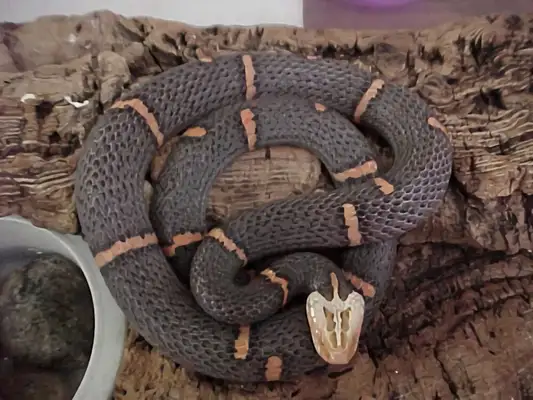
Although mainly spread in China, there are no cases of domestication in China, and because of the exceptional nature of white hair, it is easy to cause death in exchange for environment.
It's the only one of them. The world is rare. Whiteheads react specifically when faced with external threats. When they are harassed, they flatten their bodies to make them look wide, and then their jaws spread out so that they look like triangles to their elliptical heads. Sometimes they shake their tails and scare their opponents. When the situation is critical, they also bite, although they do not necessarily use their poisonous teeth to carry out the offensive. Moreover, in 1981, the scholar Zorzai argued that the white head was mainly active in the evening and not in nighttime snakes, as Orov had said, especially between March and November. The White Head Environment Profile
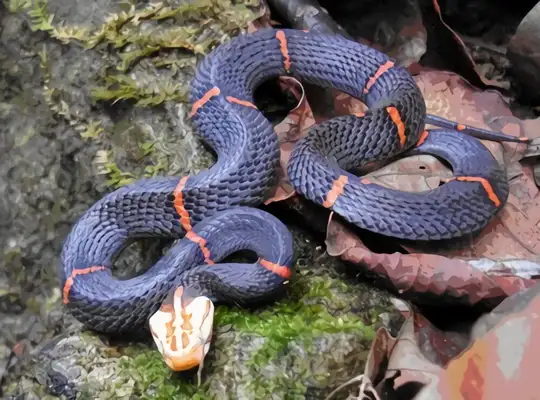
Whiteheads live in special circumstances, often in the event of a total military collapse when exported to Europe and the United States, and some scholars believe that whiteheads live in conditions that react to low-altitude temperatures, leading to damage to internal organs as a result of environmental changes.
Whiteheads like cooler climates (about 20-25 degrees centigrade). Sometimes they are found by the side of the road, in the jungle, in the bushes, in the fields, and they are even close to their homes. In Viet Nam, white heads tend to live in bamboo forests and are active in areas with extensive vegetation distribution and mountain abundance. White-headings are nightly and most popular at moist nights, with temperatures ranging between 18 and 25 degrees Celsius. The snake has recently been reported in Myanmar, Viet Nam and mainland China, mainly in Zhejiang, Anhui, Fujian, Jiangxi, Guangxi, Sichuan, Guizhou, Yunnan, Tibet, Shuxi, Gansu, etc. It is common in the hills and mountains and in the grasslands of the mountains, under the wheat grass piles, by the roadside, rocky fields, paddy fields, sugarcane fields and grasslands near the sweet potatoes. Its survival ranges from 100 to 2220 metres above sea level. The species has its model origin in Myanmar. White Head Food Demand
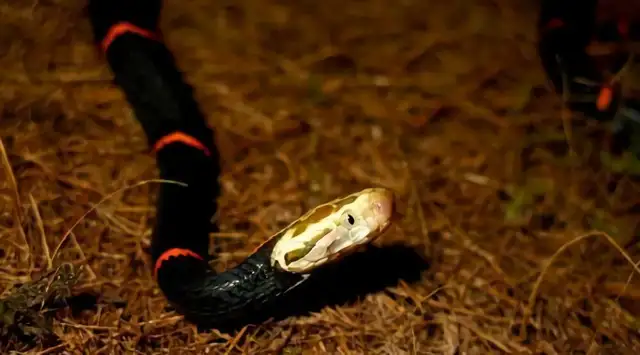
Whiteheads, although highly susceptible to death in exchange for their environment, have also been successfully raised and bred by Russian scholars. At present, there are very few reports of the survival of artificially raised white heads, which is generally extremely difficult to feed.
In the wild environment, white headlings feed mainly small mammals, and young snakes of white head are also found to feed. According to some of the feed reports, which used to feed white heads, white heads are usually resistant to being fed, and only at night are they willing to eat newborn rats, and when they bite their prey, they are often not easily released. According to Dr. Bryan Grieg Fry, the toxicity of the white head is considered to be similar to that of Tropidolaemus Wagleri, which is less toxic than that of cobras; another study found that the fermentation movement of the white head is essentially not very different from that of the common snake, except in the case of the white head, which does not cause blood condensation, blood seepage or muscular poisoning. There is no authority for certain reports that white heads are the most poisonous snakes in the category of snakes.